Paul Ryan, Republican congressman from Wisconsin and ranking member of the House Budget Committee, has introduced "A Roadmap for America's Future", his alternative budget proposal. But unlike most other republican proposals, his actually balances the budget. It does so mainly via steep cuts in social programs, namely a massive cap on Medicare spending.
The basic idea is to give seniors a voucher, which they can then use to purchase health care on the private market. The way this cuts costs is that this voucher will be substantially lower than what what Medicare currently covers. Although the program doesn't go into effect until 2020, the annual cost adjustment is far below expected actual increases in health care costs. What is more, the age of retirement coverage will have risen, further limiting coverage. What it all amounts to is massively rationing health care for seniors.
The amazing thing about the plan is its intellectual honesty. It takes a philosophy of limited government - low taxes, low spending - and actually proposes implementing it. The problem most Republicans face is that their rhetoric has over-reached their policy recommendations. During the Bush years, tax cuts were made, yet without the painful cuts in spending that would pay for them.
Republicans, now in the minority, and facing record deficits, seem to have rediscovered fiscal discipline. Yet to complain about the deficit without proposing steps to actually balance it, is intellectually dishonest. The ease with which this incongruent rhetoric is employed likely explains much of their current low approval rating.
Interestingly, the Tea Party movement seems to be tremendously popular. Its main thesis would be very approving of the Ryan proposal. Yet much of its rhetoric is even more extreme, if somewhat incoherent. Aside from the demagoguery of Obama, a main theme seems to be the detestation of any form of socialism in government. This has been largely directed at government involvement in health care - even if many of the Tea Partiers seem to be very attached to their medicare. But one wonders how far the logic might really extend. Public schools? Libraries? Ostensibly the objection might solely lie with federal government. But how would state spending on social services be any different. The same philosophical deference to individualism and markets would seem to apply.
To the extent that republican policy proposals have not adequately matched their rhetoric, they have been difficult to take seriously. The Ryan plan is honest, and logically consistent. That its Medicare provisions would not really begin taking effect for 10 years likely reflects the political impracticality of its acceptance. But at least it is something with which to reasonably debate.
A bastard's take on human behavior, politics, religion, social justice, family, race, pain, free will, and trees
Tuesday, February 2, 2010
Thursday, January 28, 2010
Finger Pointing
My prospects for getting health insurance are pretty good in the future, considering I’m an experienced teacher with a Master’s degree; unemployed now but as soon a the local market opens up I’ll no doubt find employment. I also have chronic pre-existing conditions, which makes me uninsurable. So I feel like I have a dog in this fight.
And so while the president's agenda has a pretty big direct impact on my life, I’m still not clear as to why all the finger pointing at Obama. If politically feasable, he would have supported single-payer. But he’s stuck with where the Dems are at. As far as I can tell, the main complaint is that he isn’t “fighting” hard enough. But what the heck does that even mean? It seems like a straw man to assume he has so much theoretical power over congress.
I mean, look what it took to get Ben Nelson on board. What could Obama possibly do that would top that pay off?!! I’m all for arguing that he be more aggressive. But what is being argued is that Obama’s lack of aggressive influence on the process is largely what has kept the process not only from resolving but being less liberal to boot. This is simply not true.
What troubles me most is that this rhetoric feeds right into the ignorance of independents who don’t appreciate the real underlying liberalism of Obama, and so right him off as “another politician” in their reductionist and misguided understanding of American politics – and who thus end up voting for the Scott Browns of the world out of spite.
And so while the president's agenda has a pretty big direct impact on my life, I’m still not clear as to why all the finger pointing at Obama. If politically feasable, he would have supported single-payer. But he’s stuck with where the Dems are at. As far as I can tell, the main complaint is that he isn’t “fighting” hard enough. But what the heck does that even mean? It seems like a straw man to assume he has so much theoretical power over congress.
I mean, look what it took to get Ben Nelson on board. What could Obama possibly do that would top that pay off?!! I’m all for arguing that he be more aggressive. But what is being argued is that Obama’s lack of aggressive influence on the process is largely what has kept the process not only from resolving but being less liberal to boot. This is simply not true.
What troubles me most is that this rhetoric feeds right into the ignorance of independents who don’t appreciate the real underlying liberalism of Obama, and so right him off as “another politician” in their reductionist and misguided understanding of American politics – and who thus end up voting for the Scott Browns of the world out of spite.
Wednesday, January 27, 2010
iPad in the Classroom
Woomba jokes aside, Apple's iPad is tantalizing from an education IT standpoint.
I think a class set for $13,500 (30 x $450) would be an amazing opportunity. That's still a steep price tag, but gradually rolling them out, at district volume prices might get you down to 1 cart/3 classrooms pretty quickly. Sure, a lot of teachers might not be the best fit. But the sort of closed-environment apps you could do on here would be amazing. I've generally taught in lower income schools, everything from K to 12 and I could use these with every grade. You usually can't count on kids having easy access to high speed internet outside class and so just the ability for targeted instruction ramps up dramatically.
The ability to set up custom content that targets ability would be incredible. As you go up in grades, the ability spread gets worse and worse. With an interactive textbooks the sky is really the limit. You could do variable reading levels in science or history textbooks. Assessment, both formative and cumulative could be in realtime, linked to parent emails. Classwork could be tracked. Rewards/incentives could be offered. The possibilities for student-centered/driven instruction are really opened up.
The big difference between the tablet and the desktop/laptop is input. Not only are they mobile, meaning they could be used in group-settings or field-work. But they'd offer a broader range of tactile accessibility options. Students are notoriously disorganized and the ability to save a notefile might be a real benefit to many students. Being able to incorporate the tablet into instruction on a daily basis just frees up a whole range of options that wouldn't be practical when limited to shared lab use.
Cost and theft are definitely concerns. But textbooks aren't really cheap either. Weighed against the benefits, not the least of which might be teacher time spent waiting at the copy machine, I think less than $500 is pretty awesome.
But this is the kind of thing that requires real leadership on. The more you put into it, the more it's going to work for your school. With some bright IT folks, in touch with a good team of tech savvy teachers and administrators and there are a lot of really neat opportunities for even the most tech-resistant teacher.
I think a class set for $13,500 (30 x $450) would be an amazing opportunity. That's still a steep price tag, but gradually rolling them out, at district volume prices might get you down to 1 cart/3 classrooms pretty quickly. Sure, a lot of teachers might not be the best fit. But the sort of closed-environment apps you could do on here would be amazing. I've generally taught in lower income schools, everything from K to 12 and I could use these with every grade. You usually can't count on kids having easy access to high speed internet outside class and so just the ability for targeted instruction ramps up dramatically.
The ability to set up custom content that targets ability would be incredible. As you go up in grades, the ability spread gets worse and worse. With an interactive textbooks the sky is really the limit. You could do variable reading levels in science or history textbooks. Assessment, both formative and cumulative could be in realtime, linked to parent emails. Classwork could be tracked. Rewards/incentives could be offered. The possibilities for student-centered/driven instruction are really opened up.
The big difference between the tablet and the desktop/laptop is input. Not only are they mobile, meaning they could be used in group-settings or field-work. But they'd offer a broader range of tactile accessibility options. Students are notoriously disorganized and the ability to save a notefile might be a real benefit to many students. Being able to incorporate the tablet into instruction on a daily basis just frees up a whole range of options that wouldn't be practical when limited to shared lab use.
Cost and theft are definitely concerns. But textbooks aren't really cheap either. Weighed against the benefits, not the least of which might be teacher time spent waiting at the copy machine, I think less than $500 is pretty awesome.
But this is the kind of thing that requires real leadership on. The more you put into it, the more it's going to work for your school. With some bright IT folks, in touch with a good team of tech savvy teachers and administrators and there are a lot of really neat opportunities for even the most tech-resistant teacher.
Refreshingly Meaningful Education Reform
Ed Week has a story up on a new book out that analyzes 15 years of school performance in Chicago and comes up with... surprise, what we've been trying to do all along. Apparently the 5 keys to a successful urban school are:
Anthony S. Bryk, an author of the book, Organizing Schools for Improvement: Lessons From Chicago , is quoted as pointing out that if a school is weak in any of these 5 areas it will likely fail. While these are largely generalities, and effectively creating each is not an easy task, it is a reminder that we can't reduce educational reform into easy, sound-bite-ready slogans. If we don't look at the whole picture - the curriculum, teachers, assessments, administration, staff, community... all of it, we're setting ourselves up for failure.
• Strong leadership, in the sense that principals are “strategic, focused on instruction, and inclusive of others in their work”;What's interesting here is that, as the authors note, none of these are silver-bullet type solutions, but taken together, just a comprehensive picture of what good "culture" looks like at a school. It isn't simply about a fancy new curriculum, high-powered teaching, more assessments, professional development, merit-pay schemes or any other new trick. If anything, the key is a school administration that is able to deliver on a range of factors that go into making a school work. But it is the sum of the parts, how they interact and build on each other that delivers the final result.
• A welcoming attitude toward parents, and formation of connections with the community;
• Development of professional capacity, which refers to the quality of the teaching staff, teachers’ belief that schools can change, and participation in good professional development and collaborative work;
• A learning climate that is safe, welcoming, stimulating, and nurturing to all students; and
• Strong instructional guidance and materials.
Anthony S. Bryk, an author of the book, Organizing Schools for Improvement: Lessons From Chicago , is quoted as pointing out that if a school is weak in any of these 5 areas it will likely fail. While these are largely generalities, and effectively creating each is not an easy task, it is a reminder that we can't reduce educational reform into easy, sound-bite-ready slogans. If we don't look at the whole picture - the curriculum, teachers, assessments, administration, staff, community... all of it, we're setting ourselves up for failure.
Monday, January 25, 2010
Quit Yer Whinin'...
Obama dropped a bomb today on the progressive blogosphere. Apparently plans are in the works for large cuts in non-defense spending. Matt Yglesias describes it as
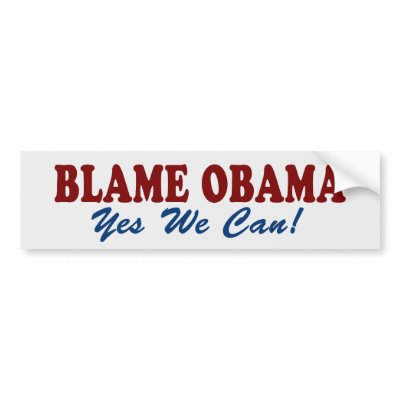
Obama has taken so much misdirected heat it’s sickening. Because the big tent democrats can’t be corralled this is somehow Obama’s fault? It appears the tea party pathology of needing to have complex problems require easy and false scapegoats is catching.
I’m not sure this is substantively anything more than political posturing. But the last fucking thing it is is acting like a Republican. Have you seen that party lately? At least the Democrats have saved us from financial ruin, staunched the pain with a stimulus (which is paying for my family’s health care right now via COBRA, Thank you very much), and attempted to put together a largely important bill to reform health care and carbon emissions. The fact that they can’t pass them is frustrating – but if maybe one or two Republicans stepped up we might have something.
The world isn’t perfect and neither are politics. So this isn’t a progressive’s fantasy – but Jesus, chill out and stare at this picture for a while.
Feel better?
Liberals are freaking out. To you I say:an effort to balance concern with a “massive GDP gap” in the short run and “very substantial budget deficits out over time,” the plan calls for the FY 2011 budget to be higher than the FY 2010 budget, but then for non-security discretionary spending to be held constant in FY 2012 and FY 2013.
Oh, wah!
Obama has taken so much misdirected heat it’s sickening. Because the big tent democrats can’t be corralled this is somehow Obama’s fault? It appears the tea party pathology of needing to have complex problems require easy and false scapegoats is catching.
I’m not sure this is substantively anything more than political posturing. But the last fucking thing it is is acting like a Republican. Have you seen that party lately? At least the Democrats have saved us from financial ruin, staunched the pain with a stimulus (which is paying for my family’s health care right now via COBRA, Thank you very much), and attempted to put together a largely important bill to reform health care and carbon emissions. The fact that they can’t pass them is frustrating – but if maybe one or two Republicans stepped up we might have something.
The world isn’t perfect and neither are politics. So this isn’t a progressive’s fantasy – but Jesus, chill out and stare at this picture for a while.
Saturday, January 23, 2010
What You Really Think About Teachers
I'm not sure what people really think of teachers anymore. On the one hand, you have a gracious acknowledgment of the implied dedication & sacrifice of the profession. But on the other, you have endless public cries in anguish over what a terrible job teachers are doing.
The fact that we now have reams of data linking poverty to education certainly paints a vivid portrait for many of ghetto schools as low-performing poverty factories. Of course, even the brightest wonks have always had trouble with correlation vs. causation.
So in the end much of the ambiguity relates to one's expectations of what is actually possible through a public education system. If you believe that with current levels of funding, the basic structure of education should be able to compensate for all other social effects, given some tweaking here and there - "an emphasis on rigor, discipline, etc.", then you likely appreciate the sacrifices teachers make but see them as standing in the way of a sort of utopia where similar proportions of children from all socio-economic backgrounds achieve success. In other words, a class of largely inept, morally bankrupt and self-interested parasites of the state who only manage to survive via the red menace that is unionism.
However, if you believe that a social project in which every single child, from every background, is brought to a proportionally adequate level of self-efficacy by the age of 18 will inevitably require massive intervention by the state, because while children from some backgrounds will continue to do fine under the current, traditional model, others with backgrounds putting them "at-risk" for a variety of negative outcomes will not thrive in conditions of overcrowding, scarce resources, and overwhelmed teachers and administrators... then you will likely be thanking God that there are people who are either desperate enough or compassionate enough to put on a happy face and welcome the hundreds of thousands of daughters and sons who come to their doors each and every day and do their damnedest to help them succeed no matter how few people really understand what their job is like and how many people don't understand at all yet feel they have a right to weigh in because, well, they were all students once or have children of their own and so they must be experts in a field which is literally a microcosm of every god-forsaken political, social, psychological, philosophical or economic theory that has come down the pike since the dawn of human civilization.
Or, you know. Something like that.
The fact that we now have reams of data linking poverty to education certainly paints a vivid portrait for many of ghetto schools as low-performing poverty factories. Of course, even the brightest wonks have always had trouble with correlation vs. causation.
So in the end much of the ambiguity relates to one's expectations of what is actually possible through a public education system. If you believe that with current levels of funding, the basic structure of education should be able to compensate for all other social effects, given some tweaking here and there - "an emphasis on rigor, discipline, etc.", then you likely appreciate the sacrifices teachers make but see them as standing in the way of a sort of utopia where similar proportions of children from all socio-economic backgrounds achieve success. In other words, a class of largely inept, morally bankrupt and self-interested parasites of the state who only manage to survive via the red menace that is unionism.
However, if you believe that a social project in which every single child, from every background, is brought to a proportionally adequate level of self-efficacy by the age of 18 will inevitably require massive intervention by the state, because while children from some backgrounds will continue to do fine under the current, traditional model, others with backgrounds putting them "at-risk" for a variety of negative outcomes will not thrive in conditions of overcrowding, scarce resources, and overwhelmed teachers and administrators... then you will likely be thanking God that there are people who are either desperate enough or compassionate enough to put on a happy face and welcome the hundreds of thousands of daughters and sons who come to their doors each and every day and do their damnedest to help them succeed no matter how few people really understand what their job is like and how many people don't understand at all yet feel they have a right to weigh in because, well, they were all students once or have children of their own and so they must be experts in a field which is literally a microcosm of every god-forsaken political, social, psychological, philosophical or economic theory that has come down the pike since the dawn of human civilization.
Or, you know. Something like that.
Friday, January 22, 2010
Democracy: Sold to the Highest Bidder!

Today's supreme court ruling, treating limits on corporate and special interest contributions to political campaigns as necessarily violations of the right to free speech, makes the incredibly naive assumption that corporations operate under the same expression of political engagement as do common citizens. No matter how wonderful any private individual's talent for information dissemination, there is no comparison. Corporations are masters of public deception, or rather, they have loads of money to spend on people who are masters of deception, aka those whose business is to deceive - or to "conceive"... however you want to polish it.
For example, say I am coal company X, and have a rather large amount of toxic sludge to get rid of. Do I tell everyone about it - specifically my plans to dump it in some nice vacant wetlands? No, I simply create an environmentally friendly "group", say, "Americans for Wonderful Wetlands", and then have them take out ads selling the public on the idea that coal companies in general are wonderful and that protecting wetlands is really where their heart lies.
The philosphy expressed in today's ruling is profoundly naive. What these objectivist free-marketeers don't seem to realize is that people will do evil things if we let them. Especially large, unregulated corporations whose reason d'etre is making profit for short-sided shareholders. They are either incredibly stupid, or intellectually dishonest. Because history is rife with examples of unchecked moneyed interests doing really bad things. The history of regulation has been an overwhelmingly positive thing for the Americans, who otherwise would have been at the mercy of malevolent interests far more powerful than they could hope to take on alone.
Ayn Rand was absolutely right that selfishness and greed are good things on their face. But she always left a small caveat that destroyed her entire thesis: it must be in the hands of men who act responsibly. This is why libertarianism is not reality based. It rests upon a utopian fantasy in which power never seems to corrupt, and the disadvantaged are magically able to retain freedom against an ever-concentrating elite.
This is why Republican claims to populist solidarity are cynical and morally bankrupt. Look at the typical Republican! He revels in inequality - he takes pride in it! He pretends that he is what he is due to his own hard work but knows deep down that he is a superior, the fittest to have survived. He should feel no shame. He is a champion. Sure, if one defines populism as "everyone should be like me", then he is a populist. But if one defines populism as "doing what is in the interest of the people", then he is far from it. Repealing estate taxes are not populist. Prayer in school is not populist. Limiting malpractice suits is not populist. Vouchers are not populist. The flat tax is not populist. Eliminating social programs is not populist. Fighting against the right for workers to organize is not populist. Prohibiting gays from marriage is not populist. Racial profiling is not populist. Take any issue where power in the hands of the unrepresentative, wealthy or traditionally powerful few is solidified, and Republicans are for it.
In the ruling today, no one is pretending that expression will be more fair. No, the powerful interests with the most money will have more power to dominate, not less. But it is the principle that there should be no check on power - they call it "speech", but what is it really other than the solidification of one speech's power over another, via the purchase of delivery. The real anathema to this philosophy is the populist idea that there may be a point at which one man's rights might grow so great that they begin to take away from another. The roots of this impulse are authoritarian in the oldest sense, wherein the monarchist claim of "might making right" - the very epitome of what would become known as Darwin's naturally selective forces - was embraced as socially appropriate.
Our founders struggled to throw those old chains to the dirt, emphasizing not the old, lazy orders of generations of entrenched power, but instead the idea that every man must be born free. And yet they keep circling back at us like vipers, disguised though they be in populist clothing, pretending to represent the interest of the common man while tightening the old grip of class privilege, ignorance and political disenfranchisement. This is a sad day for America. I fear it may have to get much worse before it gets better. What have her is a massive shift away from democracy and toward a government vastly more corrupted and less able to do what it was originally intended to do: to truly allow freedom for all.
Subscribe to:
Posts (Atom)