Life is hard, especially when dealing with people who drive us crazy. But I think when properly applied, a bit of methodology can go a long ways towards being more compassionate, confident, and effective in our daily interactions.
We tend to be a bit sloppy when faced with dysfunctional behavior,
in terms of how we view the cognition behind it. Where I teach, 16 and
17 year old kids routinely act like 3 or 4 year-olds (no – I’m not
exaggerating). A common – completely understandable – response from
staff is disbelief, shock and offense at such immaturity. “What are you,
some kind of dummy?!!”. (Not usually in such disrespectful language,
but we have our moments).
Because when we have a chance to take a step back, there is no real
reason for shock or disbelief. The explanation is perfectly clear, when
taking into account the particular student’s life experiences, and
ultimately their failure to have properly learned appropriate
self-control, self-discipline, emotional management, etc. Whatever their
story is, the fact of the matter is that they have not been able to
develop adequately.
Something I have found fascinating in working with such teens is
that, once a degree of rapport has been established, how often it is
that they are able to express their own insight into their behavior.
Unformed, lacking in narrative, etc., sure, but they know at some level
their inadequacies. Some of the best work I feel I have done, the most
progress I have made with students, has been achieved through helping
them to better understand themselves by trying to create an environment
in which they feel safe enough to be vulnerable. This is not done by
diminishing them and provoking their superficial pride and ego through
humiliation (flying off the handle is actually embarrassing, in that you
are not in control of yourself, and end up with regrets).
One student of mine, who I, for pedagogically tactical reasons, chose
to essentially counsel all period instead of doing my normal rounds,
wanted so adamantly for other people not to treat her like she was
“crazy”. This, she asked for, while recounting the time she got in
trouble for yelling at the cops to leave her the “f#ck alone”. “But
*****”, I told her, “you ARE crazy. You have serious anger problems. But
you know what, that’s OK. We’re all a bit crazy at times. And most of
us haven’t been through half of what you have. “More than anything,
she wanted validation. She knew she was a mess, but she didn’t want to
be only a mess. Ever since that day, she still barely does her work.
But some kind of calm seems to have come over her, and she no longer
seems like the quietly brewing tempest she once was. If only she can
continue to find others in her life who validate her, she’ll have a
chance of making it.
There’s a deep logic to human behavior. So many of us take our
developmental maturity for granted, and subsequently find it difficult
to understand the behavior of those who fail to behave appropriately. In
what might be described as egotistic arrogance, we imagine their level
of cognitive awareness to be equal to ours, and thus the behavior to be
not an outgrowth of natural development, but of conscious disregard. And
when we treat them thusly, I think it entirely logical for them to take
extreme offense. Because yes, if they knew better, they would be
“dummies”. But they obviously didn’t really know better (in a sort of
universal, developmental sense). We can see this illustrated quite
clearly in the classic case of the cold, unloving parent or guardian: a
child makes an honest mistake, and the caregiver over-reacts, i.e.
assumes more developmental capacity than is appropriate. We naturally
understand this to be a miscarriage of justice.
While adults are not children, and the infractions maybe more severe,
the same dynamic is at work. We ought to recognize our intuition about
the child’s treatment and imagine it in the emotional composition of the
perpetrator. If he is not treated with dignity, there will be no object
to which he will be able to appeal for justice, other than that which
resides within his own, internal understanding of fairness. A
subjectivity which of course, considering transpiring events, and
certainly in the “heat” of the moment, as higher brain functions are
limited, ought not be something in which to place our faith. So as we
still have a leveraging role to play in our relationship, mutual respect
is an invaluable commodity.
A man named Dan called about the apartment for rent. I told him my wife would call him back. She then told me it had been rented. I wanted her to call Dan and tell him. Why couldn't I have called him myself?
I might have simply been worried about talking on the phone. More likely, I was consciously worried he might feel like he was dealing with confused, or untrustworthy people. Surely, people should be organized and know whether an apartment was still available. Did I not have a good communicating relationship with my wife? What did this say about me?
My wife thought I was being ridiculous. Why would Dan think any of this? And if he did, why would I care what he thought, a complete stranger? Most likely, he wouldn't think this at all. Who is so skeptical and judgmental, paranoid about of the motives of others?
I realized this is a pattern with me. Very often, I am overly concerned about what people might be thinking of me. I often shrink from conflict in order to avoid the possibility that they might think poorly of my character. I might be blind to some true failing in myself, one they of course can sniff out from the slightest trace of weakness. I find myself assuming a sort of game face, afraid of tipping my hand, tipping them off that I am indeed weak and vulnerable, morally conspicuous and lacking in integrity.
Yet all of this presumes that I might be interpreted this way. Likely, I am not. Why would I assume such motives in others? From where does this insecurity come? Is it a false concept of myself, that I fear is true and will be found out? Or is it a false conception of others, that they would be prone to harbor such sentiments?
I suppose both could be to some degree true. Yet both also influence each other: if I assume problems in myself, I'll likely assume others will see them. If I assume others will perceive flaws in me, I may see this as a pattern that implies some truth about myself.
I do often assume that others have found flaws in me and then spend lengthy amounts of time going over the situation in my head, wondering whether or not it is really true. Do I really do X? Am I really like Y? Introspection is important; we need to be aware of who we truly are and what we do. But one can also be overly introspective, looking for trouble where none exists.
At the macro level, we face many risks in our day to day life, yet would be crippled if we attended to them in improper proportion to their probability. Sure, driving a car is dangerous, but to worry that other cars might all suddenly slam in to us would prohibit driving. Likewise, we may come off as rude to someone, yet what is the probability? Must we analyze every word we speak in the context of a likelihood that we were indeed rude? Is there a pattern?
This is an issue of cognition. We all develop a framework of self with which we assume ourselves to be functioning in the world. When we drive, this framework entails our past experiences driving, and we project the likelihood that we and others will drive safely. In interpersonal relations, so too do we have a framework. It entails our past experiences interacting with others, and we project the likelihood of how we and others will behave, feel and respond a given way.
Of course, our experiences driving a car are much more limited, and our interactions concrete. Usually, our cognition is sound. However, one might imagine that after some traumatic incident, this cognition might become impaired, and faulty predictions might be made based on unconscious anxieties. Interpersonal relationships are infinitely more complex, and the cognitive framework is enormous, encompassing vast stretches of one's life, one's varied relationships with others, as well as one's understanding of one's self in multiple contexts.
The cognitive framework is partially biological, based in temperament and predisposition to a variety of conscious states, not the least of which being manifestations of mood. But it is also of course environmental, or learned. Cognitive patterns begin to be laid down from birth, as the ways in which we begin to interact with the world begin to build a framework of consciousness - ultimately what we perceive as the self and the other.
Sorting out what one's cognitive framework consists of, assuming much of it is unconscious - learned and temperamental, is a monumental task. Yet through this sort of meta-analysis, trying to find patterns in how we tend to perceive ourselves and others, can at least give us a way of framing our behavior. That is, we may never know why we feel and respond the way we do, or what an other is thinking or feeling, but we can at least attempt to find an objective understanding of what we think and fell, and what they say and do in response.
To someone such as myself, who tends to enjoy thinking and critically examining himself and the world around him, a dangerous trap can be found in introspection. The very bravado that comes from having sorted out many intellectual dilemmas, or at least the sense of accomplishment in sorting them out to a satisfactory degree through pure intellect, can impart a seductive sense that all problems can be sorted out by analysis. Yet reason, especially when directed at the self (or at others via the self) cannot be decoupled from feeling. Thus, pure intellect is inevitably insufficient. And when faced with this challenge, the belief that what is always required is more reason can result in unremittant perseveration.
So what the meta-cognitive model allows is a sort of escape valve: allow the intellect to continue, yet confine it to only limited examination of interactions between self and others, and task it instead with a more prominent engaging of one's cognitive framework as a whole, allowing it to create, in a sense, a framework for your cognitive framework. In my case, what might be more meaningful than dwelling on specific, situational interactions, is doing so in limited fashion, while at the same time keeping an eye out for larger patterns throughout my interactions and subsequent thought processes.
So, why was I worrying what Dan might have thought of me? This is the interesting question, not whether what I said or did was correct. It was after all, a brief and inconsequential interaction. Why do I have a pattern of assuming that others will spot weaknesses in me, think poorly of me? Have I learned to see this is in people's nature? Have I learned to see weakness in myself? What does this say about my father and mother, my family and friends? Surely at least some temperament as well as attitudinal relationship must exist. These are the important things to ponder, and likely what will ultimately help me understand my true self.
Anthropologist Scott Atran reflects on war, finding it unavoidably a product of man's irrational nature, no matter how rational its justification may seem. He doesn't appear to be making a case for absolute pacifism, but rather reminding us that rational thought will always be colored by what he calls "sacred truths" we have accepted - for good or ill. Further, as a violent project, war inspires in us certain tendencies.
In one study, we asked 656 Israeli settlers in the West Bank about
the dismantlement of their settlement as part of a peace agreement with
Palestinians. Some subjects were asked about their willingness to engage
in nonviolent protests, whereas others were asked about violence.
Besides their willingness to violently resist eviction, the subjects
rated how effective they thought the action would be and how morally
right the decision was. If the settlers are making the decision
rationally, in line with mainstream models, their willingness to engage
in a particular form of protest should depend mostly on their estimation
of its effectiveness. But if sacred values come into play, that
calculus should be clouded.
When it came to nonviolent options such as picketing and blocking
streets, the rational behavior model predicted settlers' decisions. But
in deciding whether to engage in violence, the settlers defied the
rational behavior models. Rather than how effective they thought
violence would be in saving their homes, the settlers' willingness to
engage in violent protest depended only on how morally correct they
considered that option to be. We found similar patterns of "principled"
resistance to peace settlements and support for violence, including
suicide bombings, among Palestinian refugees who felt "sacred values"
were at stake, such as the recognizing their moral right of return to
homes in Israel even if they expressed no material or practical interest
in actually resettling.
A twist on "might makes right", the act of violence seems to inspire a passion that clouds out reason, focusing narrowly on violent response.
Thinking of capital punishment, that the law is on the books, as a
violent option, would by itself inspire violence. We've seen many
studies in which the suggestion of an option or concept, changes
decisions that would seem to be rational, and not directly connected to
the suggestion.
I wonder if this dynamic in justice doesn't have to with a basic human
fear impulse. The suggestion of violence triggers something deep in us,
a sort of fear response, which is built to respond with violence.
Something like a fear:attack mechanism.
---
A larger question is what we mean by sacred ? Surely, its basis is something quite ineffable, and
changes over time. Today, not being racist is a sacred truth. But it
surely wasn't a few decades ago. Other, almost invisible things have
slipped away. Why were we ever racist? I'm not sure we even knew at
the time - it was sacred truth. (I'm actually convinced that this lack
of knowing is what allows many today to believe themselves above racism -
accepting that sacred truth - while still falling subject to the many
prejudices and cognitive failings that afflicted previous, consciously
racist generations)
And each of us has our own sacred values, defined by various allegiances
and assumptions. I think the oddest thing is the circular way in which
we hold sacred truths to be self evident, yet which are based on
values and principles derived from thousands of years of cultural
evolution. And yet that evolution of values and principles was surely
informed in no small part by "sacred" considerations. Our sacred is
informed by a reason, which itself is informed by a sacred.
OK, this is kind of terrible, but I just finished Robopocalypse, by Daniel Wilson, and
there's a horrendous scene near the end where the robot mind has created
these little robot parasites that attach themselves to a dead body, and
by squeezing the diaphragm, vibrating the voice box, manipulating the
lips and tongue, are able to make the body speak. As you know, I'm a
determinist, and this might be the most disturbing, misanthropic analogy
for what I generally claim to be occurring in human thought! But, it
is vivid.
So, seeing this kind of abyssal relationship between the sacred and the
rational, and the frighteningly unconscious way in which we think - even
indeed, as we think - make me all the more skeptical of the notion that we are much in control at all.
Mind you, I actually find this insight liberating, in that in a
seemingly paradoxical way I feel empowered by it. In religious terms,
as best I can relate to and understand them, I see this determinist
operational dynamic, this causal force of the natural world, as the
closest thing I can imagine to a God. And in the manner I imagine
people have always taken solace from religion, as a part of something
larger than themselves, something that reminds them that their personal
struggles are petty in the grander scheme of things - God's plan, I too
feel a sense of belonging, forgiveness and purpose in this great natural
unfolding of biological and cultural evolutionary history.
Especially, when reminded of the silly ways in which I as a human am bound to think.
Mark Kleiman points to another example of the right's obliviousness to its own tendency towards racial cognitive bias. He links to Jeffrey Goldberg, who has this to say about a Fox News feature on Obama's meeting with the president of Gabon:
This is psychologically fascinating: The mind of Fox Business host Eric Bolling, when confronted with images of President Obama meeting with Gabon's president, Ali Bongo, instantly recalls other black people who have met with President Obama, and comes to the conclusion that Obama feels deep love for black "hoodlums."
Racism is a beast. Even in the past, when it was largely socially acceptable for people to be explicit about it, their motivations were largely unconscious. Even when pseudoscientific claims began to be made in the late 19th century, it was nothing but an attempt to find evidence for pre-existing hatreds. Did the Germans know why they hated the Jews so much? Their conscious rationale was based on bizarrely fantastical assumptions. So to with most forms of hatred - whether anti-gay, anti-woman, anti-minority, etc.
If racists were conscious of where their racism came from, what motivated it, they likely would not be racist.
So, now we have the modern "politically correct" world, where everyone knows we shouldn't traffic in "off-color" assumptions, stereotypes, or any of the other forms in which hatred has historically thrived. This has generally coincided with the understanding that racism, sexism, etc. are wrong and untrue.
Yet what is it about modern society that is able to grasp how these hatreds are wrong, while previous generations were unable to? Have we found some special evidence that has proven these hatreds false, that we can point to and agree on? To some degree, I think we have. Much of the evidence is less scientific - in terms of biological differences in race or gender. (We are still working on evidence that homosexuality is not a "choice", even while claims that there is anything wrong with it even if it were have long been demolished.) The "evidence" I think would largely come from the social sciences, and their work in laying out not only the historical roots of hatreds, and the idiotic viciousness with which they were perpetrated, but as well the psycho-social ways in which they were propagated.
The most difficult task has been to show the ways in which hatred, which is ultimately wrong because of the pain, injustice and inhumanity it creates, has persisted despite - what we now consider to be obvious - its incompatibility with the universal human impulse towards compassion, tolerance and empathy. How could otherwise rational and caring humans treat each other this way? A good portion of the explanation for this has been the fact that historically oppressed (hated) groups had been marginalized and thus banished from cognition, where they would have been subject to natural human impulses to treat them with fairness. Theoretical frameworks have been developed that try and explain this through the function of social structures such as patriarchy, class, ethnicity, religion, etc. - the interplay of social power and dominance being dynamics that alter cognition.
Obviously, much of this is pretty high-order analysis, largely still confined to and emanating from academia. In popular culture, aside from that which had been filtered down from universities, the main deconstruction of these historical hatreds came through the civil rights movement, which was certainly working with academia (and its student movements), but was also merely about the standing up to oppressive elements in society by the oppressed, for whom the hatred was very real and personal. The oppressed had no problems with cognition (except in the case of that which had been internalized, although that was a serious yet less central problem). Instead, it was the cognition of the oppressors, those in mainstream society that had been raised on stereotypes and other forms of unconscious hatred that had crippled their ability to properly process empirical reality.
It took a massive, multi-decade campaign of relentless, in-your-face protest both on the streets, in the media, in the arts, and likely most importantly, at dining room tables and backyard barbecues. (The most practical results being, of course, change in the courts and legislature). A good portion of the movement’s efficacy lay in shame.
Because once it was accepted that these forms of hatred were wrong, that was only the beginning. The real work lay not in establishing what should have always been an obvious empirical question, but in taking on the popular mythologies and habits of mind that had always been the real levers and gears of hatred's propagation. It may not have been understood as such, but what had to happen was a mass re-examination of cognitive bias. For most, what this first meant in practice was an end to ethnic or sexist jokes. However, it was not the joke itself, but the habit of mind that produced it. It was the critical deconstruction of the idea that you could reduce someone's humanity so as to not only ignore it, but to twist an empirically false reality in such a way that you could find humor in it.
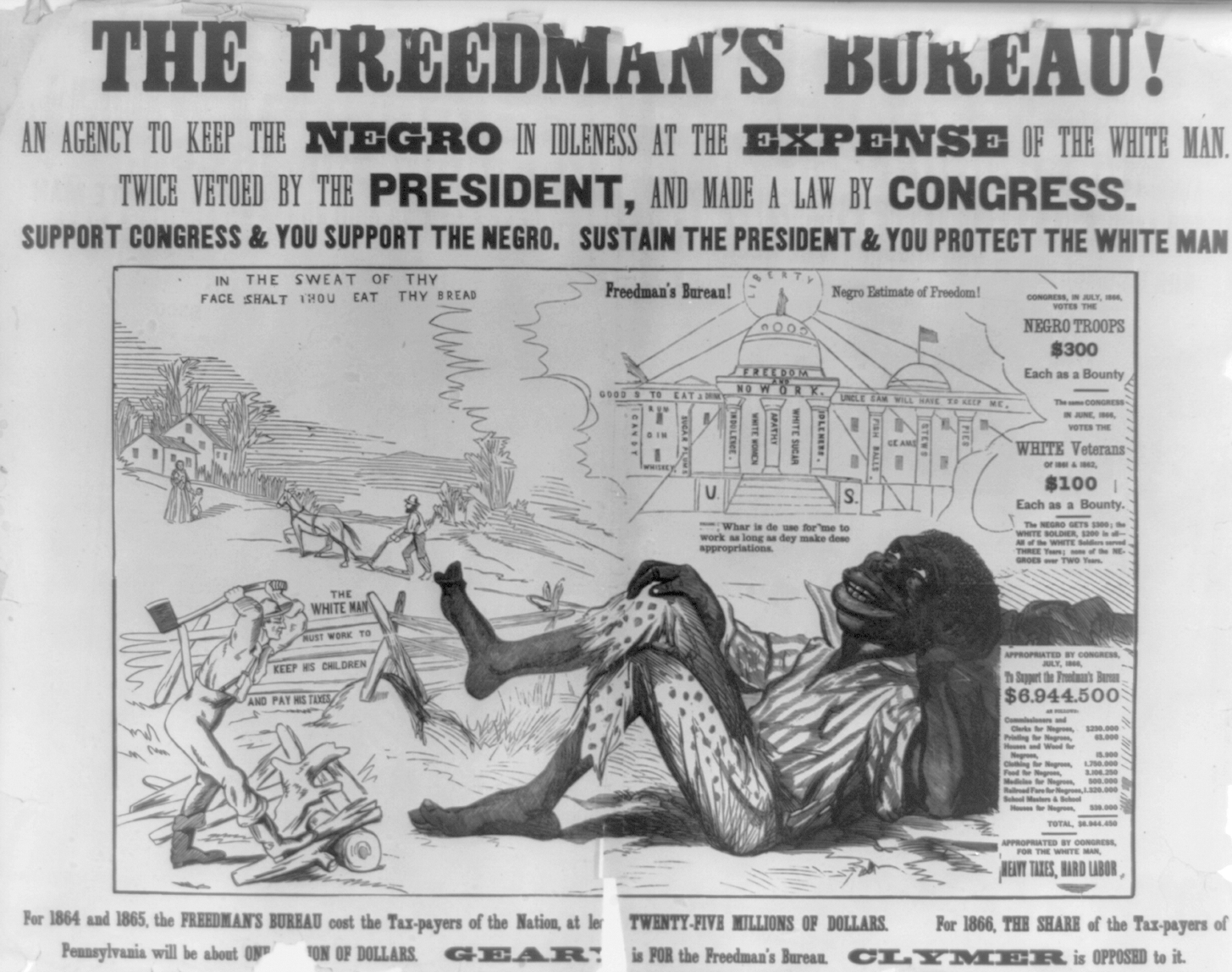
Take for instance an old-fashioned joke about blacks being lazy and eating watermelon. Both are empirically false, but behind them is the reality of centuries of racial hatred and oppression. By laughing at the joke, you are reducing blacks' humanity, inventing realities about them that are wrong, then using that fantasy to punish and laugh at them, all of which is a propagation of their historical suffering - in that this is the precise mindset that apologized for and excused their continued oppression. And you can replace that joke with any joke about women, gays, minorities, etc.
Now, then there was a backlash to all of this, generally known as "anti-political correctness". Much of it was – and still is - likely motivated by defensiveness to the allegation that one is motivated by an unconscious hatred. Because, once it became established that these hatreds were actually wrong, the cultural patterns and habits of mind were still there, whether people wanted them or not. Many in society were essentially walking right into a sort of trap: a massive cultural transformation had just taken place which revolutionized thought, and they were now expected to monitor nigh-every word or thought they had. In this context, cries of “thought police” were not entirely inaccurate.
Of course, there really were no thought police. But there was intense pressure bearing down on individuals to change how they thought and spoke. Yet how else would the transformation, the movement to end these inarguably evil patterns of historical discrimination, prejudice, oppression – all of which essentially being forms of group hatred, come to pass? It would have to be messy. There would have to be dispute over what was and was not an expression of hatred?
Many felt that the charges level against them were unfair: how could some simple comment – mere words – a joke! – prove that one was what would come to be one of the most damning charges in modern life, a racist? Well, now we’re faced with a definitional issue. What is a racist? A slave-owner was certainly a racist. A Nazi was certainly a racist. A KKK member was certainly a racist. Uncle Bob, who openly referred to blacks as “ni**ers” was a racist.
But what about the coworker who merely said she was afraid to go into black neighborhoods? What was she expressing? What was she feeling? Did she feel that black people were somehow more dangerous than whites? Did she hear all the reports about black crime and assume that the neighborhood was more dangerous than it really was? Was she subject to any of the many cognitive biases that we know contribute to false cognition about racial issues?
Add to this her genuine belief that she was in no way a racist. The idea that she might be disgusted her! Yet what if she was just a little bit wrong? What if she had grown up with mistaken ideas, assumptions and prejudices about black people? Maybe her view of race relations was informed by old patterns of racial bias and misinformation – yet she was consciously convinced, and firmly believed that racism was wrong? She never took an ethnic studies course. Sure, she watched Oprah and understood that much of our history had been whitewashed, groups marginalized. But she didn’t have the “chops” to properly analyze every last one of her own views and assumptions before they flew out of her mouth.
And now she’s being accused of racism? Well, this can’t be. Because she’s not. So what she said must not have been racist. How could it be, when a non-racist person said it? Everyone is just being too sensitive. It is they who have the cognitive bias. They have become so overtaken by their own white guilt that they are now attacking their own race. In fact, it is they who are the real racists. Why are they so obsessed with race? Why do minorities get to make sweeping statements about whites? This is reverse-racism!
Maybe some of what she is saying is true. Maybe white guilt has driven people to be a bit too cynical. Maybe some of it is simply rebelliousness – parents would surely attest to this among teenagers. (How many charges of racism were made towards parents in the sixties, and dismissed as teenage rebelliousness?)
In the end, we don’t really know what lurks in the mind of every person. We have a hard enough time knowing what lurks in our own minds. But these patterns do exist: these biases, these prejudices and assumptions. And we know that they have formed the backbone, the cognitive framework, for historical hatreds. We simply cannot take them lightly. We must investigate them and provide push-back when they are written off as harmless or insubstantial. On their own, or depending on what exactly they are expressing, they might be. Under examination, it may turn out that they meant nothing. But it also might be the case that they represented a real instance of cognitive bias, some tendril of hatred, no matter how small.
One thing we must be very careful of, if we are to ultimately continue to make progress against what may be a universal human susceptibility to patterns of hate, is to avoid alienating the very people we wish to teach. Because teaching is truly what we are doing, regardless of how we go about it. Whether it is to politely suggest, or firmly denounce and shame, the ultimate goal is always to stop the behavior, to cut off the falsehood before it can grow any larger.
Many will say that the problem is mostly gone. It has been decades now since explicit expressions of hatred have been considered shameful to the overwhelming majority of Americans (homophobia is just now getting there). So too, one would assume, the practical consequences of hatred – that which effects people’s ability to acquire housing, employment, and otherwise live in society as equals. Certainly cases of discrimination have dropped substantially. We aren’t there yet, and it is an ongoing struggle, but most people seem pretty fair.
Yet are they? One can be an avowed anti-racist, and still be subject to cognitive bias. One can feel that all gays are perfectly nice people, but worry that there is still something “wrong” with them. One can vote to limit their rights. One can feel that blacks are no different than whites, yet have bad “cultural habits”. One can then choose to avoid their application.
More damning, one can fail to fully embrace attempts by society to rectify historical wrongs. If one opposes more money for poor (read: black) schools, or welfare benefits, or healthcare – to what degree might cognitive bias enter into the picture? Surely there are principled philosophical arguments to make against such endeavors. But to what extent would opposition to such programs be informed by the presence of cognitive racial bias? If one feels that blacks have a “culture of laziness”, then would one be less likely to support the provision of social services perceived to be offered to blacks rather than whites? Surely they would. Yet because this doesn’t mean that opposition to such programs is motivated by cognitive bias (the tendrils of historical hatred), as there are perfectly reasonable arguments against these programs (they are too expensive, ineffective, etc.), the determination of the extent to which their opposition is due to bias is extremely difficult.
Suffice it to say, because of the possibility that bias may still play a considerable role in politics and the structure of government, the stakes are quite high. It is with this consideration that those who understand the fundamental role cognitive bias has played in historical hatred approach issues of race, gender, class, sexuality, etc. with heightened skepticism. Furthermore, the skepticism increases when any are involved who are known to have an opposition to attempts by society and government to correct for historical patterns of oppression through regulation or social programs. Precisely because it is difficult to know one’s motivations – whether principled or biased, it becomes all the more important to take a skeptical stance. This is warranted by the mere possibility that one’s cognitive failings might be informing their determination of highly consequential social outcomes. This is all the more true when the subject in question is not merely a voting citizen, but a public figure with a much determinative influence.