Showing posts with label naturalism. Show all posts

Saturday, December 15, 2012

Responding to Tragedy

Immediately following the tragedy in Connecticut, we began to hear the age-old rhetoric of retribution and bloodlust.  It came in two pieces, sometimes expressed together, sometimes not, but both logically dependent on one another.  The first, a reaction of disbelief and exasperation at a seeming lack of causality:  "Who could do such a thing?" The second, an impulse to revenge: "I hope he burns in Hell for this."

In the first response, the question is empirical.  We actually have a pretty good idea of who do such things.  They are usually mentally deranged, due to some combination of mental illness and life trauma.  It is very rare that there weren't clear indications of mental distress in their lives leading up to the violence, whether known prior by some or hidden away to be uncovered in subsequent, post-event inquiries.  In these cases the question is simply not one of rational action.  Statements like "I had a bad childhood", or "I know lots of people  (with autism, schizophrenia, etc.) who would never do such things", have no real value.  These disorders are large spectrum, as is human experience.  There are different types of trauma, and everyone experiences trauma differently.  Some people may have the temperament to triumph, while others get pushed in other directions. 

What we do know is that mental disorders and trauma have real effects on one's ability to reason, and introduce elements of emotional, behavioral and cognitive impairment.  I'm aware of no sociopath ever having existed who had no history of mental disturbance or life trauma.  If one did, he or she would be exceedingly rare.  In any event, the question would then become how their personality and cognitive capacities were able to form in such a way that committing heinous acts made rational sense to them, in light of the fact that every waking moment, from one's first life breaths, of human socialization in every society in the world has designing effects on our person hood.  According to the theory of Societal Capital, such a "normal" person acting so abnormally would be an exceptional outlier.

The second response, calling for bloodthirsty retribution, is logically dependent on the question in the first response going unanswered, and an assumption of free, rational agency.  It is reliant both on on there being no good explanation for the individual's behavior, and the assertion that the individual could have done otherwise and yet chose not to do so.  As I have tried to show, we know enough in general about human behavior to be able to assume that a a logic reason for the individual's behavior. 

The second assertion, about free will, is more difficult.  We live in a universe of cause and effect, and it is near impossible to speak of anything existing outside that framework.  Yet because consciousness is so complex, and seemingly impenetrable in terms of its causal mechanisms - who can measure the thousands of connections firing from billions of neurons at every second of waking life? - it is often claimed that within this mysterious process there could exist uncaused phenomenon.  To put it more simply, the notion of free will is dependent on our being able to act in ways that are free from causality, and thus determine choices ourselves, instead of having them determined for us by the laws of the universe. In this way, we are supposed to be literally supernatural creatures, unhindered by the constraints of reality that everything else - rocks, trees, animals, etc. - are forced to obey. 

Incredibly, not only are we imagined to be capable of transcending the physical, spatial world, so too must we transcend the direction of time itself, effecting past events as we would (from some time in the future, if only seconds) like them to have been, freed as it were from the constraints of having had prior reasons for what we had done.   A question illustrates this paradox.  Can one act for no reason?  That is, can one develop reasons for making choices that themselves have no reason?  For instance, if I were to decide to make myself a cup of coffee, I would ostensibly have had a good reason for having done so, such as desiring caffeine.  And this reason would have been based on prior reasoning - knowledge of the effects of caffeine, knowledge of how to make coffee.  To the extent that my ultimate decision was informed, either by conscious cognitive processes, or unconscious emotional, behavioral, etc. processes, there was a reason for it.  In fact, it is impossible to imagine a human choice that is not based on a prior causal process.  While it is certainly true that we can never know exactly what all of the causes are in a given choice (conscious, unconscious motivation, etc.), there is no way to explain an action without resorting to causation.  This seems indeed a tautology, but only in the sense that time moves forward, based on prior interactions within the universe.  To assert that consciousness could somehow allow one to step beyond this reality, and to do things that were not caused, is a basic violation of physical law. 

The claim that someone "could have acted differently" could have two meanings.  The first is simply an acknowledgement that reality unfolds according to prior events; the tree would not have fallen had there not been a wind storm; the dog would not have bit the child had he not been abused as a puppy; things could have been different had prior events been different.  

Yet somehow, in humans, we allow often ourselves a different, supernatural meaning.  We say that one could have done differently had things been exactly the same.  This second meaning is practically quite useful. It serves to reinforce social norms as it reminds us to think of what is good and bad behavior.  He should have done this or that.  It was great that he did this or that.  These are important reminders both to ourselves and to others with whom we share an ever-evolving social sphere of norms and expectations.  Through this language of ought and ought not, we contribute to a narrative that solidifies social bonds and contributes to a social project in which our basic desires for a fulfilling, satisfying life are closer to being met.  By looking at circumstances as they are, and imagining the possible outcomes of different behavioral choices, we model projections for standards of behavior that we can then hold ourselves and each other accountable for. 

Yet of critical importance to this narrative is a model in which we identify with the individual actor.  It is of no help to our narrative if we cannot imagine ourselves in their place.  When we say an individual ought or ought not do something, we are implicitly injecting ourselves into their position.  After all, it would be hypocritical to say an individual ought or ought not do things that we ourselves do not do.  Of course, none of us is perfect, and often times our moral convictions are mostly aspirational.  In this way though, we are still injecting ourselves into the role of actor, even with the caveat that our projected selves might not be perfectly suited to the role.

In our projections of our selves into the role of actor, reality often gets in the way.  That is, the individual is often quite a different person from us.  To the extent that this is true, our attempt to reinforce a social narrative is weakened; a story about what I would have done is a story about what everyone should do, and thus a valuable model.  However, a story about what someone very different than I am introduces complications.  Effective models are clear and easily understood.  Effective social models are those in which everyone can imagine themselves a part of.  Everybody likes a good story.  We want to identify with the protagonist.  Ought and ought not stories are no different.   It takes a great deal of mental energy to try and comprehend the mind of a psychological stranger.  We therefore tend to imagine others as similar to ourselves.  The cognitive efficiency of doing so, combined with the handy utility of reinforcing the larger social normative narrative places pressure on us to simplify what are usually very complicated stories behind tragic actions of individuals.

While a more nuanced approach to reflection upon tragic human behaviors such as mass shootings, one that acknowledges the minds of such individuals as very different from our own, and assumes that there is indeed a causal mechanism in place that led to their actions, requires more patience and more mental effort to quiet our more primitive neuro-physiological responses, I believe it ultimately allows us to not only attain a more accurate picture of reality, but indeed to further a stronger social narrative that is based less on the weak bonds of illusion and naivete about human nature and more on a sophisticated understanding of what it means for all of us to be human, fully-caused - and flawed - souls.  We are thus ever more prepared in very real ways for active compassion and calm wisdom about the tragedies of human behavior.  We no longer need to bother with the empty and nihilistic feelings that come from pointless questions such as "Why would any one do such a thing?", and instead allow ourselves to experience the tragedy as we would any other natural calamity, without unnecessary blame but instead a singular focus on natural grief and constructive reflection upon what we as a society might be able to do to limit such future tragedies.


For those interested in exploring more of what the Naturalistic wordview has to say about free will and human behavior, check out Tom Clarke's excellent Naturalism.org


Sunday, November 25, 2012

Stuck in Society With You

Libertarian Mathew Kahn argues that climate change is real, however in our attempts to adapt to it, we ought not incentivize irrational choices, such as building levees so that people can continue to live in low-lying areas.

Humans are incredibly irrational decision makers.  Assuming they are not underlies our greatest tendencies to apologize for inequality and injustice.  We tell ourselves, "It is their own fault.  They could have done differently.  They made a rational choice."  Yet again and again, we see that people do not.  Any businessman who has ever depended on advertising knows this well.  Any politician who has calculated his message knows this.  Any one who has struggled with diet, a budget, or quitting smoking knows this.

The problem is that it is near impossible to understand the irrational drivers of our own behavior.  With great work, we can find ways to counteract this irrationality, but it is largely in the darkness that we work.  God knows what it is that is driving you to take that bite of the fattening donut?  Your bad childhood?  The time you spent reading Zorba the Greek?  An impulsive temperament?  All the brain research and psychology that exists can only give us the faintest hints.  The fact is that the causal mechanisms at work in any given second, when each of our billions of neurons involved in the choice is firing off with its 7000 connections, making up the entirety of consciousness and unconsciousness, is unfathomable.

We learn to counteract the irrationality, in order to supposedly act more rationally.  Yet are we really acting more rationally, or have we simply been able to design habits for ourselves that have out-maneuvered the negative impulses?  "Rationality" is merely shorthand for *choosing the correct option*. 

In a fundamental way, society can be thought of as a vast, evolving system of habit formation.  At the individual level, we feel very rational and "in control".  But at the macro level, patterns emerge that tell a very different story.  Instead of individual, rational actors we see the products of systems such as family, peer relations, education, government, and social norms that conspire to design not only an individual's ability to make correct choices, but - more foundational still - an individual's ability to design for himself the ability to make correct choices.  Thus, the choice as whether to eat the donut or not is dependent not only on an individual's choice, but the individual's prior ability to have designed for himself the ability to make that choice.  For instance, after week three of having successfully fought the 8am donut cravings, the choice to not eat the donut will be far easier than it was on day one.  (I'm not actually hip to diet design, but you get my point: successful routines for habit formation are successful because they are routines, not individual, isolated choices).

So, does this mean that no one ever ought be held accountable?  Should we all get to make base, easy, immediately gratifying decisions with no concern for external effects, with the excuse that we had no control?  This is generally the first response many have to the argument I have presented.  Yet this is a case in which patient, nuanced thinking is called for!  If you will recall, I spoke of the element of social design in individual decision-making.  Just as we would set for ourselves a course of habit formation that we hope will bring about correct decisions, so too we set for society a course of policy that we hope will bring about correct social behavior.  So too we design our formal and informal social institutions.  The idea is to look ahead and put in place systems that we hope will flourish.  This utilitarianism makes the question of blame somewhat irrelevant.  Policies ought be designed that foster, through the mechanics of incentives, social good. 

If the question was mere utility, it could be answered by either side of the aisle.  It could mean lowering taxes on the "job-creators", harsh sentencing for criminals, or letting residents in low-lying areas suffer rising tides without assistance - the right-wing model.  Or it could mean a more left wing emphasis on the benefits of redistribution, leniency, or shared burdens.  To the extent that these are subjective, evidence based controversies, the chips will fall where they will.

But what is removed from the equation is the moral posturing that has traditionally been wrapped up in left vs. right politics: no one is to blame.  So, even if we will all benefit from "job-creators" getting tax breaks, they are not inherently morally superior by their good works.  They have merely been the recipients of social circumstance that have allowed them - being in the right place at the right time - to do good things.  We can argue until the cows come home about the extent to which their work is actually good, and how much money is the right incentive for them to continue whatever it is they are doing.  But in the end, they are products of *us*, as the saying might go, "we built them".

And so too did we build those who, at the other end of the spectrum, we now see are playing out what society has designed for them in the form of irrational, self-indulgent or poorly-planned behavior.  We can also argue about the extent to which these people's behavior is all that bad, or whether by circumstance it appears so (the "negligent mother" may indeed be working two jobs and thus have no ability to look after her delinquent son).  But regardless, again, "we built them".  So when designing policies that, in the interest of deterrence, or disincentivization, will create hardship on individuals caught in such a tangled web of causality, we must admit that, as they are not the originators of their actions, rather society is to blame, their hardship is a form of Earthly purgatory. 

It may allow us to sleep easier at night believing that the many who suffer do so at their own choice.  But it is a convenient fiction. 

I confess much of this argument is aimed squarely at the right, who though at times concede some degree of social determinism, generally downplay it, if not deny it completely.  After all, who then, if not government is going to help enfranchise those whom society has failed to give an equal design?  The utilitarian case for less government action is rather weak.  And, more noticeably, a great portion of right-wing framing is not utilitarian at all, but rather a direct appeal to an assumed agency ("I built it"), or merely a sense of unfairness at the notion of social design - redistribution is unfair because well, "I built it".  The truth is that, were government indeed pared down to only its most basic elements, poverty and class-mobility would not suddenly cease, or even diminish.  The supposed moral hazard in provision of social services, or even such things as student loan forgiveness - as former candidate Romney complained about -  is a convenient excuse for a callousness that comes from not seeing individuals as determined by social design, whose ability to make rational choices is constrained by a prior ability to develop in themselves this ability, and so on, outwards into the fabric of socialization.

So I'm all for utilitarian incentives.  But when their effect is serious hardship in the lives of real people, we must ask ourselves if there was not another, better way to have both incentivized good choices, without having allowed such trauma to have occurred.

Wednesday, November 21, 2012

Have Faith in Atheism

It must be nice.

That is, having faith in God to pull you through.  Having faith that there is a plan for you, having faith that there is a meaning in the universe and a reason for everything.

Of course, no one is without doubt.  Even the most devout believers must at times struggle to hold on to their faith.  But they have a faith to hold on to.  They have a deep and enduring story that, at least in theory, accounts for everything in their lives.  It tells of a universe designed with them in mind, with special details and guarantees that promise not only an ultimate reward in the afterlife, but a better life now.  It spins tragedy into harmony, grief into glory, pain into love.  There may not be any specific answer to specific problems, but in faith it is promised that a deeper purpose exists, and faith will carry one through.

Unfortunately, I have no such reassurances.  As an Atheist, I have no reason to believe that there is any higher purpose to my life.  The universe was not designed with me in mind.  It simply exists, according to a relatively limited set of physical laws.  These laws have set in motion an unbelievably vast and complex series of interactions, my body and mind composed of elements forged in the ebb and flow of stellar supernovae, brought together by interactions of gravity and electromagnetics, propelled by energies as distant as the Milky Way galaxy within which our Sun orbits, and as close as  the very bonds that hold my sub-atomic particles together.  Within this vast cosmic dance, I do my thing.

So, what is "my thing", and more importantly, why do I do it?  A question for the ages, right?  What is the meaning of life?  What is the purpose of life?  Having already declared my Atheism, I have already submitted that there is no purpose.

Seven years ago, I tried to kill myself by overdosing on prescription pills.  For twenty five years I have gone about my daily life in varying degrees of chronic pain.  Sometimes it feels like the walls are closing in all around me. It is all I can do to focus my mental powers like invisible rods and struts, holding back the vice grip of gnawing muscle tension.  At other times the pain is barely noticeable, lurking in the background but easily ignored.  My life has been torn apart; who knows how it could have been had I not had that surfboard accident in 1989.

In my darkest moments - which thankfully, are much further far and in-between than they used to be before the suicide came as somewhat of a watershed - I do not have God to comfort me.  My footsteps are my own.  I cannot bend my knee and take solace in a faith that there is a purpose to my pain.  There is no "lesson" that I am to learn.  There were no sins that I am paying for now, redeemable for a ticket into heaven when I die.  There is only the cold machinery of the universe, of which I have been on the receiving end of misfortune. 

It is true that we all need purpose.  I know as well as anyone what it feels like to reach the end of the tether which attaches me to my will to live.  We need a reason to live.  We need a reason to push on despite horrible pain, anguish and tragedy.  We cannot live without purpose.  Purpose is what gives our lives beauty and reminds us in moments of challenge that there is much to be thankful for.  Purpose is what drives us to be better, more honest, more caring, more supportive people, to do better things, to set ambitious goals and struggle to accomplish them.  Without purpose, our lives become aimless and superficial, stumbling over minor obstacles and sidetracking us towards short-term satisfactions.

If there is no God, or supernatural story within which our lives are fixed, which gives ultimate purpose to our lives, carrying us through the pain and propelling us towards the fulfillment of our best natures, how is it that the Atheist is not destined for all that accompanies a life devoid of purpose?

Some might take solace in the notion that it is Atheism itself which destroys purpose.  After all, how can one ever prove that there is no God, or supernatural force that guides our destiny?  Partly a semantic issue, Atheism is not incompatible with such agnosticism.  It can as easily be said that one can never really prove a negative.  Two plus two may equal four this time, but no one can know the future.  Just because there is no evidence for God at all, and an inexhaustible supply of evidence for causal mechanisms in the natural world that need no creator to be explained.  Aside from the creation of natural laws themselves, we have every reason to believe they are enough in and of themselves to explain everything that exists in the universe.  Agnosticism should be the basis not only for supernatural questions, but our stance towards reality itself.  However, it is merely a baseline.  Acting with purpose requires so much more.  While nothing may be able to be completely disproven, we live in a practical world and Occam's Razor requires us to make practical decisions.  I may not know that two plus two will always equal four, but I can't sit around waiting to find out.  There is just as little purpose in agnosticism as there is in Atheism.

While Atheism can give us no purpose, it makes a stronger statement about purpose in general: that we make our own purpose.  In fact, in Atheism we see that all religious faiths (all but one of them being untrue, by default) are in fact man-made.  Therefore, the purpose that they purport to offer the faithful is man-made as well. 

Unfortunately, as a non-believing Atheist, I cannot simply adopt the purpose of the faithful as my own.  And thus I cannot collect the rewards - the comfort, the inspiration.  And so I must find my own.  Limited to the natural world, I cannot simply invent convenient stories, hiding away in the mysticism that "everything happens for a reason", knowing full well that it doesn't.  We offer no such hubris to the billions of animals that die of starvation or predation each year in the wild.  The reason?  That's life.

But maybe the stoicism of the natural world offers us a clue in how to make sense of a harsh reality.  It has been theorized that at root, humanity's existential despair comes from our larger cognitive capacity.  Our brains have evolved as sense-making machines.  And yet, when faced with senseless tragedy, we are at a loss.  Our brain is a hammer looking for a nail, and unfortunately one does not exist.

Or does it?  In our quest to make sense of the world, we have invented powerful mythologies with the ultimate goal of finding purpose where there seems to be none.  It is a highly useful story to tell, yet everyone knows all but one are wrong - Atheists simply claim that one is wrong too. 

But what if we had a story to tell about purpose that didn't require the supernatural.  Is there not enough to live for here on earth?  Is there not enough to get us through the tragedies, the hardships, to inspire us with ambition, to want to make the world a better place? 

When I look into the eyes of the woman I love, I feel a purpose.  When I laugh along with my two daughters, I feel purpose.  When my family and friends remind me of our shared memories, I feel a purpose.  When I see my smiling neighbor walking past my house everyday after returning from the bustop after work, I feel purpose.  When I pull weeds in my garden I feel purpose.  When I finish writing a new song with my guitar I feel a purpose.  When I listen to a new record that inspires me to go back and write again, I feel purpose.  The roadrunner that struts across my garden wall gives me a sense of purpose.  The way the tendrils of the grapevine reach out in slow motion for a new handhold, I feel purpose.

Of course, I will forget all of these things.  I will become overwhelmed.  I will allow negative thoughts to creep over my consciousness and push away all of the good things in my life.  But time will pass, and I will overcome.  I will be reminded of all of these things that give me purpose, and I will embrace them.  I will have faith in their ability to change my life.  I will have faith that they do indeed exist, that I will come to feel their effects again.  These things are real.  They exist in the natural word.  I can touch them.  I can make real connections with them.  I have faith in these things, and through them, I have faith in Atheism.


Sunday, November 4, 2012

Pinning Down Will

A big problem in discussions of free will is language.  One of the sticking points is often the way we talk about the meaning of will, or volition.  The common intuition that we all have free will is based on the observation that most choices we make are in the context of there being many possible options.  I could have eggs for breakfast, but I could also choose to do an endless number of other things.  I have the freedom to decide which.

In explaining how a computer works, it would make sense to say the computer "chooses" from a set of variables, according to a predetermined set of parameters. When IBM's Watson computer famously competed and won against Jeopardy's best contestants, his responses were accompanied by the relative probabilities his system gave alternate responses.  Did Watson have the "freedom" to make other responses?  No, he did not.  He chose the response that made the most "sense" to him, based on predetermined parameters.

I think it is important to describe will as the act of merely choosing between competing options. In doing so, we make the notion of freedom irrelevant, instead describing the fact that choices are dependent upon predetermined parameters, ultimately arising from impulses outside of, and prior to, our conscious awareness. Just as no one would describe Watson's decisions as anything like "free", no one should describe our choices as such either. The only difference is that our impulses are infinitely more complex and (presently) unknowable.  


Yet to the degree that those impulses are knowable, they are deterministic.  That is, when analyzing why we make any particular choice, wherever we look we see a will that is dependent on predetermined parameters.


Saturday, October 27, 2012

Future Dishwashers of America

I teach the messed up kids.  OK, not all of them are messed up.  But a much higher portion of them are in my classes, as I teach subjects that, although core curriculum, are generally not college-track.  These are the kids that don't do their work, talk too much, have little interest in school as a priority.  Instead of taking notes, they like to break pencils and make jokes with their friends.  Anything they can do to disrupt the lesson and distract the teacher means less time spent focusing on school work.  These are students for whom passing the class with a bare-minimum D is all that matters.

Some of them are angry and mean.  But most are nice enough.  They just hate school.  Some of them truly struggle with reading and writing, and repeated failure has made them frustrated and bitter.  But most simply lack the "grit" to succeed; they cannot stay focused and often give up on completing even the simplest of tasks.

While they comprise maybe half the students in each of the subjects I teach, the other half of the students are generally hard working and genuinely interested in getting a good grade, respecting the class rules, the teacher, and their fellow students.  Many of them struggle as well with reading and writing, but unlike the failing students, they have the grit and determination that the others lack.

I am deeply convinced that the polarization in America today among liberal and conservative outlooks can be boiled down to how we view the nature of human choice, and the process of human development.

A local business woman in my neighborhood like to place bold right-wing slogans in large print in the windows of her dress shop.  Her most recent was "The government didn't build my business, I DID!", an obvious reference to the Republican campaign attack on Obama's speech in which he argued that government and social infrastructure is integral to a successful economy.  An obvious rejoinder to her slogan would be to point out that her business relied on everything from the clean streets and stoplights outside her doors, to public school and post office up the street, to the parks and libraries across town, to the well-regulated, quality neighborhood buildings, clean water, police patrolled safe streets, firefighters putting out fires, interstate highways bringing her goods, etc.

But at a deeper level, her impulse is representative of conservatism's emphasis on individual responsibility, and the corollary claim that people get what they deserve because of the choices they make.  She worked hard to build her business, and shouldn't have to pay for government expenditures on those who maybe made poor choices.  She was never (in her mind, infrastructure aside) looking for a "handout".

I recently had a conversation with a fellow teacher, an older Republican guy, who himself has taught these very same "gritless" students, who make poor choices on a daily basis, have misplaced priorities, and will statistically go on to live lives of poverty and likely dysfunction.  Many will drop out, many will resort to substance abuse, many will end up in prison.  Most will simply live out their lives in poor desperation, creating broken homes and generally living with high levels of stress and exhaustion.  "I tell my students," he said to me, "don't hate wealthy people.  They worked hard.  You can be wealthy too.  Just do your work.  Go to college."  It's a good message, but its optimism somewhat deceptively hides an ugly truth.

To conservatism, people have no one to blame but themselves.  They could have studied harder.  They could have put their own pain aside.  They could have reached down deeper, focused harder, sacrificed more, and put in the work to become successful.  History, they'll remind us, is filled with examples of people who have come from little, faced enormous odds, and found a way to overcome.

Yet these are exceptions.  I see it daily with my students.  Many of them have terrible stories, and yet they manage to buckle down and keep pushing to success.  But the vast majority of those who truly face disadvantages - broken homes, negligent parents, wayward peers, etc. - do not find success.  For them, the best they can do, amid the multitude of teenage distractions, is keep their head above water, struggling to complete just enough assignments to pass their classes by a hair.

So what is it about the exceptions, those who diligently do their work and seem to have a vision for themselves of a better life, that is different?  With 130 students, it is impossible to know all of their stories.  But there are many clues.  They tend to have more supportive parents.  They are more mature.  They tend to have a quietness about them that speaks to lower levels of stress coursing through their brains.  They are often preternaturally more introverted, more academically oriented, seeing a definition of self in terms of intellectual, rather than social pursuits.  They have a better sense of self-esteem, not feeling the need to measure themselves up against others through constant attention seeking.

In poor, disadvantaged, broken communities, seeking external validation means adopting what are often destructive and unhealthy norms.  Internal validation, unlike external validation which is subjective, and a constantly moving target, is more objective.  It gives one reliable, immediate feedback against intrinsically rewarding goals that are self-reinforcing.  Making art, reading books, playing sports, getting good grades involve the building of skills that are not only easily identifiable but progressive and generally highly valued by wider society outside of the local, dysfunctional community - especially that of superficial and status-driven teenagehood.  And in a poor neighborhood, where so many peers are going to have lower capital and developing dysfunctional coping mechanisms, external validation is a constant driver of community destruction.

It is hard to disentangle the genetic and environmental factors in either students who manage to "rise above", or those who do not.  But it is undeniable that it is developmental forces that have created them.  They cannot be said to be "making their own choices" in a sense in which their actions can be separated from their background, life-experiences and temperament.  Whether at 16, 12, 7 or 5, each student has a specific developmental history that is entirely dependent on his own genetic and environmental story.

When zooming out to a larger, macro social level, the pattern is all the more distinct.  Socio-economics is completely determinative of a student population's exhibition of successful or unsuccessful characteristics.  At schools in which parents are better educated, have better jobs, and whose families are more intact, the student populations will always be much more mature, have more self-control and emotional management, have better world knowledge, better cognitive skills, better academic performance.

Can these students be said to "choose" their developmental abilities?  Can they in elementary school?  Middle school?  High school?  They can't choose their genes or their environment.  They cannot be said to have chosen their development of emotional and cognitive skills.

So how can they be said to "choose" their ability to act beyond their developmental capacity?  How can they be said to possess the ability to have more self-control than they do?  How can they be said to have the ability to choose to have more intrinsic than extrinsic motivation?  How can they be said to have the ability to be more loving and compassionate than they know how to be?

There is a classic Mad TV skit in which Bob Newhart plays a therapist whose basic technique is to simply tell his patients, "Stop it!  Stop doing it!"
While there is some truth to the notion that such simple advice can be effective in certain situations, the basic premise, that all manner of psychodynamic and developmental patterns of conscious behavior can be reduced to such a simplistic either or choice, is absurd.  Over 100 years of psychological research, as well as the burgeoning field of neuroscience provides ample evidence that such a view is laughably naive.  Equally, social science research into the enormous variety of factors that contribute to the ways we end up living our lives paints the same picture at a social level.  If it were so simple, nearly all social problems would be neatly resolved, billions of dollars and countless hours of productivity would be spared.  Nothing less than world peace would be accomplished by the simple admonishment, "Stop it."

Who could believe such a silly notion.  Well, conservatives, for one.  Again and again, this basic premise underlies many forms of conservative rhetoric.  I built it.  I pulled myself up by my own bootstraps.  I played by the rules.  I worked hard.  I never asked for a handout.  I abstained from sex.  I never did drugs (or if I did, I quit on my own).  I studied hard in school.  I never needed anyone's help.  I found God.  It isn't easy, but one faces a choice between doing the right thing and doing the wrong thing.  You have no one to blame but yourself.

All of this sounds good.  And these are mostly good words to live by.  But, even though they feel true, they aren't.  The choices we make seem simple at the time, but our ability to make them is dependent both on a lifetime of development as well as the specific situation we find ourselves in at any given time.  Even though feel as though, at any given point in time, we are completely free - seemingly omnipotent - agents of every choice we make, we are just the opposite.  We are merely the conduits, second by fleeting second, of all that has gone before, into all that will come to be.

This is a profound perspective.  The absence of free will, classically defined, strikes many as utterly contrary to common sense.  But, just as it was once common sense to believe the Sun circled the earth once a day, once the evidence is gathered, and the theory becomes better supported by fact, it is increasingly understood with a "new common sense".

There are a number of claims made in opposition to the notion that we do not have free will, but they are rather easily dispatched.  The first claim is often that this leads to fatalism; if we are mere conduits of time and biology, then what is our purpose?  Well, what purpose is there anyway?  Any evidence of purpose with free will is the same without.  This is because although we may be conduits, our brains have evolved a consciousness that is dependent on a model of ourselves as agents, functioning within a limited range of knowledge of choice at any given moment.  There is a vast, incomprehensible reservoir of stimulus operating on every conscious thought that arises within us.  We will only ever be capable of understanding a small fraction of it, and most of us will spend the majority of our days not giving it a second thought.  In fact, one of the strengths of consciousness is the ability not to get caught up in self-reflection and over-analysis of one every thought.  Many mental illnesses, such as depression or anxiety , are actually marked by a tendency to over-think one's problems, real or imagined.  People with a capacity for minimal self-reflection can often be much more successful, focusing only on the positive aspects of life, as opposed to both the positive as well as the negative.  In general, while we do not have free will, we cannot but act as though we do have it.  We are thus subject to the same pleasures and pains that would drive our behavior and give us purpose regardless.

A second common claim against the idea that we don't have free will is that personal responsibility would disappear, and we would thus have no mechanism for justice or social order; people would be free to do what they wish, with no accountability, being as they could no longer be considered free actors.  The first part of this claim is certainly true; personal responsibility, in the sense that one could have done differently, does disappear.  But the latter does not follow, that social order would break down.  The concepts of deterrence and reward would still apply, as would the utilitarian notion of protecting society from the dangerous among us.  Interestingly, the concept of deterrence and reward are actually behavioral concepts that rely on an certain absence of free will; if one truly has free will, at least the psychological effects deterrence and reward would not exist.  Obviously, they do.  We do not have to believe that one could have done otherwise to allow the intelligent and hard-working to be rewarded for their productivity.  But we would acknowledge that their ability to work hard and apply their highly developed cognition and self-control was not consciously made, but rather the product of genetic and social forces that created in them the capacity for behavior that society holds in high regard.  Likewise, we do not have to believe one could have done otherwise to punish criminal behavior, or provide more limited pay to those who have only developed limited cognitive capacity, or the capacity for much self-control.  But we would acknowledge in them as well the centrality of genetic and social forces, and thus ensure that their lives are as meaningful and dignified as possible.

I can't simply tell my students to "Stop it!"  Although I certainly do, on a daily, hourly basis.  But I am merely one behavioral mechanism in their river of development.  With the current level of resources at the disposal of government, acting as an agent for larger social policy, one teacher can only do so much.  When my students leave my classroom, when they leave my school, they will return to the environment that created them.

In a recent conversation with a couple of well-intentioned, yet struggling students, I was described home lives that were developmentally crushing.  One child described being yanked about by a father high on methamphetamines.  His later conflict with a step-father drove him to rebellion in middle school.  To this day he struggles to find his priorities.  All day long, his teachers have told him to "Stop it!"  But after talking with me, the next day something in him beamed with intrinsic desire to be successful.  He needed me to listen to him.  It was by no means everything he needs, but it was a start.  Another student told me everyone in his family has been to prison (likely for drugs).  He does no work in school, and spoke of being depressed.  But he has never wanted to do drugs himself, seeing how it affected his family.  After we spoke, he too expressed an interest in finally doing enough work to at least pass the class.  He told me he felt like none of his other teachers listened to him.  They were probably too busy telling him to Stop it!  In a classroom of 30 students, there isn't much time for anything else.

If a student doesn't work hard in school, his prospects for success in life are severely dimmed.  Society is rife with inequality.  Those from disadvantaged backgrounds are much more likely to remain disadvantaged.  Those from privileged backgrounds are much more likely to remain privileged. 

In a recent column, Steven Pinker described how conservative thinkers such as Thomas Sowell and David Pinker characterize the right-wing view of humanity as having
a Tragic Vision of human nature, in which people are permanently limited in morality, knowledge and reason. Human beings are perennially tempted by aggression, which can be prevented only by the deterrence of a strong military, of citizens resolved to defend themselves and of the prospect of harsh criminal punishment. No central planner is wise or knowledgeable enough to manage an entire economy, which is better left to the invisible hand of the market, in which intelligence is distributed across a network of hundreds of millions of individuals implicitly transmitting information about scarcity and abundance through the prices they negotiate. Humanity is always in danger of backsliding into barbarism, so we should respect customs in sexuality, religion and public propriety, even if no one can articulate their rationale, because they are time-tested workarounds for our innate shortcomings.
This Tragic Vision might also be summed up as the Stop it! vision; the choice between hard-work and sloth, barbarism and civilization, sin and sainthood, comes down to a simple choice.  The simplicity of the choice implies an ease which needs to complex social science or psychology to understand: that who make the wrong one have made a choice and thus must face the consequences.  In this vision, inequality is not structural, but rather personal.  Thus, it dismisses any sense of collective culpability, either in contributing to the original inequality, or the failure to adequately correct for it.

The Tragic Vision is built upon intuitions, and denies mountains of scientific evidence that paint a far more complex and nuanced picture of social structure and human development.  It appeals to a certain kind of common sense about the degree of power one has over his own life.  It appeals to basic human emotions about wrong-doing and causality, where the person-hood of others is understood to be the rough equivalent of ourselves, and imagined to be operating within a similar context of agency; if I were you, I would Stop it!  So why can't you?  It appeals to a sense that humans all have roughly the same capacity for action, regardless of genes or environment.  It denies the complexity of human behavior, and the facts we know about development.  It supports the status quo, where millions of Americans who grew up poor are imprisoned, addicted to drugs, or raising children by themselves, their children statistically destined to repeat the story of their parents.  It supports the status quo, where the millions of wealthy and middle class Americans grew up in educated, intact families from nice neighborhoods, with health insurance and safe childhoods filled with enrichment and positive stimulation.  It supports the notion of "I got mine, and I don't have to care about you", by pretending that "you can to" because developmental capacity doesn't matter.

This is the essential underlying belief of the Republican party, who in the current election are enjoying the support of 50% of American voters.  This is what half of the country believes.  According to them, the rich deserve to be rich because they knew how to Stop it!, and the low-skilled, low-income workers deserve to be poor as long as they continue to refuse to Stop it!  As long as this particular brand of common sense, this intuition unrestrained by fact, this unscientific fantasy, is alive and well in America, there will be no hope for my struggling students, who clearly don't possess the capacity to do better in school, despite what some of their teachers, voters and politicians continue to assume about them.  And that is a truly tragic vision.


Saturday, September 29, 2012

Entitled to Our Dependency

A longstanding conservative critique of what it calls "big government" is that by providing services to the public, you increase a sense of dependency and entitlement, as people make a rational choice to do less for themselves and come to expect "handouts" instead. This appeals to a sense that personal responsibility is being destroyed, and frustration by those who neither receive nor want to receive these services, that their tax dollars are being spent on others for things that they should be doing themselves.

Conservatism differs, however, on where to draw the line at government services.  Traditional conservatives have been OK with things like reasonable regulation of food and safety standards, infrastructure projects such as roads and bridges, public education, parks, libraries, etc.  They have also been amenable to spending on the so-called "safety net" - services targeting the poor and needy, designed to roughen the edges of capitalism, granted they are of a temporary nature, needs-based, and unlikely to contribute to a "culture of dependency".

More recently, modern conservatism has experienced a shift, as reflected in the platform of the Republican party and mainstream conservative rhetoric, towards much greater hostility towards government services in general, and a demonization of government itself as well as those who might be receiving so-called "handouts" (the implication being a handout is undeserved, as opposed to deserved benefit).  This type of thinking is much more in line with traditional libertarianism, which at the extremes views all government save military and security concerns as not merely economically ineffective, producing weak growth and stagnation, but ultimately immoral and unjust taxation and regulation of private property.  To this line of thought, a man's money or business is his own, and he should not be responsible for paying taxes to a government that redistributes resources to the undeserving.

Interestingly, the political philosophy of libertarianism shares its name with the philosophical position on human agency known as libertarian free will.  Libertarian free will, an increasingly minority view in the philosophical and scientific community, assumes that the human mind, owing to the fantastic complexity of consciousness, has a special property that exists no where else in nature, namely that humans are able to make choices entirely free from prior causes or impulses, or at least free enough that something like free will can be said to exist. 

This is in direct opposition to the views called determinism or compatibilism, both of which acknowledge that human do indeed make choices, but that those choices originate in prior causes.  Ultimately no different than computers or anything else in nature (as uncomfortable the prospect may be to some), these prior causes extend back in time in what is referred to as a "causal chain", and which human conscious can ever only be only partially aware.  Thus, when we make choices, we understand some of what impulses have given rise to our final decisions, but because we are only ever aware of these impulses after the fact, and furthermore only ever partially aware of them, we simply can't claim any ultimate responsibility for them.  This implication for the destruction of personal responsibility and intention is usually the greatest problem most people have with the view that no one is his own agent.  The determinist response is actually quite simple, but instead of laying it out here, I'll link to Tom Clarke's excellent essay on it.

Given conservatism's emphasis on personal responsibility, it would make sense that conservatives would embrace libertarian free will.  I know of no direct polling on the question (a difficult proposition, given that the term "free will" is fraught with philosophical complications that need to be teased apart), but I would guess that most would be quite uncomfortable with a determinist account of human agency. 

And this shows up frequently in conservative rhetoric.  "Liberals" are routinely characterized as assuming that people have less agency than they really do.  Calls for being tough on crime, increased personal responsibility, accountability, and moral clarity are rooted in the notion that "excuses" are being made for people.  The "nanny state" is metaphor that describes government provision of services to an infantilized public, unable to think for itself, without the free will and agency of mature adults.  "Helping" people fosters dependency in the same way that a nanny taking care of a child hinders his ability to become self-reliant. 

Yet here we come to a strange tension in the conservative worldview.  At once people are assumed to have greater free will and agency, but at the same time these same people are supposedly in danger of, in the form of provided government services, a weakening of  self-agency.  One might easily imagine that if people already had greater levels of agency, they would be likewise less prone to having their agency sucked out of them by a reliance on the state for some service or another.

I don't mean to completely dismiss the prospect of people's agency being weakened by government services.  Indeed, there are points at which government services crowd out social, cultural or economic structures what would otherwise operate at the behest of motivated citizens.  We do, after all, live in a generally capitalist, not communist, society.  The state certainly does not provide for our every need.  The vast majority of Americans have jobs and earn money with which we buy food, housing, utilities and consumer goods.  If any of these were given to us for free, many of us would likely not  - simply out of rational self-interest - opt to purchase out own. 

So, what exactly is this "culture of dependency" that conservatism seems increasingly interested in?  While there is still diversity of opinion among conservatives on this issue, it is quite telling that their leading candidate in the '12 election, Mitt Romney, was recently recorded engaging an audience of wealthy donors with an extended monologue in which he invoked audacious claims of a 47% of the population essentially mooching, suckling at the government teat,
"who are dependent upon government, who believe that they are victims, who believe the government has a responsibility to care for them, who believe that they are entitled to health care, to food, to housing, to you-name-it. That that’s an entitlement. And the government should give it to them."
The 47% he so infamously referred to are those who do not pay income tax.  However, most indeed pay payroll taxes or are retirees on social security who had ostensibly paid into it all their lives, and all pay sales tax.  Romney seems to be wildly conflating two very different categories of people: those who receive government services yet are otherwise hard-working and self-reliant, and those who simply want to take and never contribute.  This second category is the group that conservatives have historically demogogued, expending the majority of their ire on them and the liberals who "enable" them.

Yet is it unclear who these people are or ever were.  "Welfare queen" was once a popular image, a thinly racialized shibboleth, evocative of a inner-city black woman sitting around in her government-provided housing, sleeping with multiple partners and having babies "just to receive their welfare".  Now, I've actually spent a good deal of time among the inner city poor, both in my work in their neighborhoods, as well as educating their children, enough to examine this portrait with my own eyes.  These individuals do indeed exist, however they are exceedingly rare.  And the story is far more complicated. 

Most families in these communities are working, however only at low-wage jobs (a student in my class yesterday just mentioned that her mother has been working at Del Taco for 9 years).  Government provision of food stamps, day care or health services merely supplement fragile economic circumstances, and in no way are an incentive to remain poor.  The reality of our economy is that a large segment of it runs on low-wage, low-skill labor.  This creates a market in which opportunities for higher pay will always be limited only to those with the human capital (developing out of societal capital) to acquire the necessary skills.  It must be remembered that no one wants to be poor. 

Here might be a good place to dig deeper into the psychology of agency.  Why is it that one person stays working at Del Taco for nine years, while another quits after one day?

True story: At the tender age of 17, Super Vidoqo was once hired to work at Taco Bell.  After a brief training session, I was set to work scrubbing hardened bean crust off dirty pans.  The second time the manager took a rude tone of voice with me, ordering me to "scrub harder", I walked right out the back door, never to return.  I would rather apply for $150 in monthly food stamps and sleep on couches - which I then did -  than subject myself to such indignities.  Aha, you say, the government supported your idolatry - err, ...idlety!  Well, in the short term, it did.  But no longer wasting time scrubbing beans for a grease-angered manager, I was free to apply my capital elsewhere, namely by networking myself into a romance with a college-track lass who's wealthy father paid her rent (and by proxy, mine), while she and I entered college.  10 years later, after a number of decidedly low-wage, low-skill jobs, and countless hours of night school, I left university with a Master's degree.

But as I stood there in my black shoes and Taco Bell baseball cap, deciding whether to stay or go, what motivated my reasoning?  If you asked me then, it was clearly the supervisor's humiliating management style.  But despite the humble aura of the tale, I should admit that I was a rather bright young man.  Naturally so?  Maybe.  But mind this: both of my parents graduated college and had professional careers.  My childhood was richly endowed with quality literature, enrichment activities and cognitively advanced conversations with adults.  My school was largely filled with other middle-class children of educated and professional parents, and my neighborhood was largely safe and promoted a sense of community peace and harmony.  There were successful neighborhood businesses and the parks, roads and libraries were clean and well-funded.

All wasn't perfect.  There were psycho-dynamic family issues involving depression, anger, hostility and rebellion.  But within the larger structure of societal and human capital, my siblings and I have all turned out quite well, educated and professionally-tracked.  No one works at a fast-food franchise.

But what of my student's mother?  Nine years ago her daughter would have been around 5 years old, just entering kindergarten.  She's mentioned her father.  She told a story last week of his altercation with a repo-man in which he punched the man in the face.  My student proudly recounted her defense of her "dad's [expletive] truck", by jamming a screwdriver in the ignition.  That's about all I know of her story, other than her being in a low-level science class, struggling to maintain focused on her studies.

Sadly, family income and education is highly correlated with generational poverty.  Poor students are at much higher risk for a host of social problems - delinquency, drug abuse, teen pregnancy.  They tend to have lower levels of cognitive development, emotional regulation, vocabulary and general world and academic knowledge.  Their development is not only hindered by a lack of stimulating input, but a range of life struggles that actively hinder development, not the least of which is increased levels of stress brought about by the effects of poverty on the family unit.

These things are all directly determinative, and in aggregate are highly predictive of life outcomes among different sectors of society.  It is simply factually incorrect to assume that everyone have similar levels of agency.  They may have opportunities, hypothetically, but in reality their ability to take advantage of those opportunities is dependent on their agency, which in turn is dependent on the kinds of societal and human capital I have discussed. The social science literature is replete with evidence for this. 

Which returns us to the question of government's effects on human agency.  Given the large amount of data on social structures that, through human development, determine agency, to what extent do government services affect it?  The conservative argument is that it creates a shift in human behavior away from self-determination and towards dependency.  But what evidence is there of this?  And how does it stack up against an individual's lifetime experience, the amount of human capital he has developed, and which affects his entire conscious perspective every waking moment of his life?

A simple thought experiment would be to simply imagine that no government services are on offer, and ask whether he would make any different decisions.  Given the fact that most of the working poor receive very little in the way of government help, it's hard to imagine any real difference at all.  The elderly might indeed have to work longer before retiring.  But are these the moochers conservatives have in mind?  I don't really think so.  Republican Vice Presidential candidate Paul Ryan has been accusing Obama of wanting to cut medicare and social security spending (a rather ironic charge, considering the self-professed Ayn Rand devotee and opponent of moochers everywhere had previously pushed those very cuts himself).  In line with Romney's 47% comments, Obama is currently being referred to as the food stamps president, many prominent conservatives arguing his giving states more leniency over federal welfare subsidies being a back-door attempt to "encourage dependency".

Who is the average food stamp recipient?  Is the paltry welfare they get from the government encouraging their sense of dependency and entitlement?  What if we refused them food stamps?  What effect would this have on the poor?  My guess would be that the poor would still be just as poor, only a few hundred dollars a month poorer.  There might be some tiny portion of individuals for whom that small amount of cash was in some subliminal way contributing to a subtle lack of extra effort to maybe fill out a community college application, or save a little bit harder, or maybe scan the job listings for work that was a tad more challenging.  Maybe.  But one could as easily make the opposite case: that in a real way the extra cash allowed them to get out of debt, buy some better food, take their kid to the movies or a museum, or some nicer clothes, thereby increasing the societal capital that in aggregate promotes within the family a sense of upward mobility.    Subliminally, it could likewise be argued that, some portion of stress being relieved, new possibilities and horizons might open up that were heretofore nonexistent.

"Dependency" is an interesting word.  It is generally used to characterize a sort of psychological, behavioral disposition in which personal agency is sacrificed for a "free ride".  But are we not all dependent?  As I have detailed, I can personally attest to the privileges I have enjoyed in my life - entirely predicted in the social sciences literature - that I have in a very real sense been "dependent" on for my relative life success.  I was dependent on my educated, professional parents.  I was dependent on the love I received from my father who played catch with me even though he was tired after a long day at work.  I was dependent on my mother's interest in facilitating my sense of agency as she allowed my help her in the kitchen, all the while developing my cognitive capacities by engaging in complicated dialogue and inquitive conversation.

It seems dependency can be thought of in two ways.  One, as a crutch in which agency is not developed but rather allowed to stagnate without stimulation, and another in which the act of development itself is dependent on stimulation.  When conservatives speak of dependency, they refer to a lack of stimulation that one's agency might have received were it required to progress unaided.  But is the development not then dependent on something else?  Those of us who have been fortunate to have had our agency developed by stimulation from high levels of societal capital - friends, a family, community - can get by pretty easily without dependency on government welfare.  (However, it must be said, we are still hugely dependent on the many varieties of modern state infrastructure, things like roads, schools, police, fire, libraries, parks, safety inspections, etc.)  And we are still enormously dependent on the social and human capital we continue to enjoy.  I am dependent on my work ethic.  I am dependent on my emotional regulation and self-control.  I am dependent on the subtle sense of confidence that comes from being a relatively handsome white male with a professional occupation, a wonderful wife and charming, intelligent daughters.  These are things of anti-despair.  On them I depend.

Liberals often describe all of this as "privilege".  Privilege is leveraged, and it is a form of dependency.  Just as a businessman is dependent on his stock of product to sell, man is dependent on his human and societal capital to leverage, to "sell" himself in the world.  Inherent in the concept of privilege is dependency.  In the children's game "king of the hill", one's titular position affords considerable advantage.  Advantage is dependent on a privileged position. 

Another word conservatives decry is "entitlement", as in the entitlement programs and the sense of entitlement that is said to be engendered among recipients.  Yet what of the sense of entitlement felt by the privileged who refuse to acknowledge their entitlement, and pretend to have somehow "earned" it or "deserve" it.  Witness Republican candidate Romney, heir to a vast fortune, who after leveraging his own privilege, expresses explicit disdain for those with a sense of "entitlement".  Witness his remarks to a reporter when asked how he feels about his income being taxed at a lower rate than others.  His lower rate was the
"right way to encourage economic growth -- to get people to invest, to start businesses, to put people to work."
Talk about a "culture of entitlement".

The fact that today I make a middle class income and am not still working at Taco Bell is dependent on my privilege, it is my dependency.  I do not know whether my student's mother has ever received food stamps.  But the fact that she has been wrapping burritos for nine years is dependent on her lack of privilege.  So when conservatives speak of "a culture of dependency" - if such a thing as they envision it even really exists, much less has anything but those most marginal import in society, given the numbers of actual citizens one could even describe as such - they might expand their understanding of the term's insight into human behavior and the ways in which society works, as evidenced by what decades of social science data tells us.  They might expand their conceptualization of who is a "maker", and who is a "taker".  Might they also see the complexity of human nature and the development of agency as something far larger and more subtle than that which a paltry bit of government aid could ever have much of an effect upon. 

A Buddhist exhortation asks that we, in the end, point our "rivers of compassion" inward, not merely projecting kindness outward, but into ourselves as well.  So too might conservatives turn their "rivers of ire" inwards, recognizing the role of privilege in their own lives, and hopefully find in those waters some humility and compassion still afloat. 


Monday, September 3, 2012

False Enlightenment

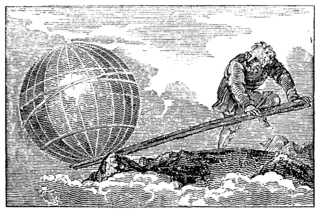
The Age of Reason, Cruikshank (1819)
Jonathan Zasloff reminds us that the GOP wants to return to a time much further back in history than the halcyon days of black and white television and Leave It To Beaver.  He has in mind the days of Social Darwinism and, even further, pre-Enlightenment.
....what the Republicans want on economics is the century before last, the 19th, when Social Darwinism flourished.  And what they want on social issues is the 17th, when theocracy was the order of the day.

I'm not so sure.  Is not enlightenment widely seen as the ultimate manifestation of the concept of free will and the self-made man, through reason arriving as the sole controller of his own fate?  Within an environment of limited government that confines itself to the rule of law and leaves markets alone, the classical liberal interpretation sees the enlightened man as achieving his greatest potential. 

I've heard more than one conservative praise the notion of Social Darwinism.  I highly doubt these folks had spent much time considering the term.  But the instinct to embrace a concept is telling.  Some may quietly embrace a cryptic racialism, or a sense that successful people have better genes.  But embrace of meritocracy is also widely valued.  And it trades in similar assumptions.  The more generous conservative avoids biological explanations.  He instead embraces an immaterial, unexplainable - almost magical - notion of "initiative", that arises not from prior structural development (either genetic or social), but rather believing such a thing to be entirely the product of the universal capacity for enlightened man to create his own destiny, available to him at any second were he only to "choose" it.

The fact is that there is zero evidence for any such capacity in man; all evidence points to initiative being the sole product of structural development, and thus forces apart from one's control.  However, due to this fact being both uncomfortable and seemingly counter-intuitive, we tend to cling to the notion of ourselves as free agents.  Nowhere more so than in the current republican slogan, "We Built It".  While purposely taken out of context, as a response to a Democratic president's emphasis on structural development as opposed to personal initiative, the slogan powerfully illustrates underlying intuitions about popular conception of agency, and the ramifications for social and economic justice. 

While most Democrats likely also embrace the myth of personal initiative, they intuitively understand how important a role larger determinative factors are in its development.  In many ways, the Republican and Democratic parties represent the interests of the haves vs. the interests of the have-nots, respectively.  Whether by race, gender, ethnicity, family education, wealth, or sexual identity, one party emphasizes the import of structural egalitarianism.  The other denies that structure (genes or socialization) have much to do with one's agency; failure and success are the result of a personal initiative located apart from any constraints.  To the extent that the Republican party views initiative as constrained by social institutions, the constraint is merely due to there being a sub-optimal choice on offer that crowds out that which is correct.  At no point, however, is the correct choice not on offer.  In the end, the individual could *always* have avoided the sub-optimal choice.  Again, this assumption rests on the notion of an immaterial, unexplainable source of agency for which there is zero evidence, as opposed to the endless supply of evidence for agency as solely determined by structural sources.

Friday, August 17, 2012

Moral Responsibilty vs. Moral Accountability

Stephen Horst gives a summary of his new book, Freedom and the Laws of Nature, which seems an exceedingly long wind up to a rather silly argument.  Claiming to pick no bone with determinist account of the universe, or human agency specifically, he instead merely wants to argue for the possibility of contra-causal, or libertarian free will.  In the main he seems to be claiming that an empirical view of a materialist universe is always limited to the laws we are aware of, and thus with a subject as difficult as the human mind, there indeed might be some as yet hidden explanation for free will.  Unless I mistake his case, it seems a bit like the "God of the gaps" argument, which, unable to show evidence for God whatsoever, endlessly seeks to allow for him wherever He might be imagined to be? Yet even worse, the "gaps" Horst finds are nothing less than the possible existence of laws yet undiscovered that would make free will possible. Could I say that the invisible unicorn beside me (which I just *know* is there) could well exist according to some yet unknown law - maybe of, say, unicornity?

But while I find that thesis boring, I found what he mentioned in passing, the discussion of free will with relation to moral responsibility, an important issue to parse. 
Since the time of Laplace, the idea that a law-governed universe must also be a deterministic universe has become a fairly common assumption; and as a result, free will and all that depends upon it have often fallen into doubt and disrepute. And chief among the things that seem to depend upon free will is the possibility of moral responsibility. It seems misguided, perhaps even nonsensical, to praise or blame people for doing things they could not help doing. And some have argued, in a similar vein, that one cannot have a duty to do something unless one is actually capable of doing it: in the words of Laplace's German contemporary, the philosopher Immanuel Kant, "'ought' implies 'can'". If this is correct - if ethical notions like duty and responsibility make sense only if there is free will - then determinism would imply that all such ethical talk is literally nonsense.

Destruction of moral responsibility is often the primary issue defenders of libertarian free will have with determinism; they fear that without it, society would crumble. If one is not accountable for their actions – either to be praised or blamed, then what basis do we have for a cooperative society of laws?  However, moral responsibility is different than moral accountability.  While it may be true that no one is truly responsible for their actions, we can certainly make sure that they are accountable to the extent that we determine is fair.
The idea of people acting with no sense of moral responsibility is an understandable fear.  But its answer I think is found in the resolution of an even deeper problem: if I am fully caused, and neither to be praised or blamed, what is the purpose of my existence; what sense is there in doing anything, either good or evil?

The bad news is that there is no ultimate sense in doing either.  The good news is that one has no choice.  Any choice one makes will have been caused.  So for those who think that the end of personal responsibility means the granting of freedom to do whatever one wishes, the reasons for doing so remain the same.  Refusing to go to work still means one will get fired and end up penniless.  Stealing from a neighbor will still cause them to suffer.  Climbing Mt. Everest will still fill one with the sense of awe and sense of accomplishment.  Being kind and loving to one’s family will fill them with joy.
So while none of these acts may have special cosmic significance, we can take comfort in the fact that we are in the end, simple human creatures, evolved to take certain pleasures in our worldly endeavors.  We might curse the limitation of our corporeal forms, but somewhat paradoxically, that curse itself is merely a product of circumstance; it too is fully caused.

But let us take a deeper look at causation, specifically that of morality.  The fear of the destruction of moral responsibility is a social claim.  That is, it has to do with the interaction of individuals within society.  The moral responsibility of a man on a desert island is irrelevant.  It is only when he comes into contact with others that moral claims begin.  His responsibilities lie in the dynamics of his relationship to others.  He has feelings towards them, and they him, regarding the effects of their respective actions.    
Moral responsibility is compatible with determinism if we think of it in this macro, societal sense, and place it within a utilitarian framework.  That is, we can say no one is himself responsible, but rather the norms and values society has designed for them to live by, which have emerged from the wisdom of history, define his responsibility. 

Through the centuries and millennia, humans have evolved complex cultural and philosophical norms so as to structure our societies with no greater aim than to maximize individual and group harmony.  Of course there have been great failures, and nothing like complete success has ever been achieved.  Each of us play our small part, and – like Adam Smith’s invisible hand – the group project steadily emerges.  All of it terrifically complex in largely incomprehensible, one man can neither understand all of it not affect all of it.  In this way, it is like the individual: terrifically complex, he neither understands himself entirely, nor affects the entirety of his own choices.  And just as society cannot be said to have free will, that is to say it is determined by and emerges from its antecedent participants (philosophers, politicians, journalists, public, etc.), so too is the individual determined by and emergent from his antecedent causes (thoughts, feelings, impulses, etc.).

And just as a society cannot choose to be anything other than what it is at any given moment, neither can man. If a fascist dictator comes to power, it will be because of specific historical and cultural circumstance.  Sure, an alternative course would have been preferable, but alas, it was not to be.  Thankfully, our human capacity of reflection provides some ability to learn from our mistakes.  This cognitive power is the mechanism by which humanity slowly provides itself an opportunity for moral responsibility, or, what might be better described as moral accountability.  Interaction on a global scale, over decades and centuries, we have the opportunity to right historical wrongs, thus holding ourselves accountable for what we hope will be a system of laws and political structures more conducive to what we perceive as having been lacking in the past.

So too, if no individual is truly morally responsible for his acts, himself a conglomeration of antecedent impulses, he will be held accountable for his actions to the extent that they interact with his fellow man.  Because of power dynamics, he may be more or less accountable (the dictator, for instance, or powerful boss, might have few around to hold him to sufficient account for what they feel he has done).  And here, social institutions provide the direct framework within which power dynamics are established.  Aside from whatever the individual’s personal sense of moral responsibility to his fellow man might be, his fellow man will have an opportunity to hold him accountable according to the structures that have been established in the society within which they interact.

When wildfires rage, they often do great damage to homes.  Of course, we do not for a second think that a lick of flame is morally responsible.  Yet neither do we allow the fires to rage unchecked.  We put them out as best we can.  We also take preventative measures, so as to reduce the possibility that wildfires will rage to begin with.  We do the same with our children.  Whether we see in them moral responsibility or not, we teach them to be caring, thoughtful and kind, hopefully so that they will grow up to be positive, productive members of society.  When they err, we hold them accountable, regardless of how they felt about their actions.  Some of us might feel the need to sate an appetite for revenge, and include that satiation in their desire for accountability.  But in the end, all that matters is that they be held accountable.  We want their actions to have consequences, regardless of what may or may not be in their heads, unless it might have bearing on the degree to which we feel they might act in the future, at which point its bearing only enters with regard to a more clear picture of accountability.

Sunday, August 5, 2012

Putting Free Will to a Vote

Un Regard Fugitif, Bluemenschein, 1900
A couple of recent "gaffes" in the presidential campaign highlight key differences in political philosophy of the candidates.

Obama got into trouble when he made the case that businesses rely on government infrastructure for their success.  This is obvious, especially if you imagine a country without a healthy, educated workforce, functioning roads, contract enforcement, etc.
“If you were successful, somebody along the line gave you some help. There was a great teacher somewhere in your life. Somebody helped to create this unbelievable American system that we have that allowed you to thrive. Somebody invested in roads and bridges. If you’ve got a business — you didn’t build that. Somebody else made that happen.”

Romney more recently got in trouble when he attributed the relative economic success of Israel compare to Palestine to superior culture of the former.
Culture makes all the difference. And as I come here and I look out over this city and consider the accomplishments of the people of this nation, I recognize the power of at least culture and a few other things. One, I recognize the hand of providence in selecting this place.
There is a sense in which the remark was not intended to refer to ethnicity, and refer narrowly instead to a kind of culture which arises purely from human capital.  Yet even here we are stretching things absurdly.  If not ethnicity, nor societal capital that facilitates the creation of human capital through infrastructure (which Israel clearly enjoys in far greater levels), then to what are we appealing as culture?  As one commenter I heard put it quite nicely, what if instead Romney had been singing the praises of the superior culture of Manhattan as opposed to Long Island?  Offensive, surely.

The positions these two candidates are taking, in terms of what to emphasize in outlining a framework of social success, are rooted in fundamentally different ways of understanding human agency.

The progressive view is one that sees success (or failure) as determined by an interplay between the individual and society.  Basic human equality of talent is assumed, roughly believing that anyone can be highly intelligent and accomplished, given the properly nurturing environment.  This view is backed up not only by endless volumes of research, but as well by common sense.  Any parent can tell you that children are largely products of your own investment and teaching.  We speak of children "raised well", and from "good homes".

The conservative view is one that sees success (or failure) less as a product of the interplay between the individual and society, but rather as ultimately the product of the individual's free choice.  Basic human talent is not assumed, but rather there are those who have been clearly endowed with superior mental and behavioral faculties.  Environment is not the ultimate determinant, but rather it is the pure strength of individual free will that allows him the agency to rise above whatever circumstance life throws his way.  This view is supported by a troubling lack of research.  There are occasional outliers, but evidence shows again and again not only that individuals are determined by their environment in the aggregate, but that countless specific pathways to skill-building exist in which it is not individual choice but social exchange that fosters specific agency.

However, there is a sense in which this conservative view appeals to common sense.  Individuals do make decisions, and each of us clearly feel as though we are the agents of this process.  If I do not get up and exercise at dawn, who is there to blame but myself?  Conservative rhetoric is very concerned with the emphasis of personal responsibility, and sees progressive claims to the contrary as morally bankrupt.  Indeed, in our everyday lives, the concept of individual responsibility is quite useful.

Yet, how to rectify this sense that we have free will and individual responsibility with the enormous quantity of research seeming to prove otherwise?  How to rectify it with the understanding all parents have that they are largely responsible for their children's development into successful adults?

It might be helpful here to think about the small child, at the tender age of five.  While still young, she clearly is quite developed emotionally and behaviorally.  Her cognitive skills are very advanced, capable not only of speaking with an extensive vocabulary, but able as well to learn to read, write, count and do basic mathematics.  She is capable of knowing right from wrong, even if her emotions sometimes get the best of her.  And yet, when she errs, we recognize her actions as not entirely her own.  That is, after a long day, when she throws a tantrum when asked to clean her room, we understand that she is likely tired, and thus less in command of her impulses.  If it has been discovered that she has stolen a piece of candy from the grocery store, we realize it inappropriate to send her to jail.  The more thoughtful among us might take the opportunity to reflect on whether deeper psychological issues might be at work, such as resentment of authority or a lack of self-esteem that might be inhibiting the development of personal integrity.

In short, there is nothing in her behavior that we can truly call free will; every action she takes can be traced to her development in relation to her socialization.  Children are not automatons.  They are often quite ponderous and reflective.  Yet even though they make choices, children's decision making process is clearly rooted in their relative development.  However, having only been on the Earth a short period of time, it is much easier to trace their thought process back to their cognitive development over time.  Epistemologically, the problem is relatively simple; there are fewer variables from which to draw causal conclusions.

In adults, there is no reason to think the same developmental dynamic does not exist.  However, because of the much greater time spans involved, the epistemological problem of trying to tease out causality from their thought process to their development as humans is far greater.  We can, through reflection, get some sense of why we make the decisions we do.  But it is very difficult and imprecise.  This epistemological imprecision is responsible for the useful illusion that our choices are caused not by our extensive lifelong development as humans, but rather by what is commonly referred to as "free will", or the ability to make decisions unfettered by developmental growth.

As dynamic organisms with the capacity for incalculably complex organization and processing of external stimulus, the positing of autonomy in the form of a "self" is enormously handy.  Thinking of a child first learning to talk, it is not uncommon to hear them refer to themselves in the third person.  Their knowledge of self is quite accurately based in an understanding of their developmental powers as identified and posited by their parent.  They have basic desires, emotions and thoughts, and quickly learn that they as well have agency.

Yet who are they?  From where does this agency come?  It comes from something that we can call a "self", and helpfully assign a name to further designate it as something different and autonomous from its environment.  However, as anyone familiar with small infants can attest, their agency is still quite limited, and in most ways they are entirely dependent on both the physical and mental capacities of their parent.  As they develop, they develop more autonomy and agency, and learn to think of all this as their "self".

As they grow older and more sophisticated, as their powers of agency grow, it becomes more and more useful to think of themselves as "selves".  As teenagers, their powers of self-reflection and group awareness reach the point where they are able to truly transcend their immediate home culture and begin to imagine other world views and forms of living, and even incorporate them into their growing capacity for self-identity and conception.  By the time they reach adults, any single decision they make seems entirely removed from any cognitive, emotional or behavioral development they have thus far experienced.  In the abstract, it might make some sense, but in any given situation, there is only so much one can epistemologically know about why one is making a particular decision.  To the extent that it can be known, it might be useful, but it can also be a hindrance, as time is often of the essence and too much navel-gazing can become a liability.

And so we move through the world, live our lives as if we are autonomous selves.  We feel proud of our accomplishments.  We feel shame for our failures.  But even the most stubbornly convinced among us that we indeed possess a free will that originates entirely within ourselves realize that the degree of credit we can take for our actions, the degree of personal responsibility we feel, is in some proportion to the degree to which our actions were not determined by external causes.  The concept of the "self-made man" is defined by the extent to which one's actions are divorced from external determination.  For instance, as successful as one is in business, if that business was built and handed to him from his father he cannot take full credit for it.  He was not self-made.

Returning to the research, it is rare to find anyone who can be described in any sense as "self-made".  Whether the privileges are obvious, such as family inheritance, or more subtle, such as the commitment, support and love of a parent, there is almost always a rather clear causality involved in human development and success.  This is just as true for those who lives lives of desperation and tragedy.  A lack of privilege, or outright misfortune almost always colors the lives of those who society would term failures, such as drug dealers, criminals, or just your average, everyday jerk.  Poor role-models, abusive parents, or an otherwise unloving or unsupportive environment is almost always the story of the lives of these individuals.

Of course it is possible for individuals to overcome circumstance.  However, contrary to the popular myth of the self-made man, or he who by the boot-straps pulls himself up, this can only take place in an environment in which he has been able to both develop the skills within himself that allow him to triumph, as well as take advantage of structural leverages afforded him by the society in which he lives.  Both of these - the skill building and societal leverage - fall under the rubric of societal capital, an external resource.  The former requires an environment in which he is able to develop the proper behaviors, attitudes, habits, knowledge, etc. that allow him agency.  The latter is, of course, the environment itself which affords him opportunities to apply his amassed stores of human capital.

This is the larger narrative behind the respective ideologies that Barack Obama and Mitt Romney represent, the assumptions about how agency is developed and applied in society.  Obama, representing the progressive view, emphasizes the degree of social determinism in the development of every citizen.  Romney, representing the classical liberal and modern conservative view, emphasizes the degree to which individuals are able to transcend society and freely make of themselves what they eventually become.  Strange as though it may be to believe, the Romney tradition is highly allergic to the concepts of societal and human capital as dynamic, reinforcing aspects of human development and realization.  The Romney view would deny much of the extent to which human capital is dependent on societal capital, instead viewing it as something that an individual is able to manufacture from whole cloth.  Societal capital itself is likewise seen with diminished import, either in many cases its dismissed entirely as a factor, or its valance downplayed.

To Obama, the successful business man is not really self-made at all, but rather is privileged to have enjoyed environmental privileges - societal capital -  that have allowed him to experience success.  Obama would no doubt view inequality between Israel and Palestine and look for imbalances in things like education, roads, access to water, occupation, etc. to explain such disparity.  To Romney, a businessman is in most ways an island of self-determination, free from the constraints of both human and societal capital.  Thus his reference to Israeli culture itself seems a contradiction - would not culture be a clear description of the interplay between human and societal capital?  Yet in the Romney framework, culture, to the extent that we are not simply arguing ethnocentric bigotry, is not so much viewed as a causal factor, but a description of things as they are, the way one might look at a flower and describe it's beauty.  However, while the flower's beauty has a clear evolutionary purpose, its cause entirely traceable to its genetics, the Romney view of culture is owed to a profound faith in the free will of man, and therefor outside the ordinary realm of natural causality and the physical universe.  This was actually illustrated rather well in Romney's follow-up allusion to "providence" as having played a role in Israel's relative affluence. 

In the November presidential election, we face two competing visions not only of policy and values, but of deeper assumptions about the nature of human development and agency.

In Obama, we have the belief represented that a free citizenry, one with an equal chance at life success, depends on individuals having equal access to the societal capital that will allow them to build and then leverage their own human capital.  While this project is no where near finished, and will likely never be, government can play a highly effective role in guaranteeing access to at least minimum levels of required societal capital.

In Romney, we have the belief that a free citizenry depends only marginally on individuals having access to societal capital, that they are each perfectly capable of developing and finding ways to leverage their own human capital.  Government has grown much too large and invasive, and needs to do much less in the way of ensuring societal capital to individuals.

Ultimately, the vote will largely be about whether you believe that human and societal capital are highly dependent, as research has proven again and again, or that human agency is something that individuals can create from nothing, likely even more so when their faith is placed in the Christian God, a view for which there exists not a shred of evidence, and is counter to our most basic understanding of the laws of the universe.