Showing posts with label student capital. Show all posts

Tuesday, August 17, 2010

What Teachers (and Students) Need

A recent hard-hitting LA Times piece on teacher performance in Los Angeles schools has dropped like a bombshell.  Reporters analyzed data from 7 years of student testing, from which they were able to determine specific students and teachers.  They developed what they call a "value-added" model, creating a hypothetical projection from past scores that they then matched to future scores, so that they could compare the two - what students would be predicted to score versus what they actually did.  They then used this as an assessment of individual teacher performance.  In order to compensate for individual student outliers, the results were averaged, pointing toward what they regarded as clear trends over time.

Then they published the results, identifying teachers by name.  While I do have some skepticism regarding the sweeping claims they make, the analysis does seem very interesting and I'd like to see further investigation.  However, some findings in the story raised some questions for me.  For instance, they made this claim:
Although many parents fixate on picking the right school for their child, it matters far more which teacher the child gets. Teachers had three times as much influence on students' academic development as the school they attend. Yet parents have no access to objective information about individual instructors, and they often have little say in which teacher their child gets.
This doesn't make much sense.  We know for a fact that schools in more affluent districts dramatically outperform those from poor ones.  Yet while teachers in poor schools do tend to be less experienced, on average you would expect similar rates of good teaching across districts.  The Times story supports this.  However, the fact remains that poor schools perform worse.  The only possible explanation for this is socioeconomic differences, which has be found time and again to have dramatic effects on student readiness and what I like to call Student Capital - a given student's measure of human and social capital resources that facilitate academic agency.

This site, which maps individual school test score data across multiple states, shows clearly that the number one factor driving overall school performance is socioeconomic demographics.  I'm not sure how the article can say that teachers had 3x the influence on a student as the school.  My guess is that this is a misreading of the data.  A poor student may on his own do better at an affluent school, although I'm pretty sure I've read this benefit is actually pretty marginal.  But in order to properly test such a claim, you would have to take every student at a poor school and swap them out for every student at an affluent school.  Although from what the research tells us, the results just wouldn't be that different.  Not only are the teachers going to be of generally similar quality on average - as the findings in this story back up, but the students are still going to possess the same levels of Student Capital as they did before.

To the extent that teacher quality is emphasized to the diminishment of socioeconomic considerations, we just aren't going to make the kind of progress towards real reform that is necessary to truly making sure that every child is academically successful.

Yet the findings in the story are still important.  And teachers, and teacher unions need to take a deep breath and maintain the conversation.  Jonathan Zasloff, at the Reality Based Community, points out how some of the lessons of a story like this can get lost.  He contrasts the response of an LA teacher to the findings:
Caruso said the numbers were important and, like several other teachers interviewed, wondered why she hadn’t been shown such data before by anyone in the district.
“For better or worse,” she said, “testing and teacher effectiveness are going to be linked.… If my student test scores show I’m an ineffective teacher, I’d like to know what contributes to it. What do I need to do to bring my average up?”
with A.J. Duffy, president of United Teachers Los Angeles, responding to the story:
     The Los Angeles teachers union president said Sunday he was organizing a “massive boycott” of The Times after the newspaper began publishing a series of articles that uses student test scores to estimate the effectiveness of district teachers.
    “You’re leading people in a dangerous direction, making it seem like you can judge the quality of a teacher by … a test,” said A.J. Duffy, president of United Teachers Los Angeles, which has more than 40,000 members.
    Duffy said he would urge other labor groups to ask their members to cancel their subscriptions.
Zasloff finds Duffy's response as emblematic of teacher union intrangigence:
If progressives want to reinstitute faith in government, then we must demand the best possible results from public institutions.  And we also need to confront directly dinosaurs like Duffy who simply refuse to accept any accountability for his profession. 
I think Zasloff makes a good point. But he also has to acknowledge that teachers are under heavy attack right now, and that in such an environment people tend to get suspicious, reactionary and acrimonious. Much of the liberal establishment seems to have turned on us as well, and are pushing reckless policies without listening. But I agree with you, as a teacher the number one priority I have – and I know this may sound shocking – is that my kids are actually learning. If a standardized test can help facilitate this, then I’m all for it.

Of course, one of the big issues is, as he points out, being able to drill down and separate out the causal factors. Largest among them, yet routinely ignored, is the incredible difference in teaching environment that two schools in the same district might hold. What this means for teachers is that not only is performance going to be much different owing to demographics, but any progress made will have been much more hard won at one school versus another. This one single problem is something that neither NCLB or Race to the Top have dealt with in any serious way.

So while I completely agree with the teacher, and have a similar reaction to AJ Duffy’s response, I also know that he is on the front lines, trying to do the heavy lifting that is protecting teacher’s genuine and reasonable interests in an increasingly hostile policy environment. I think the type of testing in the story sounds promising, and it ought to be looked at more closely.

What everyone needs to remember is that what the modern public school system is trying to do is nothing short of revolutionary. It is essentially asking generational poverty to be broken on the backs of teachers. And I love this. This is why I became a teacher. But if we are really serious about doing this, we need to take a moment and look at what we are trying to force the system to do. Some teachers at poor schools will be achieving amazing things. The teacher next door may not be. But she may actually be just as competent as the teacher a few schools over who doesn’t have to deal with nearly as many issues. The reality is that you just can’t expect to put relatively equal resources into schools with wildly different demographics and expect every teacher to be amazing enough to compensate. It isn’t fair. You can’t build a transformational system around the idea that every teacher in a poor school has to be amazing.

And I guess that’s kind of the rub of how teachers are being treated today. We signed up to do this job because we wanted to help, and a certain amount of sacrifice goes with that. But it feels like society in general has seen so many Jaime Escalante movies that they think seem to think if we all aren’t working 14 hour days and coming in Saturdays we aren’t good enough. Maybe we shouldn’t have to, right? Maybe society ought to invest a little more money in its poor schools so that the job requirement isn’t super man, but maybe average man.

Imagine if we approached other public sectors this way? What if wars were won, streets were policed, fires were put out, mail delivered, etc. by spending as little as possible (indeed not enough to effect real reform), then complaining when the job wasn’t getting done that the workers just weren’t doing their jobs?

If teachers are going to be expected to get on board with looking at increased accountability, they need to feel like there's an equal policy response that addresses their legitimate concerns about the equity of the task they are being asked to perform.  Teachers wouldn't be in the profession, already making they sacrifices they do, if they didn't want every child to succeed.  And if you give them the respect they deserve, by acknowledging the complexities of their work and providing them the resources and tools to be effective, they will back you 100%.

Thursday, July 1, 2010

Closing the College Achievement Gap

There is an understanding implicit in the city college and state university systems, and to a lesser degree (through scholarships) at private universities, that diversity is good for higher education.  Not just racially, but in broader terms providing a hand up to those who are willing to put in the effort required to succeed.  This is no where more clear than the city college model, where almost anyone is accepted, and remedial courses and support is built in from day one.  While less so at the state university level (I don't believe they offer remedial courses), there is still a community ethos and more attempts are made to promote diversity - especially in the subsidized tuition.

We have known for a while now that disadvantaged students at these institutions are much more likely to fail, even despite attempts at support and intervention.  Some students are probably beyond help, whether due to financial, cognitive or emotional limitations that are too great.  But the degree to which the students "just aren't cut out for college" is over-assumed.  There are structural problems at the institutional level that, were they resolved, many more students would find success. 

To the degree to which adequate support is unavailable, these students are at the mercy of success in the classroom; whatever outside pressures come to bear, a failing grade is going to be the last thing many of them see before they return to the workforce, sans-degree.  This places the professor in the difficult position of handing out what, in essence, are college death-sentences.  It would make sense that this could result in grade inflation.  The logic is likely that, considering the hardship the student faces, there is a social injustice in giving them a failing grade.  If inflation is implemented, even marginally, that student might find a way to make it in the end.

Of course, at the system level, this can be pathological.  Standards are gradually reduced, which is unfair to all students.  Getting an inflated grade in one class might give the student a false sense of efficacy, setting them up for failure later on, in another class.  At city colleges, this pressure is lessened by the existence of extensive support: classes are far cheaper, night courses are widely available, failing students can be sent to a writing lab, or remedial courses.  At the state or private level, few of these options are going to exist, and failure will be quick.  However, admission at these institutions will have already removed at-risk students through stricter admissions.  At city college, as they accept anyone, the demand for support services is all the more crucial.

Matt Yglesias points out that there are many models that have shown great success in supporting students, and could theoretically be instituted at every level of academia.  He links to Monica Potts:
A new program at the University of North Carolina pairs low-income students with faculty and peer mentors, monitors their grades, and instills them with basic job-hunting skills like business etiquette. Graduation rates for program participants were 17 percent higher than for students in the control group. Low-income students simply need more resources, and that’s as true for students at the college level as it is for those in elementary and high school. The kinds of schools most likely to serve lower-income students, though, often have the fewest resources. And state-level higher-education funds are vulnerable as states shrink their costs in a difficult budgetary environment.
Yglesias writes:
It’s worth underscoring how perverse the allocation of resources inside American higher education is. We expend the most time, money, and effort on helping the set of high school graduates who need the least help, even though these very same people tend overwhelmingly to come from families who have the most resources (in terms of both money and social capital) with which to help them. It’s nuts.
An important thing to note here is that, assuming the students are academically equivalent, there are still going to be large disparities in student capital (human+social capital). This means anything from navigation of campus norms, peer-group isolation, parent support, financial issues, etc.

Then, in situations where the academic equivalence is not there (usually in city college), students are going to be taking remedial courses and in many cases the “tricks” that may have worked in high school just won’t cut it. These students face the double challenge of having to succeed in college-level courses that may rely on work that they aren’t ready for.

The solutions don’t seem to difficult – counseling, cohorts, etc. But they do require resources.
*One last thing to note: my wife taught English at a PA state university and had students from one of these low-income cohorts. The papers they turned in, while often slightly sub-par in grammar, etc., were generally heads and tails above the other students in terms of a sort of wisdom of life experience. Far from vacuous and cloistered, these students represented a form of striving that seemed invaluable.

These are exactly the sorts of voices that we need at the university level, and we should be giving them any support necessary to see them succeed academically.

Saturday, June 19, 2010

You Can't "Reform" a Broken Pillar

Mark Kleiman has some comments on the concept of reform among a few some high-profile industries, namely oil, finance, public schools, and universities.  The structure of his post is interesting and it's worth a look, but his point is essentially: these institutions are very important, as such they all need to be under scrutiny, and yet their size and complexity demands an equal care and deft flexibility in holding them accountable.  I was reminded of how tricky the word "reform" is, and how, in terms of education, we're still so far from understanding what it should really mean.  With the financial crisis still hanging over us and oil from a damaged well rushing into the gulf, there is no argument that those are two industries in which the word regulation should never be out of earshot.  But with some minor reform they might indeed be set back on a proper course.  Education however needs a complete rethinking.

I had a long talk with my father (career high school teacher, retiring in 2 years, bless his soul) this morning. He’s off tomorrow on a flight to a week-long training seminar in project-based learning. We talked about the various reform proposals floated over the years, and how in the end it never fails to come down to a sort of synchronicity at the local level: administrators, teachers, parents, etc. all clicking in just the right way. But switch out some of the pieces and the entire structure falls apart. He recalled talking to a friend of his who’s been teaching for 3 decades and who agreed that, as far as what goes on in the classroom, nothing’s really changed. In his area of Seattle, the kids are still all black. Still an incredible achievement gap.

I understand the point on complexity and bureaucracy.  Schools will never be simple to adjust.

But what occurred to me is that there’s one really big difference between education, at least at the earlier levels, and the rest. Well any other field, really. And we’ve kind of understood this as a society. We’re beginning to use language that hints at it. It was the driving acknowledgment behind NCLB.


Education has the power to end social stratification. The end of class. The end of poverty. The end of criminal justice. The end of a lot. In fact, so much we’re afraid to even really try and imagine it. It seems too big. It seems, well, unimaginable. But all the social research tells us it is absolutely possible. There are examples of it happening in schools around the country. The problem is scale, among plenty others. But if they can do it, there’s no reason to think it can’t be done for all children.

The constitution points us in the right direction. Many major court cases have been fought over this very issue. Proposition 13 in California was built on it. The question was never if it was right to do it, but whether we could. Well, we can.

But we need a paradigm shift in thinking. This is where education needs to be thought of apart from any other sector, business or public. Education needs to be thought of less like a resource, or a public good, and more like a pillar of civilization; as an essential for life akin to air, food or water. As such, we need to take a serious look at how we deliver it unto each soul that enters our nation. 

This is not how we currently view it. Not by a long shot. And it isn't too much of a surprise.  The audacity of this notion, that you can take any child from any circumstance and through education put him on equal footing with his citizen peers.  The social research behind this idea, beginning with the thought that it might even be a worthwhile endeavor to begin with, has only been around for less than a century - much of it half that.  In a way, it's a sort of marvelous thing to be alive at a point in history when we not only have the philosophical and economic means to offer a plan for socioeconomic equality through education, but the scientific theory and data to back it up.

Take any two kids in America, from opposite ends of the socioeconomic spectrum, and look at what services get provided them by a public school. There is very little difference. Aside from some federal Title I money to pay for crappy lunches and a reading specialist, you get very little. Considering the vast differences in human and social capital that the two children have access to, the attempt at equity is almost absurd. You rectify this imbalance, you have social dividends that we can’t even begin to dream about.

I've been thinking a lot about what a policy prescription might look like.  At this point it revolves around the notion of Student Capital (human + social / age), and means-tested allocation of funds - likely eventually federal, as drawing from constitutional rights and recognition of natural law.  I'm not naive enough to think that it is anything that might be accomplished in even a decade; I think it might require a good 30 or 40 years to germinate and unfold as part of a larger awakening of social consciousness.  We are just beginning to grasp the significance of new understandings in human development and behavior.  As these begin to draw thin the old egocentric attitudes about human agency, hopefully more avenues for not just understanding but implementation of a theory of Student Capital may open up.

Saturday, June 12, 2010

Student Capital and Constitutional Equity

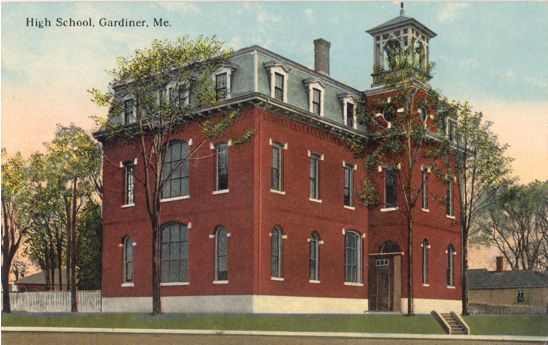
Deborah Meier at Bridging Differences comments on the significance of modern education architecture versus the old, beautiful buildings that were once the norm for educational institutions.
we went from grand to pedestrian, from castle to factory. Looking at high schools, it's even more startling. The old buildings were statements about the power and glory of education. Of course, they weren't for everybody—especially the high schools. The trouble is that once we claimed them for "everyone," we forgot to build them to be inspiring.
She goes on to relate this decline in design to a more general trend in which the promise of educational equality is payed lip-service to, meanwhile still avoiding the hard task of actually doing something about it in a meaningful way.  She refers to Harvard's Paul E. Peterson as saying in essence:
...all our favorite silver bullets have failed to change scoring patterns over the past half-century: the end of legal segregation, extra federal dollars for students in poverty, high-stakes tests, schools of choice—via charters or vouchers, teachers with more degrees, teachers' unions, improved wages for teachers, and even smaller schools.

Wait a second here, Deborah - I have a silver bullet to add to the list!

OK, maybe it's not a single bullet - more like a full clip.  The standard model currently is guaranteeing each kid a classroom of 29 other kids and a teacher.  Within that model, miracles are supposed to occur that will completely reverse social stratification and generational poverty in one fell swoop.  I call it the "Rambo Teacher" model.  Federal funds are then sprinkled over the top like pixie dust - whoopie, reduced lunches and an extra hour of tutoring a week to the rescue!

Of course, as we know - there are huge differences in levels of human/social capital between students.  So instead of focusing resources on finding better teachers, or marginal programmatic improvements, how about creating a baseline for "Student Capital": what total resources the student brings to the table.

Any number of factors could go into this framework - parent education, family income, number of parents at home, language & cognitive skills, emotional/behavioral evaluation.  What the heck - test the parents too!  It may require an entire level of administration to assess children at a certain age, and maybe every two years thereafter.  But this data would then be used to allocate an appropriate level of resources and targeted intervention, if necessary.

The idea needs a lot of work, but I think if we are to take seriously the idea that no child be left behind, that each  child has a constitutional right to an equal education, this would be an excellent way of leveraging the public education system.  Currently, all students get a very similar level of funding.  In this system, that paradigm is reversed and some students will get dramatically less services, while others dramatically more.  The whole thing is essentially means tested.  In a very real sense, the concept is very similar to that of special education.  But instead of only acknowledging that a child with a learning disability or physical handicap has a special need, that designation is broadened to include a whole host of statistically significant risk factors for educational failure.

I think we've been going about this in a totally wrong way.  We've looked past family capital for too long - even while research has told us for decades that parenting is just as important if not more so than schooling.  Yet while we cannot (should not!), replace parenting, we can take ownership of that deficiency and take real steps to ameliorate its effects both through working with parents and providing extra resources to the child through schooling, home visits, or some other combination of programmatic engagement.  We don't need new schools, or new teachers, or new curriculum.  We need a new way of looking at how education is distributed.  It is simply unfair that some children grow up in households that leave them woefully unprepared, while others are pushing them to the very top.  This is not a recipe for social justice.