Friday, December 23, 2016

Sneering Here, Sneering There

In my last post, I wrote about Kevin Drum and liberal sneering.  In the meantime, I've still been hearing  a lot about white-working class ("WWC") resentment of liberal sneering.  But I still don't seem to get it.  I did a google search and came across this post on the Blaze which was critical of Kevin Drum, and the title characterized the general framing of the piece:

"Liberal blogger admits how ‘city folks’ really feel about rural working class"

Reading through many of the comments, the basic response was that this was completely obvious.  However, it also seemed an excuse for many commenters not just to express outrage, but to reveal just how much they sneered at "city folk".  A typical example of this sneer:

Put me down as someone who sneers at city folks. Damn few of them could find their way out of the woods or survive if left alone there. By and large I dislike them. I especially dislike the ones who live in California, Oregon, Washington, and over on the northeast coast. New York? A hellhole. New Yorkers? Jerks.

I left the following comment:
I came to this post because, as a liberal, I've been trying to understand the how and why rural/less-educated voters feel sneered at by liberals.  I've always felt there was at least as much sneering going in the other direction.

Unfortunately, this thread seems to prove me right.  I actually like Kevin Drum, but disagreed with the premise of his post.  There is a difference between having different tastes or skill-sets and sneering, or looking down at someone.  If I prefer fancy beer or coffee, and dislike cheap or watered-down stuff, I guess I sneer at it, but I don't sneer at people who like it!

Likewise something like literature or the arts.  Sure, I have developed a good appreciation for the arts, and I guess I sneer at stuff I think is poor quality.  But not at the people who enjoy it.  What do I care.  They have other interests and can appreciate plenty of things that I can't.

I came here hoping for a better understanding but I guess I just found a lot of silly tribalism.  Can't we try to learn from one another?

Sunday, December 11, 2016

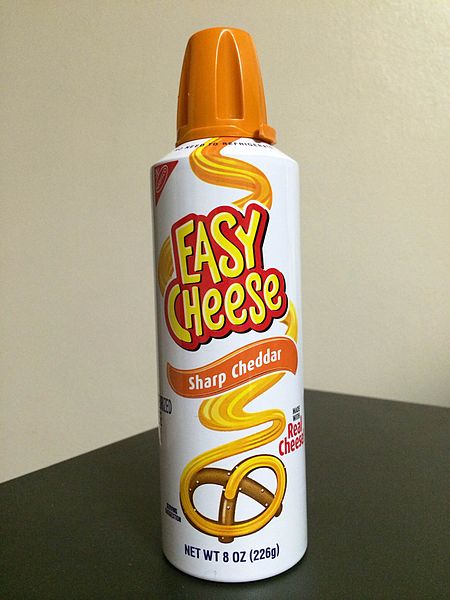
Cheese and Trump

Kevin Drum writes on liberal sneering.
I'm not here to get into a fight with Krugman, but come on. Sure, the right-wing media fans the flames of this stuff, but is there really any question that liberal city folks tend to sneer at rural working-class folks? I'm not even talking about stuff like abortion and guns and gay marriage, where we disagree over major points of policy. I'm talking about lifestyle.
I think this is super important, and something I've been interested in for a long time.  What is taste?  What does "cheese" really mean.  What does it mean to sneer?  And it is a central theme of the Trump election.

On the one hand, I do sneer at cheesy things, because they are cheesy. Is this wrong? Does sneering at things imply a value judgement about the person?  If I dislike Coors beer, can I sneer at it without being said to sneer at the person who likes it?  Is it because by extension people who like cheesy things without awareness are diminished, deemed inferior? Of course we can all have preferences, but the definition of sneer does mean "to look down on".  

Knowledge is central here; awareness. Without it, you are ignorant by definition. Yet it isn't merely awareness but the status associated with certain forms of knowledge. Uneducated people have a ton of knowledge that I do not - mechanics, carpenters, businessmen, etc. Yet if they wear fannypacks, watch wrestling and buy sweatpants at Walmart they are living a cheesy lifestyle. So, the issue is cheese. 

The dictionary definition of cheesy is that it is slang for something that is of inferior quality, poorly made, or cheap.  But there is more too it.  There is a sense in which the term refers to a lack of education on specific social standards.  These are arbitrarily defined according to a critical consensus of what is valuable at a given time.  Some things, like fashion, of course change rather rapidly, and the standards evolve.  As Heidi Klum states in her tagline for the TV show Project Runway (which my wife and daughters adore), 
"One day you're in.  And one day you're out."
As long as you are a willing participant in the specific cultural practice of following fashion, and place value on what the arbitrary standards are, you accept the terms of engagement.  However, many - possibly most, people aren't so interested in fashion. Or, find it difficult to keep up with.  They just kind of go along with what they find on the rack.

But it comes down to one's personal cultural milieu.  Different social circles have different associated fashions - almost uniform-like, in a sense.  You have the butch Lesbians with their jeans and vests.  You have the preppy boys with their izods and loafers.  You have the metrosexuals with their perfectly groomed facial hair arrangements.  Rural women with modest denim blouses and blowdried bangs.  Artsy hipsters with random t-shirt advertisements and victorian mustaches.  Dockworkers with baseball caps and practical, tinted sunglasses.  There is obvious social benefit in these groups to align oneself with the mutually agreed-upon standard.  When in Rome.

But "cheesy" is something different.  It seems primarily defined by knowledge, and a value ranking.  To agree to the terms is to make a value judgement.   And in order to make this judgement, one must first accept the premise that there are specific social standards.  One can understand something to be "cheesy", and decide that it is unimportant, and embrace the cultural practice anyway.  Indeed, a common way to flout social convention is to engage in "cheesy" activities with the explicit understanding that these activities are "cheesy".  This is an especially productive move when the practice deemed "cheesy" had been placed off-limits as a low-value practice, and yet is actually quite objectively enjoyable.  I myself engage in this when I listen to Linda Rondstand and Aaron Neville during my drive to the movie theater to watch a blockbuster action film, afterwards dining on fast food before returning home to play videogames.  Of course, I "know" that this is all cheesy, and so in certain circles you have the post-modern phenomenon of embracing low-value social practices, such as the iconic Pabst beer (which tastes like piss) in Portland, OR.

Yet what once is learned can not be unlearned.  There are better beers, with more flavor.  There is better music, relying on less cliche structure and lyricism.  There are better movies which explore larger issues of human experience with innovation and craft.  There is cuisine that engages more senses than salt, sweet and fat.  There are leisure activities that enrich one's personal repertoire of experience and expression than lining up an x and y axis and flipping buttons to pumping music.

So why engage in one activity versus another?  How ought one spend one's time?  What kind of a society does one want?  Does one believe in the arts, in innovation, in creativity, rather than cheap, inexpensively produced "popular" culture that hews tightly to well-established and low-risk endeavor?  Sweat pants at Wal Mart, slim jims and the Bachelorette are cheap and get the job done.  But what is their place in the larger scale of human history?

Donald Trump likes gold decor.  It is shiny, representative of money, and so ostensibly he believes the more of it the better.  Of course, this is an incredibly cliched and superficial standard by which to judge quality.  It demonstrates that he is unaware of the complex standards by which one might judge the value of decor.  This isn't necessarily a bad thing - many people are similarly unknowledgeable (I've chosen not to use the term ignorant to avoid its negative connotation, despite personally finding nothing wrong with being ignorant of something there is no need to be knowledgeable of.  However, I concede that is the whole point of this post).  If Trump merely had brown sofas, or had hired an interior designer, no one would notice.  But instead, he actively went out and engaged in a demonstration of what he personally finds attractive.  He thus embarrassed himself by demonstrating for all to see not just his ignorance (now the term seems to fit?), but his desire for others to see just how wealthy he is in a very obvious way, akin to wallpapering his home with hundred dollar bills.  Surely there are other ways of telegraphing wealth - rich people do it all the time.  Yet what he did, more than anything else, was actually telegraph his ignorance of social practices, of taste.

Is taste OK?  Is it OK to make value judgements on cultural practices?  To hear some, such a question is almost tasteless itself.  Of course it isn't OK!  It is snobbish, bourgeoise.  And yet this is of course ridiculous.  We all have taste.  We all have preferences.  We can all appreciate that taste is ultimately about craft, about many people over time working to develop a repertoire of cultural creation.  This can only be done by valuing certain things over others.  Anyone who has view art, watched a movie, listened to music, or picked out a pair of pants has engaged in the appreciation of taste.  Taste is about the creation of fulfilling experiences.  Like any other craft, the production of these experiences requires time and expertise.

Everyone can appreciate craft.  And here is where the taste divide might appear.  No one turns their nose up at the ability of someone to build something useful.  Its importance is immediately apparent.  Sewer pipes, bridges, walls, stairs, roads, delivering mail, fixing cars, growing food.  These are all working class endeavors.  And there is a product that is fundamentally useful to all.  A better bridge is safer, a better sewer pipe is more efficient, a better crop feeds more people.  Saying one is better than the other is self-evident.

Not so with taste.  The difference between a classical musician and a popstar, or a difficult work of art that requires a complex understanding of context and a very accurate image of someone doing something that looks fun, is not about function.  The very definition of "pop" comes from mass-appeal.  But it also almost always means somehow cheaper, less developed, and - often - more difficult to enjoy.

Whether valid or not, a certain sort of class resentment does seem at play.  A traditional definition of civilization is the ability of a society to produce enough surplus food to afford to support someone whose only job is arts and entertainment.  Class hierarchies have always bred resentment and distrust.  To the extent that one job is easier than another, or at least appears to be, it will be resented.  So much more so if the job is deemed higher-status.

The working-class, those who make their living with their hands, might indeed feel resentment towards those who make their living indoors, away from the grime, without elbow-grease.  And imagine if while these non-working class individuals were off in universities, they gained not only the ability to gain high-wage jobs, but also gained an ability as well to gain high-status tastes - art, literature, philosophy.  And more recently, notions of what is "politically correct".  And imagine them then coming back home and no longer appreciating your low-class, uneducated and low-status cultural preferences.

At this point, do they really need to "sneer" for the resentment to be felt?  I'm actually of the opinion that there isn't actually that much sneering going on.  As Drum mentions towards the end of his post, working-class can sneer too.  Isn't really just about how you treat people.  You can have preferences, but you don't need to sneer.  But there are cultural resentments, especially when it feels like you can't get ahead, even if this is isn't because of the educated, but rather an economic and social system that isn't very good at giving everyone a fair chance.

Donald Trump has nothing to offer but trickle down theory, which is cold comfort.  Instead he and his right-wing nationalist talk-radio ilk sell a narrative that the real problem is pointy-headed, educated liberal fascists (try replacing "liberal" with Jew sometime and historical resonance gets creepy).  For whatever reason it has obviously been working.  His tackiness is his credentials.  The more he attempts to gain status without knowing the difference, the more relatable he is.  He's ridden into office on a wave of resentment of the elite, a tide of Coors beer and bad TV.  He could walk out onto 5th avenue in a fanny pack and people would cheer.


Sunday, December 4, 2016

Cream-Based Politics

Trump has named Betsy DeVos to head the department of education.  She's a huge proponent of charters, vouchers, and choice; privatized education.  The selling idea is government institutions fail poor kids and "choice" provides a ticket out by allowing them some selectivity in schooling.

School "choice" is interesting because of what it reveals about the conservative perspective.  On the one hand, government provision of education is seen as to blame for "poor" schools; private, competitive charters would do a better job.  However, conservatism also blames the poor for their poverty, and looks to a breakdown in family and "culture of poverty" to explain the dysfunction we see in these communities.  This breakdown would clearly lead to "poor" schools, would it not?   However, maybe we are dealing with children, and so it is only fair to help them.  But shouldn't that be a job for the parents?  Why should the government be involved in rectifying the manifestation of social problems in children?

You can see how messy this gets.  "Choice" is kind of a fun way out.  It embraces free market principles.  In theory it promises a better education to all - even specifically the poor.  But it also performs a neat trick: government is no longer required to provide a proper education to all.  In effect, the burden is placed on the parent to send their child to a "quality" school.  This introduces an element of selectivity into the process.  Poor parents who want the best for their kids - and more important know how to get it, are now given an option to do so.  Previously, they would have been required to send their kids to their local school, whose demographic would have guaranteed the school to be failing.

This is great news for these parents.  And I don't doubt they deserve it.  I would want the same if I was in their position.  However, the issue is now the families who have been left behind.  The only reason the "choice" model works is because of its selectivity - poor kids (yet with motivated and accountable parents, who as any teacher will tell you are 80% of the battle) get to be with higher-capital kids (better income, education and motivated parents).  The only way you make butter is by removing the cream.

Now how are we going to make butter with the milk left over?  I don't have any answers.  But what I can do is raise questions about the fundamental issue involved.  My concern is that conservative ideology is very comfortable with what you might call cream-based-politics.  In theory, a robust social understanding of poor communities would involve grasping the functional relationships involved in barriers to success.  Yet because conservatism's ur-fear is government intrusion into the lives of the citizenry, these functional relationships frighten them to death.  Better to turn away and hand wave about "personal responsibility" or "market forces".  Choice bows to the latter and hides behind the former in doling out goodies to the selected poor while conveniently averting its gaze from those unable to "self-select".

Furthermore, the "starve the beast" tradition inevitably continue apace: poor schools housing the "unselected" will of course have even more difficulty in educating a student body composed of increasingly disadvantaged children.  Yet the schools' failure will not be seen as a function of this dynamic, but rather more evidence of government ineptitude.

And the graduates of such wretched institutions?  They will continue to stock our prisons and fill out our underclass, performing our menial labour and dutifully providing a reminder of how morally upstanding, intelligent and hard-working the rest of us are.


Sunday, November 13, 2016

A Better Definition of Racism

Jacqueminot Roses-
Martin Johnson Heade (c.1890)
An interesting fact: many Trump supporters voted for Obama in the past two elections. This would seem prima facie evidence that Trump's racism couldn't have held appeal for them.

However, we need to remember that most racism is not a conscious dislike of minorities. Most people who engage in racism do not identify as racists and legitimately believe they have no problem with them. BUT. Racism is a tendency to not treat minorities as equals. For instance, having higher standards for their behavior, or not trying as hard to put oneself in their shoes, or being quicker to judge them more harshly, or not cut them as much slack as they deserve. The classic example of this for me is the grammarian who hates it when blacks say "axe" a question and demands they speak "proper english", yet ignores they many ways whites engage in improper english, such as when as saying "ummana" instead of I'm going to. To the extent that one is applying a different standard to blacks, they are engaging in racism. And we all do it, in many ways, from major to minor biases. In this way I can see someone voting for Obama, but then buying into birtherism, or ideas that he he a Muslim, or that he hates white people. All of these depend simply on cutting him less slack as a member of a historically oppressed group which he has unconscious biases against.

I can see him becoming more and more incensed at the notion that illegal immigrants are parasites who are taking our jobs and suckling at the government teet, as opposed to desperate people who merely want the best for their families who are OK with breaking a few abstract rules in order to work hard to give them a better life, all the while paying taxes and receiving zero government assistance. And yet because they are Spanish-speaking, brown skinned, and not "his people", he finds it easier to be less empathetic, less kind, less compassionate: in other words behaving words towards them because of their ethnicity.

Ditto for Muslims. Ditto for gays.

The standard definition of racism is put thusly:
"the belief that all members of each race possess characteristics or abilities specific to that race, especially so as to distinguish it as inferior or superior to another race or races."
By this definition, most Trump supporters are not racists: they do not profess this belief.

But what is the moral problem with racism?  Sure, it is an incorrect assessment of the biology of fellow man.  It is an incorrect belief.  But isn't the real problem the actual way we treat one another?  When racism was enshrined in law, it had actual effects.  But that was only a formal oppression.  The daily lived harm came when minorities were not treated as equals.  Their foibles were not forgiven at the same rate.  They were held with more suspicion.  They were kept at arms length.  They were the other.

What if instead we were to define racism like this:
"acting as if all members of each race possess characteristics or abilities specific to that race, especially so as to distinguish it as inferior or superior to another race or races."

That is to say, to treat different races differently.  There need be no master plan.  There need be no calculations and tabulations.  There need only be thought and deed.  Or maybe just deed...

This is the racism we see perpetrated all across America everyday.  This is the racism that people are accused of, and then deny.  They're defense: they are not racists: they believe everyone is equal.  But like the lover who professes his love but doesn't show it, or the friend who pledges loyalty but acts otherwise, racism is deeds not words.  As the old phrase goes, everyone is above average.  Jerks don't believe in being jerks.  Assholes don't set out to be assholes.  They believe in kindness and consideration.

They just don't show it.


Saturday, November 12, 2016

Big Trouble in Little Iowa

I recently wrote at length on Trumpism viewed through a behavioral lens. I thought I'd post this as it's a more simplified, digestible version. 

What we've seen in this election, more than anything else, is the rural cultural identity of the white/Christian/heterosexual/gender-conformist reacting against the notion that they are no longer considered superior. This narrative has been playing out on the right for decades, growing in strength alongside the rise of multiculturalism, feminism, LGBT awareness and strength. To hear the mythology, one would think these different groups are somehow taking over and oppressing the WCHGCs. Yet examine the actual events and one finds no removal of rights, but rather modest requests for polite inclusion - bake a gay cake too, say happy holidays instead of Merry christmas, add a girls soccer team, build a wheelchair ramp, don't mention Jesus in your opening statement, don't bully a feminine boy, try to hire some more women and minorities. This is hardly oppression. 


As a behaviorist, I think of the term "exctinction burst". This describes the tendency for people to engage in maladaptive behaviors (anger, yelling, violence) when behaviors they have previously been reinforced for engaging in are no longer reinforced - or placed on "exctinction". It's a natural process, and ought to fade in time, as long as the reinforcement is withheld. Unfortunately, if people remain in social groups that cling to these chauvinist behaviors (we include thoughts as behaviors), they will remain reinforced, and in a perpetual state of anger. This is especially true as the cosmopolitan dominated media and academia remain dominated by progressive values that oppose chauvinism.

Friday, November 11, 2016

Strange Boots

I've struggled to place myself in the shoes of Republicans who disliked Trump, but voted for their party anyway.

I start with someone who believes in my core progressive ideology -  pro-choice, government services for the poor, regulations, climate change, healthcare, higher taxes, etc. - but then expresses paranoid, racist and misogynist sentiments.  I can kind of imagine it, however there's really nothing like that on the left, where on the right you have an entire culture devoted to it (the 50% polled who seemed to express similar feelings to Trump - the "deplorables").

I find it hard to imagine.  Much of what is frightening about Trump is not just his bigotry but his authoritarian tendencies, seemingly born out of a hyper-masculine machismo which I am also allergic too, yet which is also a popular disposition on the right.  By itself, machismo isn't necessarily problematic, but in the context of larger retrograde attitudes, it takes on a bullying, chauvinist quality.

So I imagine these non-Trumpist Republicans as disgusted by his racial bigotry (the homophobic policies I'm assuming they're quite amenable to), embarrassed by his dim-witted bloviations, his crassness making them wince.  But he's also likely much more of a recognizable type, the kind of fellow not uncommon in right wing circles, be it leather-upholstered backroom offices or at the opposite end of a construction yard.  They are used to seeing him, tolerating him, even appreciating his git-r-done brashness all-the-while shaking their heads and rolling their eyes.

So now he's been nominated and, well, as long as he's surrounded by enough good old boys, he'll generally continue policies we want: dismantle Obamacare, cut up climate change regulations, stand athwart the gun rack, appoint conservative justices who might just finally end the fetal holocaust, and with any luck nuke ISIS.

I take solace in the fact that, while I disagree with these policy choices, they don't necessarily represent moral monstrosity.  They don't actually want to violently march into neighborhoods and rip apart undocumented families.  They don't actually want to ban Muslims.  They don't actually want to waterboard-and-then-some.  They don't believe in crazy conspiracy theories.  They don't read Breitbart.

However, their party nominated someone who does.  They have to live with the fact that they are in bed with this movement, which has consumed them.  At what point do you decide to leave?  We'll see.


Saturday, October 29, 2016

Reinforce the Behavior You Want

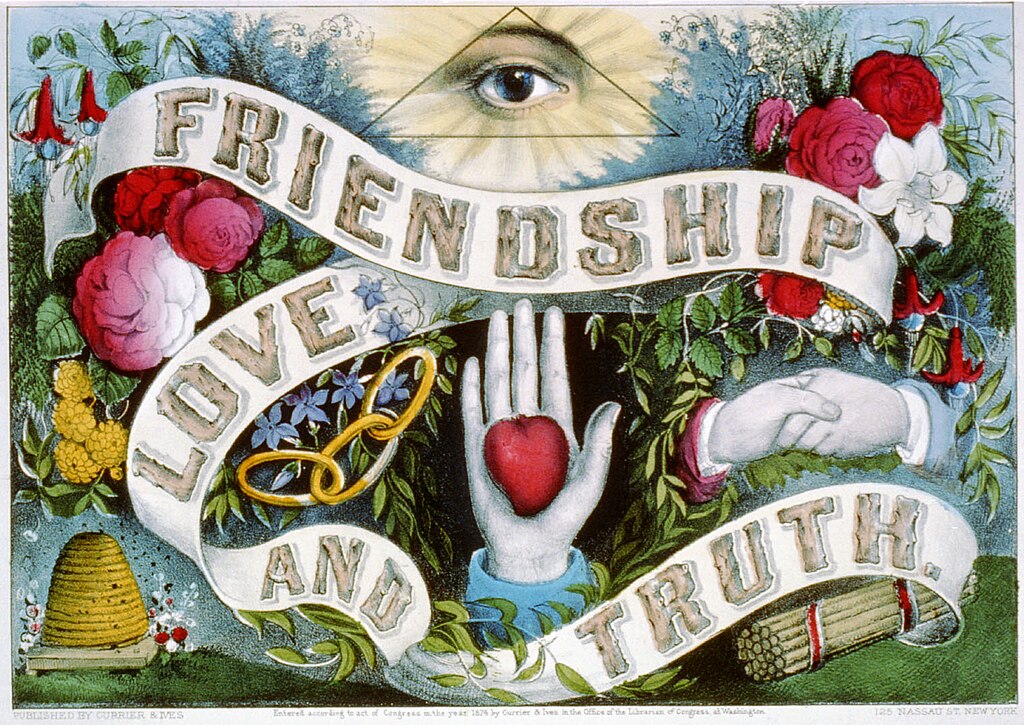
Currier and Ives print , 1894
If I could boil down everything I have learned in behaviorism to one piece of useful advice, it would be this:
Reinforce the behavior you want.

In radical behaviorism, everything we do is a behavior.  This includes our physical actions that can be observed by others, as well as our thoughts and feelings - the "private events" that can only be felt by ourselves.  The term reinforcement refers to any stimuli that occurs after we engage in a behavior that increases or maintains that behavior.  Common reinforcers in our lives are generally things that cause us pleasure - sweets, nice smells, soft blankets, pretty music, hugs, kisses, smiles.   Reinforcement can also come from the removal of something we don't like - for instance putting up an umbrella on a rainy day is taking away the cold rain and thus reinforces the behavior of putting up an umbrella.  Punishment is the opposite: a stimulus that occurs after a behavior that weakens or stops the behavior from occurring in the future.  But for today I want to focus on reinforcement.

As you can imagine, at any given moment, we are engaging in an enormous number of behaviors.  We are looking with our eyes, listening with our ears, feeling with our skin, pushing our muscles about into different positions.  Each of these actions takes place in interaction with the environment.  We see colors, we feel textures, push against objects.  We also feel physiological changes in our bodies, such as emotions, pain or pleasure.  Part of our awareness of this is of the physiological effects such as goosebumps, tightening of stomach muscles or quickening pulse.  But it is also the relationship between events over time: we are sad because we aren't deriving joy from normally joyful activities.  Or we are excited because we are jumping up and down.

In radical behaviorism, "we" aren't actually the cause of any of these behaviors.  Rather, our bodies take place in a continuum between past and future events in which our genetic make-up is interacting with the world around us, continuously forming a "learning history".  There is no "self", an entity somehow removed from the physical body that is processing information - "thinking" - and then choosing how to act.  Thinking is a behavior like any other, and it is a result of environmental and physical interactions.

An example: someone asks you what you would like to eat for dinner.  You say, "Just a minute, let me think about it."  At this point, there is no "you" who is processing information and then relaying it back to the physical world.  Rather, the verbal question is a series of conditioned stimuli - "like to eat" and "dinner" refer to activities you have previously experienced and/or made associations with.  These associations evoke in you a series of conditioned responses.  You are now under social pressure to answer - you have learned the consequences for not answering (there also consequences for answering).  So you are prompted to engage in the behavior of emitting verbal behavior to the questioner that relate to the verbal stimuli in the question.  "What" and "you" places emphasis on your responding.  "Eat" and "dinner" are the cues as to what associations to make.  You then engage in the learned behavior of associating - literally and briefly experiencing relative pleasure sensations of the places that you have eaten, were thus relatively reinforcing, and to which a value can be assigned according to which is more or less powerful.

Whew.  All of this is quite complex.  And I was only scratching the surface.  The truth is that we are all engaged in an incredibly complex series of behaviors, moment to moment, as we go about our day.  Engaging in verbal behavior, whether with other people or with books, magazines or other verbal materials, is the most complex behavior  - literally, in the universe.  The causal chain between stimuli in the environment over our individual learning histories in the past and our current behavior in the environment of the present is tremendously complicated.

 The science of behavior has identified predictable patterns of behavior in which responses are allocated according to the schedule of reinforcement over time in which we are living our lives.  Behaviorists will often refer to all of this this as a "sea of reinforcement".  We live our lives in this sea, little boats us, traveling about based on the environment in which we sail.

As members of society - friends, family, co-workers, voters - our actions have effects on others.  Indeed, the science of behavior tells us that the behavior of individuals is determined in large part by the society in which they grow up and live their lives.  From birth, they set sail on the sea of reinforcement.  How many hugs they get, how much time they spend ignored.  How many kind words they receive, or how many harsh threats.   More importantly, what behavior they were engaging before the stimuli occurred is or is not being reinforced.  If the child asks an inquisitive question about a novel item and is rewarded with attention - an explanatory response - they will be more likely to ask inquisitive questions.  (Indeed, their private behavior of "inquisitive thinking" will be reinforced).  If, however, they receive no response, this behavior will not be reinforced.  In behaviorism, this is called "extinction": a previously reinforced behavior that occurs yet receives no reinforcement will be less likely to occur.

(I've written on this blog many times before about the classic Hart and Risley study which developed longitudinal data on this very phenomenon among different socio-economic groups.  The study was landmark in pointing to the effects of socio-economic disadvantage on children's language development.  Todd Hart was a founding contributor to The Journal of Applied Behavior Analysis.)

Reinforcement isn't only about the behaviors you want.  It works just as well on those you don't.  When people engage in bad behaviors - we would call them "maladaptive" - these have previously been reinforced in their learning history.  They have learned these behavioral repertoires because they have been functional for them in some way; they have been rewarded for them.  Kids learn quickly how effective screaming can be to get what they want.  When that doesn't, a swift push or punch also does the trick.  All manner of attention-seeking behaviors can be observed in everyone from small children to adults.  Look at how much reinforcement Donald Trump receives for his antics.

This becomes difficult to understand when the bad behavior seems self-destructive.  Why does the school-yard trouble maker continue to goof-off in class and alienate himself on the playground?  Wouldn't doing his work and being kind earn the kind of accolades and friendship any kid would want?  Why does he "choose" to behave this way?  Classical terms for these children (and adults) are mentalistic - they originate cause in the "mind" of the individual, as opposed to the environmental learning history.  They place moral judgment on him for "choosing" to engage in maladaptive behaviors instead of appropriate behaviors.  We call him "lazy", "mean" or "hyperactive".  In assuming that he could have done otherwise, we allow morality to enter the picture, asserting that he has failed in his obligation to follow moral rules.  We place responsibility for his actions within him, as if he could have possibly done any different.  Of course, there is morality - right and wrong.  But the error we make as a society is in blaming the individual instead of the "sea of reinforcement" in which the individual is operating.

The science of behavior has established that this framing and use of mentalistic terms are unnecessary.  A parsimonious account of all behavior can be made that is deterministic and lawful, and is certainly at least as explanatory as an mentalistic account (which isn't really an account at all but rather an appeal to circularity: one is lazy because one acts lazy, which is the cause of one's laziness).   Behaviors are a function of and contingent upon schedules of reinforcement and punishment.  There is nothing about a mentalistic account that explains anything that a radical behaviorist account of actions cannot.  Of course, we will never have access to an individual's entire learning history.  However, we can review patterns of previous behavior, take stock of the current environment, and if necessary do a functional analysis.  A functional analysis involves manipulating environmental variables to isolate relationships between the independent variable (the environmental condition) and the dependent variable (the behavior).  For instance, if a behavior is maintained by gaining access to a preferred item, removing the item will increase the behavior while returning the item will decrease it.

For the troubled kid at school, the behavior is most likely not new, and takes place in a context of a learning history in which certain events in the environment trigger a behavior and then it is reinforced.  It could be a variety of things, but commonly with these kids it is escape from demanding tasks, and a desire for attention.  The bad behavior occurs and the demands are temporarily removed.  The behavior is then reinforced when the child is reprimanded.  A vicious cycle develops where the majority of social attention the child receives comes in the form of reprimands - or sometimes laughter from other students - which reinforces the bad behavior.  Years of this go by.  Often times home life isn't so good.  There are likely few times in the child's day in which he is being reinforced for good behavior.  No one pays attention to him when he is quietly sitting in his seat.  Teachers are likely happy no not have to be dealing with him for the moment.

Interestingly, many teachers are not trained behaviorally and end up reinforcing bad behaviors and then wondering why they continue.  The child typically stops when they reprimand him, giving them a momentary reprieve, which reinforces their reprimanding behavior.  The best thing for a teacher to do is likely to ignore the misbehavior and focus on the positive behavior.  Of course, it is difficult to do this in a classroom filled with other children.  But if the behavior is being reinforced by attention, we don't want to give it any.

However, what these children need is for their appropriate behaviors to be reinforced.  What is it we want them to be doing?  Listening quietly.  Raising their hands.  Tolerating demands.  Expressing themselves via words.  Being kind to others.  Sharing.  Caring.  They need extra reinforcement when they engage in each of these.  Ideally, we would be able to be continuously monitoring them and doling out the reinforcement for each of these behaviors.  We want them to increase and happen all the time!  We want to reinforce the behaviors we want to increase, and place the maladaptive behaviors on extinction.

The nice thing about good behaviors is that they actually do bring their own naturally reinforcing consequences - having learned to ride a bike, many new pleasures are now available!  Artificial reinforcement can then be thinned as the individual comes into contact with natural reinforcement.  But they have to occur often enough and consistently enough.  One schoolyard punch can harm many days of polite caring and sharing behavior.  But sharing and caring brings friendships, fun activities and lots of social praise.  Tolerating demands placed allows one to learn easier, faster, and with more joy.

So how does one reinforce the behaviors one wishes to see in others?  By making them happy, essentially, after they have behaved appropriately.  Social praise is the easiest and most common conditioned reinforcer.  Compliment them.  Show them how much you care.  Give them a friendly slap on the back.  Give them, a smile.  Give them a hug.  A classic teacher phrase ought to be applied throughout life: catch them being good.

In Applied Behavior Analysis, we focus on the positives.  Inappropriate behavior needs to be corrected, and there are specific ways of doing that that are simple and effective.  But even more important are the alternative, replacement behaviors that we want them to engage in instead.  These sometimes need to be taught explicitly.  But generally, people already engage in them yet may not be getting sufficient reinforcement to engage in them at a high rate.  The nice thing about focusing on the positives is that they feel good for both parties.  In relationships, a little positivity can go a long way.  A nagging partner can do everyone a favor and pay attention to when the correct behavior is emitted.  If the individual isn't taking out the trash frequently enough, try heaping on the praise when they do it.  This will increase the rate of responding.  Ditto for paying attention when the partner is talking.  When they do it, make sure to lean over and give them a kiss, a hug or a squeeze.  You don't necessarily need to use verbal language to communicate praise.  You just need to make them feel good.  The behavior will be reinforced.

This isn't always easy.  We operate under our own schedules of reinforcement.  Our behavior of reinforcing the behavior we want is itself a function of schedules of reinforcement.  Maybe we don't have a learning history of praising others, or showing them affection.  Maybe instead our behavior of nagging or finding negatives has been reinforced.  In men, showing affection towards other men is actually frequently punished in children: homophobic culture reinforces behavior that seeks to punish small boys who engage in affection towards one another at a relatively young age.  Social praise can be delivered in other ways, yet physical affection and compliments are often met with statements along the lines of, "what, are you gay or something!"

It also takes a lot of patience to ignore someone's bad behaviors and emphasize the positive.  I'm certainly no saint myself.  We have a long tradition in our religions of placing a high value on behaviors such as compassion, humility, generosity and turning the other cheek.  We venerate those who are able to remain dignified, and rather than seek immediate retribution, instead find the good in others.  This is what Jesus, Gandhi, Martin Luther King and the Dalai Lama are all known for.  The current pope Francis is widely beloved for just this sort of attitude.

But what is "finding the good in others", but reinforcing the behavior we wish to see?

It isn't easy, but it makes the world a better place.  We all help each other.  We all create each other.  We are all in this together and responsible for one another's behavior.  Ultimately, there is no you or I, only us.