“Government takeover” has been a defining phrase for the right over the past few years. But it is just the kind of sloppy rhetorical sloganeering that drags political discourse into the mud.
The truth is that “takeover” can mean any number of things. It can mean anything from a literal annexing of private businesses by the government, to a slight increase in the government’s presence in the healthcare market – the effect of which being to put the government in the position of driving some degree of health costs in the entire market. The former is entirely untrue, while the latter is mostly true. And basically the same can be said about government “takeover” of the banking or auto industries.
The problem is that when most people think of “takeover”, they think of the former. This is helpful rhetoric because while there is a kernel of truth to it, the claim can be backed away from as “hyperbole, while retaining all the demagogic punch and avoiding the impression that one is outright lying.
I suppose being a mealy mouth weasel doesn’t bother some people, but I’m not comfortable with it. Nor am I comfortable going one step further and offering for my defense the claim that “well, they do it to”. I suspect this is an Achilles heel of the left – not being as comfortable playing dirty.
However, in the end I imagine it is mostly about a conscious awareness of what we are doing. To the extent that the right is more comfortable playing games with language and emotions, I don’t think it is really a conscious choice to behave unethically. I think they simply aren’t as reflective intellectually in general.
Glenn Loury and John McWhorter are at it again on bloggingheads.tv, this time taking Cornell West to task for simply not being serious enough.
I've had my share of problems with Loury and McWhorter (here, here, and especially here), although I suppose I've come to begrudging appreciation of at least Loury's particular eloquence (I did enjoy him here). The man can wax eloquent on a turd.
Which I guess leads to what is maybe my agreement: these two so often have so much to say, yet end up saying so little. The crutch they - especially McWhorter - have a habit of relying on is an oppositional schtick. They stake out an "unconventional position", yet then spend much time deriding what they have defined as "conventional". Yet much less is spent actually making a case for their unconventional position, allowing much of the argument to be assumed from the fact that it is merely in opposition.
I'm not sure if I heard either of them say this, and it may be a criticism beyond the pale for either of them to level, but I wonder to what extent their critique of West was about a sort of minstrelsy? They are both quite damning of what they refer to as his playing of some old-time civil-rightsy caricature. They both seem offended by this, and wish he wouldn't do it. They seem to think of it as a schtick, a performed routine that he puts on - no doubt to the benefit of a white audience.
Because, what about when he does it before a black audience (as he does)? What role is he playing there? In most academic settings, the form of expression is in sharp contrast to the the subdued, stiff-lipped, "serious", anal-retentive analysis we're accustomed to coming from "experts". And this is for the most part a white thing, right? (As most "experts" tend to be white). Interestingly, his last (first?) appearance on bloggingheads happened to be with a Robert George, southerner very interested in the Christian tradition, which especially in the south has a long history of just the sort of expressionistic style West demonstrates.
But before a black audience, his style is perfectly at home. What Loury and McWhorter seem to criticize as phony or contrived, suddenly becomes an exemplar of the great history of black ethnicity. In criticizing West, they too implicate black culture itself - something these two particular black men are no strangers to. In fact, the very conservative impulse that they have an affinity for has a long history of criticizing black culture, not just for the dysfunction disproportionately prevalent in its community, but for its expression of "otherness", and the way in which it seems to present a perpetual challenge to white European American cultural hegemony. In their quest to transcend race, they become susceptible to the conservative habit of downplaying its significance, having been made uncomfortable with the thornier issues it presents both at the micro and macro levels of social integration and political policy.
If one can say anything about West's core motivation, it is that it is a search for social fairness and human dignity. His academic career has been devoted to this question, specifically race, and how our society has struggled to "do right" by its citizens. I think it is fair to say that no small part of West's public persona has been as a charismatic champion, in the tradition of many great social leaders. No doubt this has meant a sacrifice in his thinking - there is little room for nuance in rallying the masses. In this regard, serious academic thought (not to mention the time required for heavy-duty scholarship), will inevitably suffer.
Yet in his quest to inspire the public, West no doubt has gained a spiritual eloquence. I don't mean this in any religious sense, but in that thought - we are discovering more and more - is not solely the domain of logic and reason. It is at least as motivated by emotion, informing things like empathy, conviction, ego, etc. The great efficacy of a leader is the way in which he or she is able to connect with an audience not only on an intellectual, but this "spiritual" level as well. And of course, doing so requires developing this skill within oneself.
The ultimate question then seems fair: to what extent are Loury and McWhorter offering up a "schtick" of their own? To what extent is any of us offering up a "schtick"? Sure, in the relative comfort of each of our established communities, it may not feel like so much of a schtick, and merely "natural" behavior. But one of the lessons of precisely the movement from which West is coming, not only civil rights but the profound self-reflection and deconstruction that peaked in the 60's, is that there really is no "natural". For what is "natural" about african-americans who took the names of their masters, were forced to live in oppression and cultural violence for centuries? What is "natural" about Barack Obama, who was raised in a relatively white family, yet is seen (and treated) as "black" by the rest of society? Many black radicals, along with many others, took this new relativistic understanding and then sought to upend things by explicitly creating what is "natural" for themselves - whether Kwanzaa, adopting African names or dress.
I think this was actually not so new. Because culture never really was "natural", especially when you live in the hostility of a white supremacist society that denies everything that is truly natural about you, and invents what is not. Despite this, the story of America is in no small part the story of black survival and cultural triumph. What happened in the sixties what largely a conscious discovery of what had already been going on since before the founding.
Loury and McWhorter make a reasonable enough case for the sixties "being over". But I think they strongly overplay their hand. There is a fundamental inertness and stubborn shamefulness to their critique. So what if West is a little over-the-top? The content of what he says, despite their protestations that it is not "deep enough" (ironic, coming from them), is as least as much strengthened as weakened by his emotional delivery. Because when he pulls into that "groove", so to speak, his torso rocking, his hands waving, his words falling into a rhythmic sync, he is tapping into a source of power and strength that finds its roots deep in the human soul, that which will never find expression in even the most complex and well-structured grammatical elocution. Combine this with a first-rate mind, capable of referencing the greatest of human works at the drop of a hat, from philosophy to poetry, to Judeo-Christian texts and historical events, you have a figure that anyone ought to be in awe of.
Mark Kleiman points to another example of the right's obliviousness to its own tendency towards racial cognitive bias. He links to Jeffrey Goldberg, who has this to say about a Fox News feature on Obama's meeting with the president of Gabon:
This is psychologically fascinating: The mind of Fox Business host Eric Bolling, when confronted with images of President Obama meeting with Gabon's president, Ali Bongo, instantly recalls other black people who have met with President Obama, and comes to the conclusion that Obama feels deep love for black "hoodlums."
Racism is a beast. Even in the past, when it was largely socially acceptable for people to be explicit about it, their motivations were largely unconscious. Even when pseudoscientific claims began to be made in the late 19th century, it was nothing but an attempt to find evidence for pre-existing hatreds. Did the Germans know why they hated the Jews so much? Their conscious rationale was based on bizarrely fantastical assumptions. So to with most forms of hatred - whether anti-gay, anti-woman, anti-minority, etc.
If racists were conscious of where their racism came from, what motivated it, they likely would not be racist.
So, now we have the modern "politically correct" world, where everyone knows we shouldn't traffic in "off-color" assumptions, stereotypes, or any of the other forms in which hatred has historically thrived. This has generally coincided with the understanding that racism, sexism, etc. are wrong and untrue.
Yet what is it about modern society that is able to grasp how these hatreds are wrong, while previous generations were unable to? Have we found some special evidence that has proven these hatreds false, that we can point to and agree on? To some degree, I think we have. Much of the evidence is less scientific - in terms of biological differences in race or gender. (We are still working on evidence that homosexuality is not a "choice", even while claims that there is anything wrong with it even if it were have long been demolished.) The "evidence" I think would largely come from the social sciences, and their work in laying out not only the historical roots of hatreds, and the idiotic viciousness with which they were perpetrated, but as well the psycho-social ways in which they were propagated.
The most difficult task has been to show the ways in which hatred, which is ultimately wrong because of the pain, injustice and inhumanity it creates, has persisted despite - what we now consider to be obvious - its incompatibility with the universal human impulse towards compassion, tolerance and empathy. How could otherwise rational and caring humans treat each other this way? A good portion of the explanation for this has been the fact that historically oppressed (hated) groups had been marginalized and thus banished from cognition, where they would have been subject to natural human impulses to treat them with fairness. Theoretical frameworks have been developed that try and explain this through the function of social structures such as patriarchy, class, ethnicity, religion, etc. - the interplay of social power and dominance being dynamics that alter cognition.
Obviously, much of this is pretty high-order analysis, largely still confined to and emanating from academia. In popular culture, aside from that which had been filtered down from universities, the main deconstruction of these historical hatreds came through the civil rights movement, which was certainly working with academia (and its student movements), but was also merely about the standing up to oppressive elements in society by the oppressed, for whom the hatred was very real and personal. The oppressed had no problems with cognition (except in the case of that which had been internalized, although that was a serious yet less central problem). Instead, it was the cognition of the oppressors, those in mainstream society that had been raised on stereotypes and other forms of unconscious hatred that had crippled their ability to properly process empirical reality.
It took a massive, multi-decade campaign of relentless, in-your-face protest both on the streets, in the media, in the arts, and likely most importantly, at dining room tables and backyard barbecues. (The most practical results being, of course, change in the courts and legislature). A good portion of the movement’s efficacy lay in shame.
Because once it was accepted that these forms of hatred were wrong, that was only the beginning. The real work lay not in establishing what should have always been an obvious empirical question, but in taking on the popular mythologies and habits of mind that had always been the real levers and gears of hatred's propagation. It may not have been understood as such, but what had to happen was a mass re-examination of cognitive bias. For most, what this first meant in practice was an end to ethnic or sexist jokes. However, it was not the joke itself, but the habit of mind that produced it. It was the critical deconstruction of the idea that you could reduce someone's humanity so as to not only ignore it, but to twist an empirically false reality in such a way that you could find humor in it.
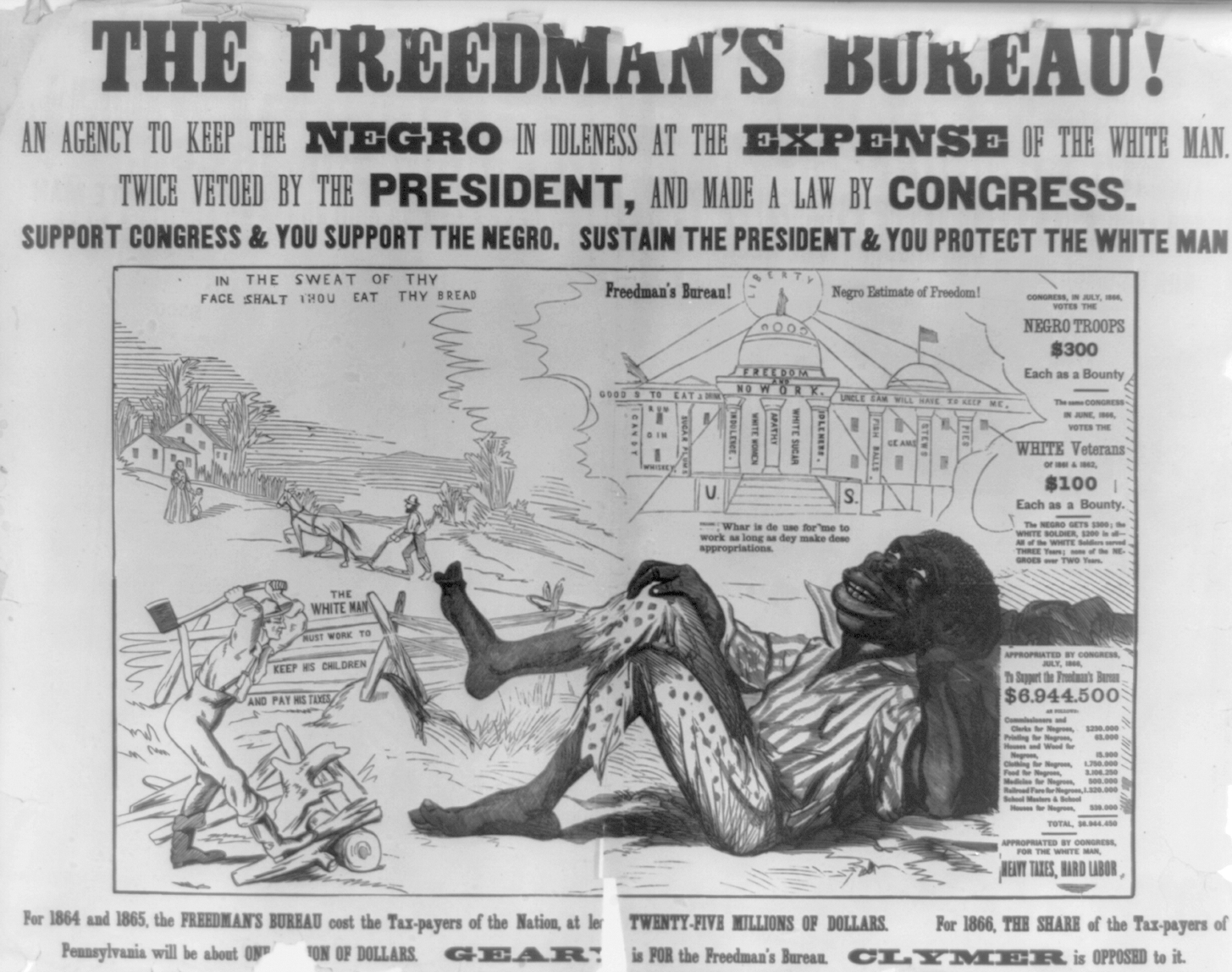
Take for instance an old-fashioned joke about blacks being lazy and eating watermelon. Both are empirically false, but behind them is the reality of centuries of racial hatred and oppression. By laughing at the joke, you are reducing blacks' humanity, inventing realities about them that are wrong, then using that fantasy to punish and laugh at them, all of which is a propagation of their historical suffering - in that this is the precise mindset that apologized for and excused their continued oppression. And you can replace that joke with any joke about women, gays, minorities, etc.
Now, then there was a backlash to all of this, generally known as "anti-political correctness". Much of it was – and still is - likely motivated by defensiveness to the allegation that one is motivated by an unconscious hatred. Because, once it became established that these hatreds were actually wrong, the cultural patterns and habits of mind were still there, whether people wanted them or not. Many in society were essentially walking right into a sort of trap: a massive cultural transformation had just taken place which revolutionized thought, and they were now expected to monitor nigh-every word or thought they had. In this context, cries of “thought police” were not entirely inaccurate.
Of course, there really were no thought police. But there was intense pressure bearing down on individuals to change how they thought and spoke. Yet how else would the transformation, the movement to end these inarguably evil patterns of historical discrimination, prejudice, oppression – all of which essentially being forms of group hatred, come to pass? It would have to be messy. There would have to be dispute over what was and was not an expression of hatred?
Many felt that the charges level against them were unfair: how could some simple comment – mere words – a joke! – prove that one was what would come to be one of the most damning charges in modern life, a racist? Well, now we’re faced with a definitional issue. What is a racist? A slave-owner was certainly a racist. A Nazi was certainly a racist. A KKK member was certainly a racist. Uncle Bob, who openly referred to blacks as “ni**ers” was a racist.
But what about the coworker who merely said she was afraid to go into black neighborhoods? What was she expressing? What was she feeling? Did she feel that black people were somehow more dangerous than whites? Did she hear all the reports about black crime and assume that the neighborhood was more dangerous than it really was? Was she subject to any of the many cognitive biases that we know contribute to false cognition about racial issues?
Add to this her genuine belief that she was in no way a racist. The idea that she might be disgusted her! Yet what if she was just a little bit wrong? What if she had grown up with mistaken ideas, assumptions and prejudices about black people? Maybe her view of race relations was informed by old patterns of racial bias and misinformation – yet she was consciously convinced, and firmly believed that racism was wrong? She never took an ethnic studies course. Sure, she watched Oprah and understood that much of our history had been whitewashed, groups marginalized. But she didn’t have the “chops” to properly analyze every last one of her own views and assumptions before they flew out of her mouth.
And now she’s being accused of racism? Well, this can’t be. Because she’s not. So what she said must not have been racist. How could it be, when a non-racist person said it? Everyone is just being too sensitive. It is they who have the cognitive bias. They have become so overtaken by their own white guilt that they are now attacking their own race. In fact, it is they who are the real racists. Why are they so obsessed with race? Why do minorities get to make sweeping statements about whites? This is reverse-racism!
Maybe some of what she is saying is true. Maybe white guilt has driven people to be a bit too cynical. Maybe some of it is simply rebelliousness – parents would surely attest to this among teenagers. (How many charges of racism were made towards parents in the sixties, and dismissed as teenage rebelliousness?)
In the end, we don’t really know what lurks in the mind of every person. We have a hard enough time knowing what lurks in our own minds. But these patterns do exist: these biases, these prejudices and assumptions. And we know that they have formed the backbone, the cognitive framework, for historical hatreds. We simply cannot take them lightly. We must investigate them and provide push-back when they are written off as harmless or insubstantial. On their own, or depending on what exactly they are expressing, they might be. Under examination, it may turn out that they meant nothing. But it also might be the case that they represented a real instance of cognitive bias, some tendril of hatred, no matter how small.
One thing we must be very careful of, if we are to ultimately continue to make progress against what may be a universal human susceptibility to patterns of hate, is to avoid alienating the very people we wish to teach. Because teaching is truly what we are doing, regardless of how we go about it. Whether it is to politely suggest, or firmly denounce and shame, the ultimate goal is always to stop the behavior, to cut off the falsehood before it can grow any larger.
Many will say that the problem is mostly gone. It has been decades now since explicit expressions of hatred have been considered shameful to the overwhelming majority of Americans (homophobia is just now getting there). So too, one would assume, the practical consequences of hatred – that which effects people’s ability to acquire housing, employment, and otherwise live in society as equals. Certainly cases of discrimination have dropped substantially. We aren’t there yet, and it is an ongoing struggle, but most people seem pretty fair.
Yet are they? One can be an avowed anti-racist, and still be subject to cognitive bias. One can feel that all gays are perfectly nice people, but worry that there is still something “wrong” with them. One can vote to limit their rights. One can feel that blacks are no different than whites, yet have bad “cultural habits”. One can then choose to avoid their application.
More damning, one can fail to fully embrace attempts by society to rectify historical wrongs. If one opposes more money for poor (read: black) schools, or welfare benefits, or healthcare – to what degree might cognitive bias enter into the picture? Surely there are principled philosophical arguments to make against such endeavors. But to what extent would opposition to such programs be informed by the presence of cognitive racial bias? If one feels that blacks have a “culture of laziness”, then would one be less likely to support the provision of social services perceived to be offered to blacks rather than whites? Surely they would. Yet because this doesn’t mean that opposition to such programs is motivated by cognitive bias (the tendrils of historical hatred), as there are perfectly reasonable arguments against these programs (they are too expensive, ineffective, etc.), the determination of the extent to which their opposition is due to bias is extremely difficult.
Suffice it to say, because of the possibility that bias may still play a considerable role in politics and the structure of government, the stakes are quite high. It is with this consideration that those who understand the fundamental role cognitive bias has played in historical hatred approach issues of race, gender, class, sexuality, etc. with heightened skepticism. Furthermore, the skepticism increases when any are involved who are known to have an opposition to attempts by society and government to correct for historical patterns of oppression through regulation or social programs. Precisely because it is difficult to know one’s motivations – whether principled or biased, it becomes all the more important to take a skeptical stance. This is warranted by the mere possibility that one’s cognitive failings might be informing their determination of highly consequential social outcomes. This is all the more true when the subject in question is not merely a voting citizen, but a public figure with a much determinative influence.
David Brooks argues in his latest column that the main difference between the Republican and Democrat models for health care reform is top-down vs. bottom-up planning. Really, argues Brooks,
"Politicians wave studies, but they’re really just reflecting their overall worldviews. Democrats have much greater faith in centralized expertise. Republicans (at least the most honest among them) believe that the world is too complicated, knowledge is too imperfect."
Jonathan Cohn finds this merely new spin on an old Republican framing:
Brooks writes as if the key distinction between Democratic and Republican plans for Medicare is the way they would manage the program, with Democrats entrusting experts to make key decisions about where to spend money and Republicans entrusting consumers. But that’s not the most salient difference between the two approaches. The most salient difference is that Democrats would preserve Medicare's fundamental guarantee of health benefits at affordable prices. Republicans would not.
I completely agree. This is less about markets and more about morality. One of the most irritating conservative mistakes is to compare private vs. government service without acknowledging the fundamental point of government services: to guarantee some standard of access to all. Private enterprise is pointed to as routinely superior in service – which it no doubt usually is. But be they roads, parks, libraries, schools or health care – they are not required to open their doors to everyone. Of course this is often less efficient, and normal market mechanisms won’t come to bear – but we make this sacrifice if we feel the service is of sufficient importance to provide to the public.
Something I've never really understood is the relationship between college and socioeconomic status, particularly in the changing rates of college attendance over the past 50 years.
Today, college attendance - not withstanding the general drumbeat equating it with economic success - has come to signify upper socioeconomic status. While it certainly has currency in the marketplace, I wonder whether much of the actual association with it has more to do with its socioeconomic correlates: family income & education, and individual motivation. I'm not sure where, but recently I heard/read that the vast majority of Ivy League students come form families making over $200k a year.
College obviously signifies more than mere status. You can reasonably trust a college graduate to have good reasoning skills, exposure to a modicum of historical thought, as well as some degree of intellectual desire. However, much of this can have more to do with the family and peer groups within which one has traveled.
If you go back 50 years, far fewer people attended college. Yet there still would have been family and peer groups that produced individuals with what we now associate with college education. Sure, they didn't take college-level courses - yet they no doubt were still voracious readers and possessed the critical-thinking skills that allowed them to make daily social interaction and personal reflection a higher-order experience.
An interesting question might be what effect has this increased college attendance has had on social segregation, in that individuals with proclivities towards higher-order thinking and intellectual curiosity could now self-select into more rarefied social groupings, organized at least by economic affiliation, if not by shared cultural interests formed in no small part by college-going cultural communities. This would be seen in the "college-town" phenomena, where veritable islands of higher-order* cultural progressivism and experimentation existed within a larger geographic sea of traditional and conservative norms.
*My use of "higher-order" here is damning (as much to myself as anyone). I accept the conceit that higher equals better, or at least more important - to a degree. Because what I mean by "higher" is a meta-analysis that can only come from increased consciousness both of past and present. A sort of cultural geometry exists that literally requires amassing perspective and increasing "viewing angle". I tend to be what you might call conscious-ist: I generally feel that increased knowledge and awareness is a good thing. I suppose there is a good deal of the Platonic ideal in this judgement.
Interestingly, this may really now be getting at the root of class and cultural resentment. Because the idea that "higher is usually better" implies the reverse, that lower is usually worse. So what then to make of that which is derived from lower-order knowledge or thought?
Well, maybe I ought to back up a moment. To be clear, I am only talking about knowledge/consciousness/awareness, not action. It can certainly be the case that pure reliance on knowledge itself can limit one's expression, and even one's acquisition of more knowledge; "just because you can play all those notes, it doesn't mean you should". I think one of the great things to come out of cultural postmodernism has been the embrace of the "low" as a legitimate form of expression. Yet the crucial difference is the meta - the knowledge that the "low" is merely one form, relative to its position, and that other forms exist. It is the knowledge that is important, not the action.
One of the lessons post-modernism has taught us is that the high is also relative. It is here that power-dynamics come in to play. The platonic ideal of those in possession of the light of truth must question how they came to possess it, and instead of self-congratulation, holding themselves in high regard, be humbled by the task of uncovering how it came to be that they came to find the light while others did not.
There is a great deal of bitterness on the right and a sense that the left - the "liberal elite" - looks down on them. It is an interesting notion because it is partially true, but works both ways - do not these aggrieved people look down on the left? I think there there are a couple of things going on here. First, there is a definite positional, hierarchical relationship between the cultural values being debated. (As I stated before, if we're talking about degree of knowledge/consciousness of the relative nature of truth, the left's position can literally be said to be geometrically "higher".)
Second, there is an economic implication for power dynamics - "learnin'" - that goes back to the dawn of civilization. There are the haves and the have-nots of knowledge/consciousness. Furthermore, the "knowledge haves", to the degree that they have insinuated themselves into any system of elite intellectualism (whether through schooling or social organization), have traditionally been white collar, or at least not involved in industry of brute strength. Their contemplative natures represent - so goes the perception, with a good deal of truth - a sort of social luxury, or frivolity. To the have-nots, they seem little more than peacocks, parasitically lolling about in a land of abstract ideals, while "real" people do all the heavy lifting.
This is no doubt true. Yet it is also false, and suffers a revanchist motivation that obscures proper cognitive analysis. Because first of all, there have always been individuals that are more interested in intellectual pursuits, while others more interested in that of the physical, or socially important. It is literally true that these folks will not possess the same consciousness of a particular subject, and thus have less "expertise". But we all can't be surgeons, or auto mechanics. Civilization is built on a division of labor. Second, intellectual pursuit is also the backbone of civilization. And while Plato argued that an intelligentsia run affairs of state and culture, democracy has completely rejected that notion. Certainly our founders were incredibly learned men, and spent most of their time in intellectual pursuits. It is virtually agreed upon by all that true democracy requires an educated public. Can there ever be too much education?
And so today we have a situation where higher education has never been more democratic. Interestingly, most of the voices you hear decrying this actually come from the right, ironically seeking to make education more exclusive. And yet higher education is overwhelmingly liberal - at least its professors are. And so to is its export of ideas - filtered out not only through graduates, but through papers and policy groups, as well as through journalism, which relies on its massive bank of credentialed "authorities" for expert commentary, not to mention the college-educated journalists themselves.
This dynamic - academia and journalism - works as one of the great engines of social reflection and progress. The mission of both entities is explicitly one that is progressive in nature, in that it seeks to critically analyze and reflect on knowledge, seeking to create more in the process. There is a reason it is called "higher", not "lower" education.
Is it no wonder then, that its resulting formulations and conceptions of our world would be innately progressive? William F. Buckley once wrote both in defense and statement of conservative principle (and I'm paraphrasing), that we have solved most of the major social problems. A better argument for intellectual complacency would be difficult to make. He said this also, I believe, around forty years ago - a time I would hope most people would not really want to return to. Certainly we have in many ways become worse-off, but there is no clear way of saying that this was the result of progressive social inquiry. To be sure, we certainly wouldn't want to be better of [I]not knowing[/I] certain things about ourselves. Yet I wonder if that statement may not be more controversial than I give conservatives credit for.
It is a general given nowadays that there exists a large split between the right and left on intellectual vs. anti-intellectual lines. There is certainly much evidence of this in the rhetoric of politicians, as well as pundits. I imagine that the right isn't opposed to what it feels is genuine intellectual pursuit, but merely opposes what it feels is a take-over of intellectual institutions such as the press and academia by liberals, hence a "liberal elite". Yet this opens them up to criticism that their critique is less substantive, and more an irrational rejection of real truths that these institutions have uncovered, which align with left-wing values. Because of course, as with the tendency for conspiracy theories to thrive in cognitive blind-spots, if established authorities are existentially suspect, and claims they make that might give dissonance to one's prior belief, it is perfectly logical to dismiss them as "biased".
Ironically, this opens the door to a form of relativism, albeit a factual relativism - not the moral relativism that the cultural right has always criticized the left for. Interestingly, factual relativism requires the denial of facts, while moral relativism denies absolute, metaphysical authority. (Moral relativism in practice is actually incredibly rare: most simply argue that morals are relative to human culture, and not that no morals can ever exist. I've actually never encountered anyone who believes the latter).
In the end, the right-left, socio-economic, cultural split may have more to do with cognition than anything. Rates of college attendance aren't much different on the right and left. Given the degree to which college professors, as well as journalists tend to be liberal, one might assume that the conservative response is simply to discount these authorities - relying on a cognitive model that reduces their authority.
Michael O'Hare reflects on the ways in which we design our lives - consciously or unconsciously - around meaningful interactions:
The dishwasher displaced a family ritual of washing dishes that has no good substitute (I wonder what kind of social interaction rich people with servants have/had?). Sitting around the table at dinner, people are looking at each other and anything that comes up, especially if it’s at all risky or awkward, is an agenda item. But washing the dishes, we were ‘officially’ doing a chore, and not face to face. It was a lot easier to bring up a touchy or risky question. Not being face to face has a lot going for it in enabling honesty, I think. As in being side by side in a car seat, or sitting around spinning or sewing, as women used to do for hours. Aaron Wildavsky was famous for having meetings on the hoof, which was a good idea partly because using large muscle groups seems to be good for mentation, but also because the setting was better than sitting across a table looking at each other, and on a walk, the time to the end is implicit physically, and the meeting can’t be ended unilaterally on either side. So one knows when there’s just enough time to open the kind of difficult issue that begins with “By the way, I was thinking…”
It seems more and more that as the pace of new forms of living quickens, we are challenged to engage in this kind of insight. As it becomes harder to rely on forms of living that we had previously gravitated towards unconsciously, or through vaguely tacit approval of traditional structures that may have lasted centuries or more, we can no longer rely on tradition to provide at least a benign guidance. Of course you could argue that tradition hasn’t always been benign, but if you’re going to embrace iconoclasty, you must first be conscious of what it was your were doing and what you are now going to do.
And here maybe is where we all find ourselves faced with the existential angst of change and relativism. “Oh my God, I no longer wash dishes by hand – how can I replace that meaningful exercise?”, or “Why bother collecting records when everything is online, all the time?”. As the pace of economic and cultural change only seems to grow, our worlds can seem to unravel.
This is also likely a function of age as well. Now in my mid-thirties, I think I’m just beginning to grasp the age-old lament of mid and later life: that the world seems more and more like the view out the window of a speeding train, and less like the view of the interior cabin. I suppose this has been classified as a fear of ultimate mortality. But it seems more a recognition of the transient nature of time itself.
So what to make then of attempts to find stability – to find a sense of real meaning in this modern chaos? What if an increasing effort to be conscious of what we are gaining or losing as modes of life change, turns out to simply create a net increase in stress and anguish? Karen Armstrong and others have claimed that the extreme version of this sense of threatened rootlessness and assault by modernity is the driving force behind fundamentalism. Its hard not to see their point.
Ironically, when one is in a permanent state of reaction, one would also seem to be quite rootless. The more one attaches oneself to moving targets, always allowing oneself to be framed by them, defined by their gravity, the more chaotic the world becomes. Like a boat caught in a fast-moving river, resisting the flow is a full-time job. Of course, the only alternative is to let go.
And yet here we are again (in the same boat?), struggling to orient ourselves and try and steer however we can. It is an unavoidable fact that the modern river is all around us and there is no stopping it. I suppose the question to ask ourselves is how much worrying we can withstand as we sail into oblivion?
We’ve all been there: patiently sitting across from someone who seems to possess a limitless capacity to answer with confidence every question that arises. Never pausing more than a few moments to collect their thoughts, producing endless convictions like a magician with a bottomless magic hat, they spontaneously extemporize and theorize with almost zero trepidation or self-reflection. Like the classic SNL parody commercial, they have turned their ass into a professor.
Bores come in different forms. The most morally benign form is the Humbly Bumbling Bore. They make no pretense of special wisdom or authority, yet lack neither any sense of what might be interesting to their audience, nor the ability to stop flapping their lips. These individuals will spend five minutes explaining in exquisite detail the most insufferably dull aspects of their lives. And lest you bother yourself with attempting to provide commentary of your own, be warned that “getting a word in edgewise” is a phrase designed with these folks in mind. Should you succeed, odds are your offering will be briefly acknowledged and then moved on from, like a quick piss at a rest stop before heading back onto the road to nowhere.
A more rare form is the Bore On High. Like quiet wise men of yore, these types sit silently until the conversation calls for their input, which they obligingly proffer in dry and authoritative tones. For the most part, there is an air of cool skepticism to their manner, as if by some bothersome twist of fate, their chariot-driver lost his way and they were mistakenly driven to a frivolous engagement. Yet these individuals are rare, presumably spending more of their time scaling ever more lofty and aery heights than we could possibly be privy to.
Alas, the form we are all too familiar with is the industrial-strength Pedantic Bore, known colloquially as the Blowhard. Mouth more often open than closed, forever spewing forth an ultimately monotonous and clichéd mass-production of predictable and neatly packaged commentary, these types regularly enter into conversation and immediately proceed to dominate its direction and tenor. Their contributions so resolute, so confidant and final, or at least so mundane and uninteresting (say, irrelevant details such as street names or car manufacturers), other participants are generally caught speechless, previous avenues of deliberation and nuanced consideration suddenly cauterized.
At this point either one of two things will happen: participants will scan their brains for some new bit of intrigue from which to build new avenues of discussion, any of which the pedant will seek to capitalize once again. Or, if unhindered, he will simply take advantage of the lull he created in the conversation and insinuate himself even further into the now expired subject, providing more and more details about himself and his own experiences in the matter, usually repeating his original comments at least once or twice in the process. At this point, any slightest acknowledgement of his verbal tenure, any utterance that might possibly be interpreted as tacit approval of his holding court, only serves to encourage his kingly procession.
I have briefly searched but have not found examples of descriptions of bores among ancient texts, but I have no doubt that the personality type extends thousands of years back in time. People must have always been boring. I would imagine that as we evolved the capacity for complex communication, a tendency inevitably developed, especially among the less socially-astute, towards indiscriminacy of expression. In fact, I would not be surprised to learn that there are chimps out there right now, describing their chimp thoughts in chimp ways, boring even their own fellow chimps.
Or maybe not. Maybe chimps aren’t polite enough for such silliness. Maybe they simply turn and flee when they see a serial offender approach. Or maybe they tolerate him for a short while, then give him a good box about the ear. I imagine this would go a good length towards inhibiting such social behavior in general. Of course, in the interest of group cohesion and maintenance of positive relationships, sacrifices have to be made. We all must tolerate one another to a degree. I suppose it is within this space that bores learn – or, to be more precise, never learn that such self-involved behavior is at best annoying, at worst highly corrosive to social progress.
Just think of how much good, positive, productive human interaction has been wasted at the hands - at the mouths – of bores. If one makes a reasonable assumption that the average American spends a minimum of 10 minutes of each week being actively prevented by a bore from engaging in otherwise socially productive behavior as learning something new about themselves or the world, or being on time for a meeting, we’re talking about 8.5 hours a year - over a lifetime, nearly two years! Two years of excruciatingly frustrating, almost nauseating and soul-crushing boredom.
So maybe this is a reminder to us all to find some way of fighting back. Whether making more of a hasty exit, or taking a firm and explicit stand, let us remember the words of John Updike:
“A healthy male adult bore consumes each year one and a half times his own weight in other people's patience.”