Showing posts with label taste. Show all posts

Sunday, December 11, 2016

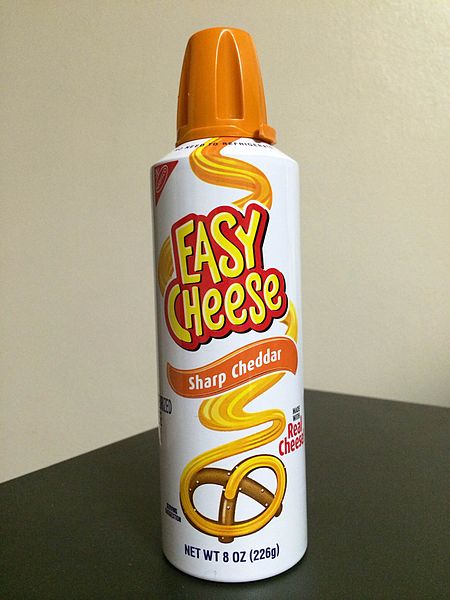
Cheese and Trump

Kevin Drum writes on liberal sneering.
I'm not here to get into a fight with Krugman, but come on. Sure, the right-wing media fans the flames of this stuff, but is there really any question that liberal city folks tend to sneer at rural working-class folks? I'm not even talking about stuff like abortion and guns and gay marriage, where we disagree over major points of policy. I'm talking about lifestyle.
I think this is super important, and something I've been interested in for a long time.  What is taste?  What does "cheese" really mean.  What does it mean to sneer?  And it is a central theme of the Trump election.

On the one hand, I do sneer at cheesy things, because they are cheesy. Is this wrong? Does sneering at things imply a value judgement about the person?  If I dislike Coors beer, can I sneer at it without being said to sneer at the person who likes it?  Is it because by extension people who like cheesy things without awareness are diminished, deemed inferior? Of course we can all have preferences, but the definition of sneer does mean "to look down on".  

Knowledge is central here; awareness. Without it, you are ignorant by definition. Yet it isn't merely awareness but the status associated with certain forms of knowledge. Uneducated people have a ton of knowledge that I do not - mechanics, carpenters, businessmen, etc. Yet if they wear fannypacks, watch wrestling and buy sweatpants at Walmart they are living a cheesy lifestyle. So, the issue is cheese. 

The dictionary definition of cheesy is that it is slang for something that is of inferior quality, poorly made, or cheap.  But there is more too it.  There is a sense in which the term refers to a lack of education on specific social standards.  These are arbitrarily defined according to a critical consensus of what is valuable at a given time.  Some things, like fashion, of course change rather rapidly, and the standards evolve.  As Heidi Klum states in her tagline for the TV show Project Runway (which my wife and daughters adore), 
"One day you're in.  And one day you're out."
As long as you are a willing participant in the specific cultural practice of following fashion, and place value on what the arbitrary standards are, you accept the terms of engagement.  However, many - possibly most, people aren't so interested in fashion. Or, find it difficult to keep up with.  They just kind of go along with what they find on the rack.

But it comes down to one's personal cultural milieu.  Different social circles have different associated fashions - almost uniform-like, in a sense.  You have the butch Lesbians with their jeans and vests.  You have the preppy boys with their izods and loafers.  You have the metrosexuals with their perfectly groomed facial hair arrangements.  Rural women with modest denim blouses and blowdried bangs.  Artsy hipsters with random t-shirt advertisements and victorian mustaches.  Dockworkers with baseball caps and practical, tinted sunglasses.  There is obvious social benefit in these groups to align oneself with the mutually agreed-upon standard.  When in Rome.

But "cheesy" is something different.  It seems primarily defined by knowledge, and a value ranking.  To agree to the terms is to make a value judgement.   And in order to make this judgement, one must first accept the premise that there are specific social standards.  One can understand something to be "cheesy", and decide that it is unimportant, and embrace the cultural practice anyway.  Indeed, a common way to flout social convention is to engage in "cheesy" activities with the explicit understanding that these activities are "cheesy".  This is an especially productive move when the practice deemed "cheesy" had been placed off-limits as a low-value practice, and yet is actually quite objectively enjoyable.  I myself engage in this when I listen to Linda Rondstand and Aaron Neville during my drive to the movie theater to watch a blockbuster action film, afterwards dining on fast food before returning home to play videogames.  Of course, I "know" that this is all cheesy, and so in certain circles you have the post-modern phenomenon of embracing low-value social practices, such as the iconic Pabst beer (which tastes like piss) in Portland, OR.

Yet what once is learned can not be unlearned.  There are better beers, with more flavor.  There is better music, relying on less cliche structure and lyricism.  There are better movies which explore larger issues of human experience with innovation and craft.  There is cuisine that engages more senses than salt, sweet and fat.  There are leisure activities that enrich one's personal repertoire of experience and expression than lining up an x and y axis and flipping buttons to pumping music.

So why engage in one activity versus another?  How ought one spend one's time?  What kind of a society does one want?  Does one believe in the arts, in innovation, in creativity, rather than cheap, inexpensively produced "popular" culture that hews tightly to well-established and low-risk endeavor?  Sweat pants at Wal Mart, slim jims and the Bachelorette are cheap and get the job done.  But what is their place in the larger scale of human history?

Donald Trump likes gold decor.  It is shiny, representative of money, and so ostensibly he believes the more of it the better.  Of course, this is an incredibly cliched and superficial standard by which to judge quality.  It demonstrates that he is unaware of the complex standards by which one might judge the value of decor.  This isn't necessarily a bad thing - many people are similarly unknowledgeable (I've chosen not to use the term ignorant to avoid its negative connotation, despite personally finding nothing wrong with being ignorant of something there is no need to be knowledgeable of.  However, I concede that is the whole point of this post).  If Trump merely had brown sofas, or had hired an interior designer, no one would notice.  But instead, he actively went out and engaged in a demonstration of what he personally finds attractive.  He thus embarrassed himself by demonstrating for all to see not just his ignorance (now the term seems to fit?), but his desire for others to see just how wealthy he is in a very obvious way, akin to wallpapering his home with hundred dollar bills.  Surely there are other ways of telegraphing wealth - rich people do it all the time.  Yet what he did, more than anything else, was actually telegraph his ignorance of social practices, of taste.

Is taste OK?  Is it OK to make value judgements on cultural practices?  To hear some, such a question is almost tasteless itself.  Of course it isn't OK!  It is snobbish, bourgeoise.  And yet this is of course ridiculous.  We all have taste.  We all have preferences.  We can all appreciate that taste is ultimately about craft, about many people over time working to develop a repertoire of cultural creation.  This can only be done by valuing certain things over others.  Anyone who has view art, watched a movie, listened to music, or picked out a pair of pants has engaged in the appreciation of taste.  Taste is about the creation of fulfilling experiences.  Like any other craft, the production of these experiences requires time and expertise.

Everyone can appreciate craft.  And here is where the taste divide might appear.  No one turns their nose up at the ability of someone to build something useful.  Its importance is immediately apparent.  Sewer pipes, bridges, walls, stairs, roads, delivering mail, fixing cars, growing food.  These are all working class endeavors.  And there is a product that is fundamentally useful to all.  A better bridge is safer, a better sewer pipe is more efficient, a better crop feeds more people.  Saying one is better than the other is self-evident.

Not so with taste.  The difference between a classical musician and a popstar, or a difficult work of art that requires a complex understanding of context and a very accurate image of someone doing something that looks fun, is not about function.  The very definition of "pop" comes from mass-appeal.  But it also almost always means somehow cheaper, less developed, and - often - more difficult to enjoy.

Whether valid or not, a certain sort of class resentment does seem at play.  A traditional definition of civilization is the ability of a society to produce enough surplus food to afford to support someone whose only job is arts and entertainment.  Class hierarchies have always bred resentment and distrust.  To the extent that one job is easier than another, or at least appears to be, it will be resented.  So much more so if the job is deemed higher-status.

The working-class, those who make their living with their hands, might indeed feel resentment towards those who make their living indoors, away from the grime, without elbow-grease.  And imagine if while these non-working class individuals were off in universities, they gained not only the ability to gain high-wage jobs, but also gained an ability as well to gain high-status tastes - art, literature, philosophy.  And more recently, notions of what is "politically correct".  And imagine them then coming back home and no longer appreciating your low-class, uneducated and low-status cultural preferences.

At this point, do they really need to "sneer" for the resentment to be felt?  I'm actually of the opinion that there isn't actually that much sneering going on.  As Drum mentions towards the end of his post, working-class can sneer too.  Isn't really just about how you treat people.  You can have preferences, but you don't need to sneer.  But there are cultural resentments, especially when it feels like you can't get ahead, even if this is isn't because of the educated, but rather an economic and social system that isn't very good at giving everyone a fair chance.

Donald Trump has nothing to offer but trickle down theory, which is cold comfort.  Instead he and his right-wing nationalist talk-radio ilk sell a narrative that the real problem is pointy-headed, educated liberal fascists (try replacing "liberal" with Jew sometime and historical resonance gets creepy).  For whatever reason it has obviously been working.  His tackiness is his credentials.  The more he attempts to gain status without knowing the difference, the more relatable he is.  He's ridden into office on a wave of resentment of the elite, a tide of Coors beer and bad TV.  He could walk out onto 5th avenue in a fanny pack and people would cheer.


Wednesday, June 6, 2012

Coldplay, Fugazi & McDonalds: The Politics and Science of Taste

Universal tastes and the importance of cliche

Friends of mine know that I tend to have pretty "interesting" taste in music.  Which, among this crowd, means I enjoy a lot of tasteless music.  These are people who would rather die than be caught with a Madonna cd on their shelf.  Or Foreigner, or Sara McLaughlin, or Iron Maiden, for that matter.  Which brings me to Coldplay.

But let us begin with cold cuts.

Anthony Bordain, travel channel food critic, is known for his appreciation of both the high and the low in culinary arts.  He seems to have an especial affinity for heaping piles of greasy meat.  Not exactly Michelin-approved fare.  But, as he might put it, the food is authentic, i.e. something created by ordinary people - not for mass consumption but whomever turns up at their particular bodega counter.  Now, this is actually a quite high-minded, multi-cultural and humanist recognition of the social and cultural nature of cuisine.  Bordain is not simply eating a spicy pile of goose thighs, but ingesting the dynamic interplay of the people of San Pablopalooka - their parents, grandparents, and relative's gastronomic peculiarity.

Fine.  But it isn't as if his palate is consumed by sociology.  He turns his nose up plenty, notably iguana ("tastes like pond scum"), and coal-fried eggs ("bits of charcoal in my teeth").  And when he does find something he likes, his praisings are confined to the actual entree, which he devours with considerable bacchanalian relish.  At the end of the day, he is still human, his salivary glands activated not nearly as much by anthropological charms as the biomechanics of taste receptors in his mouth and nose.  Food must largely be reduced to, well, food: it lives or dies by the particular dynamics of fat, salt, sweet, etc. that it signals in the the pleasure centers of the brain.

I listen to music in my head.  Quite literally, I mean, most of my music appreciation these days takes place between a set of headphones.  And while I've seen a good number of musical performances, enjoyed an album spun by a friend round his record player, and sung along to the stereo with a carload of travelers.  But my deepest experiences of music have generally come without distraction.  Even in social settings, my most transcendent experiences have been spent in a reverent solitude, mediated by the power of music to transport me away from the physical realm and into a quasi-religious state of pure emotional absorption.

Many people are not as enthralled with music as am I.  To each his own.  I'm honestly not a huge fan of food.  Oh, I like it alright.  But it's just never been something that affected me so deeply.  As I often like to say, on a scale of 1-10, the most sublime pizza might be a 9, but a frozen pizza straight from the oven rates a better than decent 6 or 7.  I'm also somewhat of a recluse, so I'm probably not interested either in devouring the cultural context of one or another "great little joint".  Food, for me, can indeed be reduced down to an awfully base, biomechanical level.  I wouldn't quite call myself indiscriminate, but maybe more semi-discriminate.

Mouth.  Open.  Food.  Enter.  Yum.

But let us return to music, where things will get much more complicated.  Not only am I a passionate music listener, and devoted entrepreneur of new musical experiences, but a musician as well.  Given my reclusive, anti-social tendencies neither has my music production been social.  Few have ever heard what I have made musically, but it has nonetheless been rather copious.  I have written and recorded four indie-rock oriented, full-length albums, as well as one pseudonymous rap album (if a bear has a pseudonym in the woods, is it really a pseudonym?).  I absolutely love music.

And I am discriminate.  There is much I desperately do not like.  Most music, probably.  Whole genres of music are uninteresting to me.  Bluegrass is certainly pleasant, but I get more stimulated watching cats sleep.  "World music"?  What does that even mean.  I think most Arabs these days listen to technopop.

No, give me originality.  Give me passion and challenge.  Give me darkness and experimentation.  Let Death Metal transport me to roiling seas of demons and rusted caves.  Let reverb and pedal effects wash over syncopated drum and drone of bass and snare.  Let plaintive, obscure lyrics launch existential projectiles over Elysian fields of gentle acoustic minority.

Everyone likes television.  Everyone likes porn.  They won't admit it.  These things have all sorts of political connotations.  Everyone, too, likes french fries and greasy meat.  Even from McDonalds.  Even Anthony Bordain.

Everyone likes resolving chord progressions.  Everyone likes harmonic dynamics.  Everyone likes a beat.  Everyone likes a pattern.  Everyone likes a well-written pop song, because they start with these things.  They are popular, because they end with them.  Pop songs are by their nature unchallenging.  They do little that is very new.  They take what has been done before, rework it, repackage it - maybe with different instruments, different singers, and different emphasis on different aesthetic elements.  But in the end, there is more that Britney Spears and Fugazi have in common than not.  Short, cyclical, rhythmic, dynamic pop songs.  Its just that Fugazi sings about masturbation as a metaphor for social discomfort, and Britney Spears sings about her ass.  Repeater, meet Hit me Baby One More Time.  Their musical choices highlight these priorities.

And so this gets political, as a difference in values arises.  Britney Spears gets airplay worldwide, with media marketing blitzes and corporate payola.  She is the epitome of the mass-market, corporatization of art, focus-grouped and merchandized within an inch of its life.  Fugazi listeners are after the antithesis of this.  They are the artistic equivalent of off-the-grid, hippie communalists, living their principles and giving the finger to all that has been cynically processed and delivered unto them in a attempt to spoon feed an habitually lazy lifestyle of uncritical consumption.  What underlies their appreciation of Fugazi is not merely its aesthetic charms, but what it represents.  Much as Bordain glorifies the meta-cognitive experience of "authenticity", so too do the anti-consumerist music fans glorify their music as free from the chains not of fast-food, but what you might call "fast music".

I get this.  Not only am I sympathetic, but I engage in it myself.  I'll even go so far as mark my aversion to corporate music as part of my identity, both as a self-image, but as a social signal.  My music in some ways represents my politics.  It also represents my socio-economic status as one who knows better.  My cultural/political critique reflects as well my lifelong grooming as a member of somewhat good standing among the cognoscenti , a person with superior, usually specialized knowledge or highly refined taste, from the Greek Gnosis, or knowing.  In the circles I have been raised to travel, knowledge for knowledge sake is one of the highest values.  As such, my ability to think critically - and digest subsequently knowledgeable indulgences - is a primary status indicator.  Fugazi is therefore an expression of individual, enlightened and cognitive discrimination, as opposed to populist, unenlightened, uncritical nondiscrimination.


Yet here we run into what I call the cheeseburger problem.  There is all that meta, analytical stuff.  But then there is the awesomeness that is the cheeseburger.  There is the cocaine-like drip of grease over one's lip.  Might we find a rhyme, in the cocaine-like dip of the hip?  As I write this paragraph, I'm listening to a duet between Coldplay's Chris Martin and Rihanna.  It takes discipline to not want to move my hip.  Very un-PC.


Coldplay is an interesting band.  A decade a go they shot onto the mainstream charts with Martin cooing about everything being yellow.  It was noticeable for its sly derivativity.  Apparently Martin himself called his bands music "limestone rock" as opposed, I imagine from "hard rock".   A respectably honest self-assessment.  An amalgam the bubble-gummiest bits of U2 and Radiohead, they are romance more than angst.  Pushing the envelope only ever so slightly, they certainly aren't afraid of staying within the lines.  And yet it cannot be said that when it comes to hooks - those oh so important and yet so hard to quantify and explain secret spices of pop sauce - they are experts.  No doubt hidden producers lurk like digital svengalis, refining and orchestrating whatever magic the band originates naturally and spinning it into even more sumptuous and digestible gold.  Maybe more than any other rock band in recent history, Coldplay are the perfect pairing of organic, "authentic" artistry and corporate discrimination.


Modern food corporations pay flavor factories to give their products perfect appeal.  Essences are scientifically extracted and mixed into precise morsels of consumptive bliss.  Glutamates and sodiums fold together into sensory bombs designed to flood the brain with oxytocin.  The same can be said for popular music.  To the extent that many strive for authenticity, much of the formula has already been accepted and internalized.  Fugazi is popular music, wrapped as it is in respectable and impassioned political statement.  The envelope is pushed, further indeed than Britney Spears, further too than Coldplay.  But it remains largely intact.  In a strange irony, to the extent that Fugazi's music represents the politics of authenticity, it gathers strength from the very brain bio-mechanics of musical pleasure that it finds co-opted by the creative hegemony of corporate music.  Fewer hooks, fewer patterns, fewer resolving chord progressions and Fugazi leaves the envelope for obscurity.


This tension between radicalism and moderation has always existed.  The radical argues for total purity at the cost of pragmatism, the moderate makes pragmatic concessions to acquire less corruption.  The hippie communalist who goes off the grid gives up the prospect of influencing the larger culture, carving out instead his own individual victory.  Maybe this is has its own unique power, gaining larger change in less direct ways.  Fugazi fans will never hear their music on the radio, but many corporate bands will have been influenced by Fugazi's values. 


I might be described as a moderate.  Maybe my enjoyment of Journey, Depeche Mode, the Smashing Pumpkins and Coldplay represents a moderation.  So too my enjoyment of frozen pizza.  But maybe my devotion to music runs so deep, my fascination so profound, that I feel compelled to honor every note without the petty intrusion of political, social intrusions.  Chris Martin may be kind of a derivative dork, but he means well, and it simply can't be said that his band doesn't consistently produce hook-driven music.


Or maybe, like an addict, as the King of Pop himself Michael Jackson once sang, "I just can't stop loving you."