Showing posts with label philosophy. Show all posts

Sunday, May 28, 2017

Whose Property?

Samir Chopra, professor of philosophy at the Brooklyn College of the City University of New York, reminds us that property is a social and legal construct.

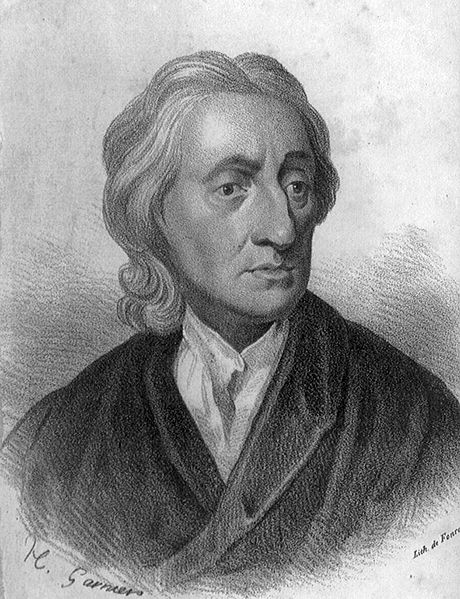
Property is not discovered; it is made, not by the act of mixing labor with supposedly ‘fallow land,’ as Locke would have had it, but by the scaffolding provided by the surrounding legal system.

So an agreement, designed according to what makes sense.  Of course, this "sense" gets rather complicated.

The simple story is that property should be fair, distributed according to one's desert.  However, how to establish desert?  If I inherit a million dollars, I certainly did nothing to deserve it, in that I played no part in its creation.  But maybe it is fair to respect the wishes of the deceased.  But what if they inherited it, and so on?

Let me toss another piece of wood into the fire: as a behaviorist, I can make a rather solid case that all of our actions in life are in a sense "inherited", in that they are entirely a function of our genes and our environment.  As such, any action we take to create wealth is inherited.

This may seem a fanciful stretch, even if you accept the premise that our actions are not our own.  Surely we must act as if they are.  As a practical matter, maybe this is true.  However, we certainly don't act this way at a societal level.  In criminal justice, people are judged to be responsible for their actions, and thus deserving of a range of punitive measures.  In our economic system, people are assumed to have "earned" their fortunes - or lack thereof.  As such, property is hardly given a second thought as the direct result of personal action.

If our actions are inherited, then all forms of property inequality (not to mention other forms of capital) are injust.  As a practical matter, remedying this injustice in a complex society is obviously no easy task.  History is riddled with horrific results of experimentations in equality.  However, it is also filled with examples of successes (public schools, libraries, parks, social security, medicaid, etc.).

Many of our political arguments are over the practical effects of social responses to equality - whether or not they would work, whether we can afford them, whether they have secondary negative effects and so on.  Yet, first we must establish whether or not there is a moral imperative, a problem to address.  And at this point, a good-as majority of the country simply disagrees with the premise that we inherit our actions, much less that social interventions might be effective.

(A strange irony is that many of these very same people view social interventions as having negative effects on motivation, which is a completely behavioral analysis, and would as such seem to agree with the premise they deny in the first place!)

Saturday, October 13, 2012

Letting the Light In

According to Wikipedia, the psychological phenomenon known as confirmation bias works thusly:
[it] is a tendency of people to favor information that confirms their beliefs or hypotheses. People display this bias when they gather or remember information selectively, or when they interpret it in a biased way. The effect is stronger for emotionally charged issues and for deeply entrenched beliefs. For example, in reading about gun control, people usually prefer sources that affirm their existing attitudes. They also tend to interpret ambiguous evidence as supporting their existing position. Biased search, interpretation and memory have been invoked to explain attitude polarization (when a disagreement becomes more extreme even though the different parties are exposed to the same evidence), belief perseverance (when beliefs persist after the evidence for them is shown to be false), the irrational primacy effect (a greater reliance on information encountered early in a series) and illusory correlation (when people falsely perceive an association between two events or situations).
We see this both on the left and right, as especially partisan liberals and conservatives often seem immune to facts.  The stories they tell, their ideological narratives seem both lacking in nuance and introspection.  In the Bush administration, the president was evil incarnate, a racist xenophobe intent on establishing a Born-Again Christian Caliphate.  Today, the president is a Socialist Muslim.  In both cases, policy objections are based on legitimate political and social philosophies.  Yet these deeper convictions become buried in unserious, often outright untrue and tribal attacks.

So, where does this come from?  It seems to be a cognitive style, and one that can be consciously guarded against.  If my view on an issue is quite strong, confirmation bias theory would predict that I would be more accepting of facts that seem to support it, and less accepting of facts that seem to contradict it.  Positive facts will reinforce my pre-existing narrative, as I will remember and incorporate them into my story.  Negative facts, on the other hand, will be more likely to be dismissed and forgotten. 

No one wants to be biased.  They want to be thinking clearly, bravely adjusting their beliefs according to evidence and reality, not illusion.  Yet given the universal nature of biased thought, and its terribly insidious nature, we must all admit that it is an unavoidable part of being a thinking human.  Because of its unconscious nature, unless we are actively setting ourselves on guard against it, recognizing its patterns in our own cognitive habits, its work will go unnoticed.  Daniel Kahneman talks about fast and slow thinking, in which most of our thought - conscious as though it appears to be at first glance - is actually being prepared in a largely unconscious manner, cooked up in the hidden kitchens of our primal brain, our conscious perception of it only served up as a final product at the last second.  Studies have shown that these pre-conscious, pre-formed thoughts actually begin their creation up to multiple minutes before they reach consciousness.  Yet our awareness of them feels instantaneous. 

One of the remarkable feats of he human mind is its ability to simulate multiple orders of consciousness.  Not only can we self-reflect on our own person-hood, we can imagine in others a model of person-hood.  We can assume, for instance, that if a piece of sweets tastes good to us, another person would also find it delicious.  We can then take this further, and imagine that another person has the same capacity, and imagine in them an ability to anticipate the response of a third party.  In his book, Unconscious, Leonard Mlodinov describes how writers often do an amazing set of mental gymnastics in not only imagining their reader's perspective, but imagining their reader's imagining of the story's narrator's perspective, and in turn of the perspective of the characters in the book.  Quite a hall of mirrors.

This capacity for imagining the other, maybe loosely described as empathy, is generally a highly-valued human trait, begetting wisdom and fostering trust and authority.  What more do we often desire in others than their ability to understand, to "get" us? 

And it is difficult.  As similar as most humans are, our different cultures foster different experiences.  Our different personalities and temperaments find us emerging as often quite dissimilar.  This can make empathy hard to develop.  Imagining second, third and fourth order personhood is often utterly impossible.  If we cannot understand another, to get into his mind and imagine life from behind his eyes, how can we imagine how he might imagine what lies behind our own?  How strange we must seem to him?  How might the extrovert imagine the world of an introvert, and how might the extrovert imagine an introvert might perceive him?

In learning theory, new thoughts, ideas and facts are more likely to be retained if they are placed within context of one's prior knowledge.  New information is more readily incorporated into old if there is a context within which new connections can be made. If one is unable to develop even second order empathy with sufficient accuracy with another, how is one to incorporate their ideas into their own? 

If every one was the same, it would be rather easy to accomplish this task.  This explains why we so enjoy hanging around people who are similar to us, who see things the way we do.  All we have to do is imagine what we would think if we were them, and - presto! - we get a fairly accurate idea of what they might be thinking.  When we meet someone of sufficiently different personality, culture or temperament, our capacity for empathy is suddenly lost.  Climbing into the space behind their eyes, it is as if we are climbing into the abyss.  Their words come at us as if from the darkness, attached to nothing we can relate to in our own experience.

Politics is the process of sharing power.  When we engage in political thought we are not only developing our own responses to how we want to shape society, but at the same time developing our response to the desire of others to shape society as they see fit.  If we believe that truth and facts are essential to shaping a society that is good, fair and just, then we must seek the most honest accounting possible of whence our ideas come.  Because we have no alternative but to rely on second, third, etc. imaginings of person-hood, we must endeavor to develop empathy with constant vigilance.

Unfortunately, this process is not only difficult when attempted with conscious purpose, it is hard to remember to attempt in the first place.  Therefore we must develop it as a cognitive habit.  In order to truly see the world as others see it, our minds must be as open as possible.

A number of obstacles stand in the way of developing an empathetic imagination.  As we saw earlier, confirmation bias makes empathy difficult from the outset, keeping us from being open to new ideas.  The more rigid we are, the more prone to reinforcement of preconceptions, even if the preconceptions are wrong.  If we surround ourselves only with those who think like us, we may feel more comfortable emotionally, and feel less taxed by the process of having to constantly negotiate unfamiliar personhoods.  Engaging with those who have very different and contradictory sets of values and beliefs can often leave one feeling numerous negative emotions such as frustration, confusion, anger and even sadness.

So it makes sense for us to choose to spend our time with those with whom we feel a kinship.  Yet what then to do when we are faced with political thought that has direct bearing on the society we all share?  If we cannot bear to actually be friends with others who see the world so differently, how are we ever to understand them well enough to experience their truth?

I think much of the answer lies in developing a cognitive style that is able to both and give and to receive political thought that is purposefully open-minded and attune to natural proclivities towards bias, not just in others but in ourselves.  We must in a sense develop our own second-order person-hood that resides within ourselves and exists in constant dialogue with new thought.  Much like an objective moderator of a debate, this "person" acts as an impartial arbiter of truth not by pronouncing on the accuracy of a given thought, but rather as a referee who's job it is to be on the look out for bias and other forms of mental laziness.

In order to develop such a cognitive style, however, one must expend extra time and mental energy.  This type of thinking is necessarily "slow" - it requires not just thinking the first-order thought, but performing the calculations for the second-order construct, and then in turn processing it and incorporating it into the original ideation.  In much of daily life it simply isn't practical; decisions and responses must occur more rapidly than time for sufficient second-order processing might allow. 

Fortunately, through sustained development, this type of slow-thinking cognition becomes more adept and itself becomes a piece of first-order thinking.  That is, it becomes less and less conscious.  New ideas are sent directly to this kind of "quality control" for processing as matter of course.  As we age and develop, we all become wiser; children have limited capacity for second-order thinking (however this is an important skill that can be fostered to a great degree in the earliest years).  When we think of "wisdom", what we generally envision is both an incorporation of slow thought processing such that it is nearly automatic, but at the same time a patient vigilance towards steady observation of nuance.  The more you know, the wise phrase goes, the less you know.

But how much of a role does ideology play a role in one's development of cognitive style?  As mentioned previously, both the left and the right have their share of fast-thinkers, both with a subsequent array of embarrassingly retarded ideas.  Yet the two ideologies seem to directly engender different levels of cognitive processing.  The left seems in many ways to be almost designed for slow-thinking, while the right does not.  One would think that this would not be something to be proud of, however the right actually promotes itself, and denigrates the left, as being just so. 

Right-wing critiques of the left are often that it is too open-minded, "relativist", or tolerant.  These are seen as weaknesses.  The left is seen as being too compassionate, too forgiving, too willing to cooperate with others, to let down its defenses and accept others.  These are all critiques that, at their core, are about empathy, or second and third-order thinking.  When Supreme Court Justice Sotomeyer was in the nomination process, Obama's publicly stated desire for a judge with "empathy" was pounced on by conservative critics as emblematic of everything wrong with liberalism. 

There is a reason religious fundamentalists are right-wing, not left-wing.  They are enormously rigid.  They see the world in black and white.  They abhor nuance and embrace literalism.  Their main cause is protecting what is traditional, preserving what is known and familiar. 

Progressivism is anathema to this state of mind.  It seeks to challenge existing dogmas and the concept of "common sense".  It promotes the new, the process of change, the deconstruction of old ideas and the concept of reinvention.  It embraces nuance and reinterpretation.  It abhors literalism and revels in the unknown and unfamiliar.

Of course, these are two poles, and most of us are somewhere between them.  But the driving impulses are real enough, and inform both ideological perspectives.  And both have serious implications for one's cognitive style.  The degree to which one embraces nuance, relativism, change and challenges to existing paradigms, one will be more comfortable with slow thinking.  The degree to which one embraces rigidity, literalism, tradition and conformity, one will be less comfortable with slow-thinking.

In this sense, one's degree of bias is built-in to their political ideology.  Liberals will indeed be more biased to the degree to which they, whether consciously or not, adopt the right-wing principles of rigidity and conformity.  Conservatives will be less biased to the degree to which they adopt left-wing principles of change, nuance and relativity.

All of us, if we agree that knowing truth is dependent on seeing reality - and seeing our own seeing of reality - from as many angles as possible, will endeavor to be vigilant against mental laziness and cognitive bias, to open our minds and let the light in.









Tuesday, July 17, 2012

Towards An Optimistic Determinism

The Gilded Cage, Morgan (1919)
In debates over free will, the determinist position, even when accepted, is often met with a sense of begrudging despair, as if, upon seeing the wizard behind the curtain of reality, life suddenly loses much of its luster and charm.

(For those unfamiliar with the debate: libertarian free will posits we are the original cause of our choices', and thus ultimately responsible; compatibilists and determinists acknowledge that we make choices, and feel as though we are free in doing so, we cannot actually "choose to choose" our choices, thus our will not originating within our consciousness.)

In a recent review of Sam Harris', Free Will, the reviewer - having largely ceded the determinist case - expresses an all-too common sentiment.
Couldn’t it be that we need the experience of what Wegner and others call “perceived control,” at least as a model of voluntary behavior, to get on with our lives and to have our achievements recognized and to be instructed by our failures? (Doesn’t Harris enjoy his success? I bet he does.) Finally, what happens to traditional qualities of character like courage, villainy, leadership? Poof! However correct Harris’s position may be — and I believe that his basic thesis must indeed be correct — it seems to me a sadder truth than he wants to realize.

So, why all the pessimism?

Rather than seeing determinism as a cold, subtractive, fatalism, I would argue the opposite – that current society is generally opposed to a determinist model, with some terrible policy implications. For starters, our criminal justice system is highly retributionist, terrorizing hundreds of thousands (with not only moral but practical implications – the almost complete lack of rehabilitative thinking). Understanding people as fully-caused would promote not only compassion, but an embrace of the science behind rehabilitation measures.

Income inequality is another. Too many currently feel that people are responsible, original causes of their successes or failures, leading to an acceptance of dire poverty and decadent wealth. Accepting determinism means acknowledging that biological and social privilege, combined with extant social structures are the original causes. This makes a moral case against inequality, as opposed to the notion of free will that apologizes for it.
At the very least, the notion of contra-causal free will overstates the case for reward and punishment. For while determinists much acknowledge the positive import of behavioral triggers like deterrence and success, they are in the end not only limited in their ability to drive behavior – only one factor among many others – but to the extent that they contribute to inequality, are immoral.

Finally, in terms of personal interactions and conscious development of self, determinism provides an enormous amount of grace and forgiveness. The more we are able to see one another as caused, the more we are able to accept each other as we are, not who we pretend to be, over-imagining agency where it does not exist. Often, the mere remembering of determinism is enough to occasion a soothing sigh and reminder to be compassionate and empathetic.

In the end, it seems much more liberating, if we must live caged, to do so fully aware of our humble position, rather than pretending to enjoy freedoms that do not exist.

Sunday, November 27, 2011

Me and My Brain

As a longtime sufferer of depression, I've relied on pills designed to treat chemical imbalances in my brain.  These pills are controversial, with conflicting opinions on whether they are really more effective than placebos.  Millions of people swear by them, many claiming that they have clearly been effective in treating their depression.  Of course, such data is anecdotal, as would be any that I could offer.  I can say anyhow, that my depression has been somewhat reasonably managed for years.

When I first began taking the medication, about seven years ago, I did recall a significant feeling that my conscious state had been altered.  Almost impossible to describe, it was as if a kind of numbness came over me, taking "the rough edges" off of things.  My psychological history in the subsequent years was complicated.  In some ways I did seem to feel a certain sense of relief.  Yet a couple of years later, shortly after my first daughter was born, I attempted suicide.  I had certainly entered a deeply depressed state, one in no small part induced by geographic and social isolation, as well as the stress of being the primary caregiver for a colicky infant, all while suffering from devastating chronic neck pain.

So in one sense the medication failed me, or at least was not effective enough to prevent suicidal depression.  But the trouble with measuring the efficacy of antidepressant medications is that the population being treated suffers from an illness that is very difficult to properly diagnose, properly quantify, and much less understand the pathology of.  To what extent was my depression and my behavior driven by brain chemical imbalances, and to what extent was it driven by my habit of mind, or cognitive framing of the world?

Philosophically, the debate over what consciousness is, or to what degree we can understand it, is contentious.  Much of conscious human experience is not well understood, and little data exists to support hypotheses as to either what causes it, or what it even is.  Thomas Metzinger, director of the Theoretical Philosophy Group and current president of the Association for the Scientific Study of Consciousness, defines consciousness as "the appearance of a world".  It is a good start, but doesn't offer much of a clue as to where it comes from or what it in fact is.

There are many phenomena that we can't really explain very well, and yet must start somewhere if we are to hypothesize - especially if there are real-world consequences of our assumptions either way. Critiques of materialism usually see people as assuming too much, relying too readily on a physical framework as a best guess. Critiques of the opposite - immaterialists? - see people as ignoring what seem to be perfectly reasonable logical conclusions drawn from our knowledge of the physical world.

I tend to fall into the latter camp. I'm reminded of the old creationist thought experiment, the clearly "designed" phenomenon in the natural world, such as Mt. Rushmore or a house in a desert, in which physical processes are assumed to be incapable of such complexity. This can be contrasted with a thought experiment designed to illustrate Occam's Razor, where a broken, blackened tree is found in a field - in the absence of clear evidence, one might assume any number of explanations, some more fantastic than others. Yet the most likely, the most reasonable explanation would be that lightening has probably struck it down.

Surely, many biological processes - certainly those involving the brain and/or consciousness - are lacking in a great deal of evidence. But there is also much that we do know, and would be remiss in not taking into full account, if not inferring even further material hypotheses.  For my part, I look forward to advances in this exciting area of science.  Not only for what medical breakthroughs it might provide in the treatment of psychiatric illness, but for what it might tell us about broader, older philosophical assumptions about human behavior and the social structures they inform.


Monday, August 29, 2011

Nested Wrestling

I've always found there to be a fascinating tangle in the right-wing apology festivities surrounding environmental regulation.

There are the two claims generally put forth, almost always in tandem, in such a way as to gain strength from each other, like two orbiting bodies. The first is the idea that the environmental/human impact is not real. The second is that the ensuing regulation would be far worse - more disruptive, expensive, etc., if not an outright immoral taking.

There's an odd parallel to the tax-rate debate, where a primary, more empirical claim is wrapped within a seemingly impenetrable layer of subjective and unproven nebulousness. The testable environmental claim sits upon a throne-claim
of philosophical piety in the form of policy dithering, back-peddling and weak appeals to property right. There is a great deal of empirical data on the leveraging of human and social capital into financial success (i.e. the scaffolding of privilege), yet it too gets nestled in a tangled web of high-minded appeal to pseudo-developmental philosophy and - just as magical - supply-side kabuki.

Saturday, July 30, 2011

On Nihilism

Las Meninas, Velasquez
When discussing the question of determinism and its effect on how we live our lives, the question of nihilism ultimately arises.  A form of this question goes as follows,
"If we believe we are determined, why should we follow any moral action, or any course of action at all?"

I would say this isn't an ought question. We simply can't behave otherwise. Our brains are not powerful enough to unravel every last influence on our actions. Sure, we do this to a degree, and it can be quite helpful. But it's ultimately a kind of rabbit hole. Douglas Hofstadter likens consciousness to an infinite loop, such as a picture in a picture in a picture, etc. He describes consciousness as a process of feedback loops of increasing complexity.

My favorite example he uses is what he calls a "Hunecker" scale ("Huneckers" being something like souls), in which zero is an object with no feedback awareness (a rock, a stick), and 100 is an object with total feedback awareness (God, a super-alien). He then describes the feedback mechanism in a toilet ballast as being a one on the Huneckers scale. A tree might be a 42, a human a 61. (His book I Am A Strange Loop goes into a dizzying array of suggested allegories for the mechanism of consciousness.)

This makes a lot of sense to me. After all, as soon as we take notice of our thoughts, they become things already thought. We simply cannot determine what we are thinking in the moment. We can notice memories, which in turn determines future thoughts. But at a basic level we are in an endless state of reaction.

Which makes a lot of sense, right? Especially considering that when we are not conscious, we are certainly in a state of complete reaction.... my daughter (4) just showed me her painted fingernails. They were pretty badly smudged, and I suggested we find some nail polish remover to clean them up. Where did this thought come from? How much was I aware of all the ways I could have reacted? No, I simply went with what "came to mind".

And even in our most contemplative moments, aren't we simply searching for what "comes to mind"? We won't possible know where the thought originated, or, from what it has been built - they were likely billions of pieces to it - a conversation with a classmate back in college, the way a dog barked at me when I was a child, a book I read a couple of months ago, the way my wife smiled at me this morning, a commercial I watched last night, etc., etc.

Only an entity with a Hunecker score of 100 would know every input, much less then process that information and adjust to it in a way that aligns with an entirely different set of connections. What is basically happening is an infinitely (at least as far as we are aware) large set of reactive stimuli from within and without the world, and then the conscious experience of "noticing" what we can of those stimuli, as well as then noticing what we can of the infinitely large set of connections we make internally.

Consciousness has been likened to the tip of an iceberg, the depths of which are far more vast, yet largely out of reach. Maybe a better metaphor would be a fast moving river current, only a small area of the surface we can at any given moment see and feel.

So it is simply impossible to know how we are determined. We can guess, and know some of it, but most will always be far beyond our grasp. And yet we are creatures built to act. As an existential youth, having thrown away all previous conceptions of God or the universe I could, I despaired that there was no point to existence - the classic existential conundrum.

I still remember where I was when I took this recognition to its logical conclusion. I was living with a girlfriend at the time, and I sat down on the chair in her bedroom, realizing that if there was no reason for anything, there could be no reason for me to act. I then realized that I should not even be using my muscles to sit. I rolled down onto the floor and lay still, listening to the sound of my own breathing.

This was it. My body was breathing - to stop it would be to make a decision, and what point was there in that? I would lay there and starve. Catatonic. That seemed the only reasonable solution.

Of course, my girlfriend, who was out at the time, would return home, beg me to get up. And why would I?

Which is when it hit me: because of her. I loved her. And what was that love? I didn't know. There was so much I didn't know. How was I to lay down on the ground, only 18 years old, and give up on something so mysterious as life and consciousness? And there was so much going on in the larger world. I was relatively lucky to have a floor below me, a roof above me, in one of the most wealthy countries on Earth.

Maybe there wasn't an ultimate reason for anything. But in a weird way, that gave me a reason; what I didn't know - my lack of consciousness - gave me a reason. In the end, making a decision to do nothing was just as much a decision as a decision to do something, regardless of whether a reason existed.

My task was then to create meaning. Which I like to think I have been doing ever since. I have to. I can't not create meaning. To decide not to is itself only another form of creating meaning. (I'm reminded of religious fundamentalists who feel that the only way to not be led astray by selfish reason is to strictly adhere to original texts. Of course, these have generally been complied by less than perfect sources, and are themselves subject to interpretation, i.e. are they really saying what they appear to be saying?)

So an acceptance of determinism is an update to the process of meaning making. Rather than making meaning myself, I now see myself as little more than a conduit for society at large. This doesn't excuse me or anyone else, it merely explains us. We simply do the best we can and hope for the best.

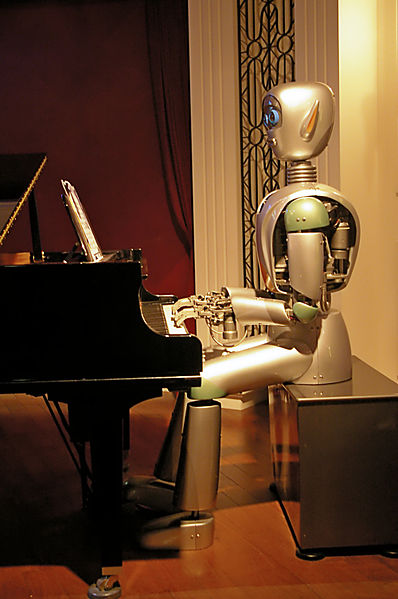
To those who would say this allows one to excuse oneself from responsibility, I would reply that any moral code is only as good as the individuals who adhere to it. Just because I believe my code was determined, I am not given an excuse to break it. The fact that I know it, and accept it, does not allow me to dismiss it. For instance, a pianist who learns the notes to a new piece of music understands that he only knows them because he had learned them, also knows that if he plays them wrong - breaks their musical "code" - he will no longer be playing the same song. Knowing the laws of gravity does not allow me to break them.

There is a cause and there is an action. I accept that stealing is wrong because it will harm another. I also accept that I know stealing is wrong because I have thought about it, and understood the argument, the pieces involved in its logic. If I steal, whether or not I believe I have been determined to find it wrong, the results will still be the same - someone will be hurt. And I will be to blame, in the sense that I will have broken a moral code.

Monday, July 25, 2011

The Executioners

Another tragic mass-murder.  This time in Norway, a country that does not put its criminals to death.  Questions arise to as to what this man, clearly culpable, deserves.

But what does it mean for him to “deserve” anything? Should he be made to feel uncomfortable as a sort of payback for the pain he caused? How could he possibly suffer enough?
You could torture him for the rest of his life and it wouldn’t even come close to the sadness he has caused. Could the manner of suffering even be replicated?

Would it make people feel better to see him suffer? How much suffering would be enough? Surely there could never be a knife long enough, or a whip fast enough.

Is there some “debt” to society that he must pay back? What would that transaction be? What could possibly be done with his blood?

Maybe what we seek in vengeance is a vain attempt to erase the past, because we did not *deserve* what he did to us. Maybe we seek to right some cosmic wrong we see in the universe, by hammering our dull and useless limbs against the sky, in vain. Yet, there is nothing we can do, and this final truth is too much to bear.

But, maybe it doesn’t have to be. Maybe by acknowledging our humble place in this violent world, we can make some sort of peace. Horrific things happen to us, everyday, sometimes just as brutally – plane crashes, car wrecks, volcanoes, hurricanes, tidal waves, etc.

Yet where are the calls for vengeance then? Who is to pay the debt? Only a fool would demand justice. And thus these tragedies are so much more honorable, and less troublesome. Who would blame an earthquake, nothing more than the forces of nature at work?

And so the question is: how is the murderer any less of a force of nature? He is either clearly a man with a troubled life, or a psychopath. In either case, it had nothing to do with his ability to make a rational decision. He was an assembly of factors that resulted in a coordinated force of destruction and evil, a walking tornado, a talking plague.

And yet what may be most disturbing of all, is that unlike most natural disasters, society is at least partially to blame. From reading the man’s manifesto it was clear that he had plenty of help in the formulation and determination of his nightmarish plans. In fact, we’ve heard similar remarks from our elected politicians, pundits, and friends and neighbors.

He is certainly guilty. But so too are we.

Wednesday, July 13, 2011

A Few Thoughts on Liberals vs. Conservatives

Liberals tend to be more broadminded and socially-critical, thus open to change. This is why we see so many more go into academics and journalism, as well as be on the forefront of cultural change. Many intelligent conservatives are likely mistaken for fools because their stubborn attachment to tradition is see as non-intellectual. Argument from tradition is, after all, a logical fallacy - even if the idea itself is correct. I think in general conservatives tend to suffer from more cognitive biases and fallacious thinking. This critique comes directly from liberal social-critique, and applies much more to social conservatives, however economic conservatives tend to have similar intuitions.

For their part, conservatives do ad hominem differently. For them it is more a question of liberals as traitors, as whiners and sneaks, know-it-all snoots, do-gooders and freaks. Conservatives tend to embrace traditional social orders. This is why they are so comfortable with the pyramid shape of much of business, with its hierarchical class system and clenched fist. Getting ahead means following orders and pleasing authority. From a traditional vantage point the ground is more firm, less prone to disruptive or tangential thought. This provides great confidence, pride, and stability, yet less capacity for deconstructive analysis and free thought. Accordingly, liberals are not to be trusted, like rebellious children, always attacking foundations and nipping at the heels.

Interestingly, conservatives can rely on tradition to enforce their ideologies. Liberals, seeking change, must rely on legal enforcement. This seems to set up an endless dynamic of liberals getting bothered by traditions and changing them through law, and conservatives feeling threatened by new laws they disagree with.

Saturday, July 9, 2011

When Justice Doesn't Feel Like Justice

The Gilded Cage - Evelyn de Morgan
While discussing the DSK case, Katherine Mangu-Ward (Reason) and Erica Grieder (The Economist) have an interesting discussion of the philosophical uncertainty surrounding the court system, in particular the jury selection process.

I was reminded of my own experience as a juror.

A couple of years ago I served on a jury in a rape trial. I would certainly say it was one of the most profound experiences of my civic life. At the end of the process I had much more conflicting views about our legal system - not that it was necessarily flawed, I think it does a pretty good job considering. But it raised many philosophical issues for me, as well as a sad sense that serious mistakes can be made by well-intentioned people.

So, our case was a young woman accusing an older man of rape. They were both meth addicts, and by the end of the trial, neither seemed trustworthy in the slightest. The two had been "partying" for almost 2 days straight - going from house to house, cavorting with sketchy people, until finally ending up with another woman in a tiny, dilapidated auto trailer lit by an extension cord, its windows covered in tin-foil, where they smoked a bit of crack. Up until now the stories aligned, but it was at this point that it became a he-said, she-said.

She claimed he and the other woman raped her. He claimed it was consensual. She fled to a nearby fast-food place, called her boyfriend. He was upset with her for having been where she was. She then told him she was raped. They went to the ER, where the rape kit turned up nothing.

We deliberated for a couple of hours, and found him not-guilty. However, we almost unanimously agreed that he had probably done it. Yet we simply didn't feel we could say so beyond a reasonable doubt. It seemed just as likely that she was lying, considering her past behavior demonstrated in the testimony.

Did we do the right thing? I don't know. I feel like the question was exactly this: is it better to let a guilty man go free or to lock up an innocent man? If we were wrong, he would certainly be facing years in prison for a crime he didn't commit. I remember one female member of the jury breaking into tears. The defendant seemed perfectly capable of being a rapist, based on prior testimony, but there just wasn't any clear evidence that he had done so.

We walked solemnly back into the courtroom and almost hung our heads in shame. We did what made us uncomfortable, but that we felt was right. When it was over, we simply walked out into our normal lives, leaving the accuser behind, likely in sadness and anger.

So the question is this: what happens when a crime is committed. but there is no evidence? We kept looking for it, hoping to find something strong enough to back up our intuition. But there just didn't seem to be. And you can't convict someone based on intuition.

Adding to the vagueness and unease I felt was the sense also that I was unqualified to judge the case. Before we went into deliberation, we were read an enormously long and difficult to interpret series of instructions, many of which we were informed only applied in the state of California. I remember sitting in the deliberation room, wishing I could talk to the judge, to the lawyers, to the defender and the accused. But all of that is designed to be taken care of in testimony.

Would I have been more comfortable making my decision had I had legal training? Or possibly experience in forensics or rape cases? Probably, but maybe not. We were a jury of peers. I was elected foreman, and one of the jurors was seriously worried about losing his job if we deliberated too long. He wanted to hurry up and give a verdict after little discussion, because all he could think about was supporting his wife and child.

There was an air of inexpertise about our decision that really bothered me. The judge and lawyers seemed to have done an excellent job, yet ultimately it was in the hands of mere people off the street. I'm sure there are very good, considered reasons for this. But I'm no legal scholar. Neither am I a scholar of the philosophy of jurisprudence.

A mere citizen, I took the facts as I saw them. And I did my best to deliver a verdict for justice. Did I? I'll never be sure. __________________

Saturday, April 23, 2011

A Question of Leverage

A basic underlying disagreement between the right and the left is the concept of taxes.  Specifically, the right resents the idea that the wealthy should be taxed at a higher rate.  So too, do they resent the idea that a portion of those taxes ought to pay for government services for the less-well off.  This ultimately goes back to fundamental questions of human agency and social capital. Just as financial capital is leveraged for profit, so too is social capital.  The left sees this reality and uses it as a frame for understanding how to not only measure, but create more fairness in society.


We live in a society filled with opportunities, many of which go unexploited. Why is this? The basic premise of science is that there are causes to most everything. This is the premise of social science. We look at society and see causes. We look at billionaires and poor people and we see causes.

Yet this basic premise is denied. Why? While opportunities exist to be exploited, why do we we assume that everyone can exploit them? If one does not know how to exploit them, how can he? And if another knows how to exploit them, why would he be expected to have done otherwise? Social capital is a causal factor.
But so if you correct for social capital, and luck, what do you have left? From where does human initiative come? This seems to me the final question. The billionaire and the pauper in Mc Donalds are two completely different people, who’ve had different life experiences, and – specifically – had different levels of access to social capital. If the two could be said to have possessed the same social leverage in their lives, one single price, or one single tax rate would be fair. But they clearly had not. The billionaire cannot claim to have earned his wealth apart from the leveraging of opportunities beyond his control. Likewise the pauper.

Marx had the insight that the leveraging of inequities in financial capital creates inequities in society. So too inequities in social capital, whether by birth or by family learning and culture, are leveraged by degree. Society is an organism that cannot be separated and reduced to the pseudo-scientific conception of actions that are free from temporal or spatial causality. We are society, warts and all. To deny this basic reality is not only a scientific error, but one that serves to prop up and excuse the most egregious forms of inequity, those that are inevitably exploitative and corrosive to the conception of the human right to freedom and self-realization.

Tuesday, February 22, 2011

Ice Floes, Pt. II

In general, calls for harsh retaliation is a very gut-level response common to conservatives.  A classic example is the father who would exact brutal revenge on anyone who threatened his family.  I think it's fair to say it drives the death penalty, hawkish foreign relations, "tough on crime", etc.

Each of these positions can be rationalized, or argued for with logic and reason.  But I wonder whether all that is somewhat after the fact?  Because the truth is that there is this deep reaction, for which there may, or may not be a well-developed rational framework.

And lest anyone think I'm only pointing at the right here, I think there is a sort of anti-response on the left.  That is, the tendency to under-react, or at least to not respond with the same desire for revenge or finality.  This tendency in liberals is all to clear to the right, who routinely point to it as a deep character flaw.  Liberals are "soft" on crime.  Liberals want a "nanny" state.  They are "bleeding hearts".

Yet, the most difficult piece of this is determining to what extent the feeling/reaction follows philosophy/worldview, or visa versa.  By the time one is old enough to be taking positions on the world, one has likely grown up in either a liberal or conservative environment.  Personally, I am largely sympathetic with my parent's liberalism, even if I've moderated my own somewhat.  And so I have a difficult time understanding what it might have been like to change my politics, as many have.  The sheer number of people who hew to their parents' views would seem to argue for philosophy shaping feeling/reaction.  I would assume natural variance in temperament would predict a much more diverse set of outcomes.

Another piece can be inserted here, something maybe described as the "personality style" of a family.  This would be a sort of familial temperament, or tone, that averages from the dynamic range between primary authority figures.  To a degree, peers and extended authority figures would have an effect, but my guess is less than that found in one's home environment.  This influence would most likely be expressed in the common self-describing statement, "...the way I was raised".  This familial tone would affect the essential temperament of an individual, with respect to his reaction to basic moral questions concerning justice, work ethic, empathy, sharing, in/out group, social status, authority and the like.

Unfortunately, even here we are forced to return to the effect of broader worldview on each of these family and network pressures.  The moving pieces thus rotate between self, family, and worldview.  The latter two seem to be the most static, considering predictable regional and ethnic patterns.  However, the first - one's temperament - varies relatively greatly.  Interestingly, temperament would seem to be highly selected for in forming familial partnerships, as well as inner networks of friendships - all having a great deal of effect on the developing child. 

So with ethnicity and worldview falling into general patterns, at least regionally, you would then have clustering by temperament, as networks associate and disassociate according to basic moral responses. 

And so here we are.  I have a much different response to whether terrorists do, well, basically anything.  And my response is very different.  As a liberal I very much take the "hand-holding" or "bleeding heart" position.  I have plenty of philosophical reasons to back up why I should feel why I do (and why you should too!).  But I wonder just how much of how I got to where I am at emotionally and intellectually, is due to the soundness of my ideas, and how much is due to the particular milieu from whence I come. 

Oh yeah - I love tofu and once hugged a tree (no lie!).

Saturday, January 22, 2011

The Perils of Rigidity

The recent discovery of Dr. Kermitt Gosnell's malpractice has been fanning flames in the abortion debate.  I think one of the biggest problems in this debate - is a lack of nuance.  This is really tricky ethical/moral stuff.  There is a lot on the line for people, and the issue is in many ways a sort of Rorschach test. 

For instance, I don't believe there is a God or creator, or that any of us has any soul, or "meaning" in the grandest sense.  I believe we are simply a highly evolved set of molecules placed in a specific sequence, that the original "life" was able to assemble a series of amino acids and self-replicate trillions of times over, covering the Earth with all manner of life we now see around us.  In this way my ear cells, when placed in a petri dish are just as "alive" as anything or anyone.  Yet I not only believe but know that life has meaning in a smaller sense - actually quite literally as a manifestation of my ability to sense and "make sense" of the world.  Thus, I feel emotion and am able to empathize with fellow creatures. 

Yet any meaning I assign to life is well, not arbitrary, but relative to my world view, my culture, my reasoning, etc.  This is how I believe, for instance, that it is wrong to cause animals to suffer.  But I realize that this is a meaning that I have created in my mind, at least in so far as it is something I have thought about and come to a conclusion on.  Yet I realize that others may have different, yet reasonable views.  I think they are wrong, but they won't think so, because their meaning is different than mine.  And their views are likely entirely consistent with their worldview.  They don't view animals the same way as I do, and so don't empathize the way that I do. 

When Rick Santorum brought his dead child's fetal body home to sleep with, he had given it a much different meaning than I would have.  When my wife had a miscarriage, I couldn't have cared less.  The baby didn't feel pain, we didn't know it, and I had no reason to empathize with it - no more than I would my sperm or my wife's unfertilized eggs.  There's nothing especially significant to me about the fertilization process.  At a certain point, a the baby begins to feel, or at least develop the capacity to suffer.  Although even then, suffering doesn't come into it so much - I no doubt suffered considerably when I was circumsized. 

In any event, there must come a point at which infanticide is wrong, either within or without the uterus.  We certainly can't have people killing their children.  So how does one find that line?  The sort of strict, black & white approach would be to draw a line in the sand at a definition of "life".  But isn't that a sort of tautological, semantic device?  As I mentioned previously, biologically, I don't believe anyone is really a "life" any more than any cell anywhere is.  This is where we each simply create meaning.  For me, "life", or human life at least, is experiential - in the sense that it is something that emerges from the uterus, and immediately takes on special significance to the immediate relations, and to a lesser extent larger society.  The baby has feelings and needs, and the community has an interest in giving it great significance. 

Do I have a perfect line I can draw that says after this moment the baby takes on enough meaning for its life to be spared?  Certainly not.  "Meaning" is almost unquantifiable by definition.  When do cookies become "good"?  When is a song "beautiful"?  Yet we obviously have to make rules as a society, even if they must in a sense be very arbitrary.  Rules often are.  What should the sentence for theft be?  How do you quantify the wrong that was done?  It seems that if any debate demands nuance, it is abortion.  Yet as is often the case in controversies where one's worldview is at stake, rigidity seems so much the more powerful and "righteous" - one might even say easy, stance. 

Some will think me a murderer.  Some will say my nuance leaves the door open for a slippery slide into the evils of moral relativism.  I see no reason for that to be the case.  Just because I know a 70 mph speed limit is somewhat arbitrary, I know that speeding is dangerous.  So too do I know that killing people is wrong.  I just don't know exactly when one becomes that sort of "human".  In standing up for nuance, and rejecting the safe, firm chains of rigidity, one goes out on a limb.  Yet there is a great faith there.  It is a faith in the reasonableness of humanity.  Sure we can be brutal and inhumane.  But we can also be incredibly wise and reflective.  The irony of nuance may be that the greatest evils have come not from nuance, but rigidity itself.  Because with rigidity comes a closing of the mind.  That may be a good thing if the cause is good.  But what if the cause is bad?  And once rigidity has set in, how would one know?

Thursday, October 7, 2010

Magician in the Sky

Julian Sanchez tries to imagine an Agnostic God:
"How can you be sure you’re omnipotent? Perhaps you can accomplish anything you can imagine in your own corner of reality—a lucid dreamer can say that much—but there’s some greater reality you’re not even aware of in which, like the dreamer wakened, you’d have no such power. Or maybe even within reality as you know it, there are gaps in your power you aren’t aware of because you can’t even think of the relevant tests. The obvious response is that you’d know all these things because you’re omniscient—but of course, the same problem arises. How do you know you’re really omniscient? At most, there might not be any questions you’re aware of being unable to answer—but that’s hardly the same thing. The subjective feeling of omniscience might in fact be a symptom of a profound ignorance—being unaware even of the existence of those domains of knowledge you lack."

He wonders whether such a God might be able to offer us proof of his own omnipotence:
"It would require a good deal less than omnipotence to make a human perceptual system experience any demonstration of omnipotence you might care to suggest. So we might imagine God zipping you back to the dawn of creation so you can watch him summon all the galaxies into existence, then mold the earth and breathe life into the first humans, and so on. The trouble is that if you’re aiming for parsimony, the simpler explanation will almost certainly be that you’ve encountered a being capable of simulating all these experiences to your primate nervous system. That is, of course, a hell of a trick—a being who can do that is certainly pretty potent!—but still pretty far short of complete mastery over all space, time, and matter."
I’ve always imagined the reasonable response to such an entity would be, “OK, so how does he do it? (or, possibly more interesting, why?)”. At which point we’re back to square one, trying to understand the science behind it all.  It's one thing to levitate or turn water into wine.  But how does it work?  Or is the answer simply that "he can".  Sounds to me a bit too much like a magician refusing to reveal his secrets.

Sunday, August 1, 2010

Clinging to Darkness

The thing is not sturdy.
And so it must be clung to.

From where comes rigidity of thought?  In black and white thinking is righteousness an indication of unstable ground?

The ability to incorporate nuance is an indication of ideological coherence. The coherence is a comprehensivity.  The greater the points of logic, of consonance, the greater the ability to incorporate nuance. 

This often appears as simplicity.  And simplicity is often mistaken for coherence.  Its elegance and apparent universality is deceptive.  Truth, in its absolute coherence, often takes a simple form.  Yet when pressed upon, it is infinitely comprehensive.  2 + 2 will always equal 4.  Whether apples or plums.

Although simplicity does not imply falsity, it does not automatically provide for incorporation.  Thus, through elaboration, through incorporation, simplicity becomes complexity.  And in a debate of ideas, simplicity is at a disadvantage to complexity.  It lacks the means with which to meet complexity. Thus when truth, in simple form, encounters nuance, it unfolds.  This unfolding, ordered and without dissonance, is beautiful and elegant.

Falsity masquerades as truth by claiming simplicity and elegance.  Yet, because it is false, it can not be comprehensive, it can not bear nuance.  Unable to extend itself without creating dissonance, falsity must always resort to fascism, bullying, self-interested conquest by force.  Built upon a weak and malformed foundation, it compensates via rigidity and brutality. In contrast to truth's elegant unfolding, falsity unfolds through trickery and legerdemain, relying on devious maneuvers and distractions.

The one thing that falsity can not suffer is magnanimity, recognition of the other.  To do so would allow that critique is possible.  Yet critique - and this is often only understood by the unconscious - is the surest path to dissonance, to ultimate defeat.  Oh, what armies we command within our depths, all knives sharpened for the dissonant hordes.  The more fragile the kingdom, the longer the axe.  Barricade upon barricade must encircle and defend the weakest idea.

The easiest strategy of course is to relocate.  While a good idea may take solace from its eternal truth, able to live comfortably within the brightest fires, a bad idea must remain forever vigilant, comforted only in darkness and isolation.  Within this pit of snakes it slithers, unaware, ultimately, of its own form.

Truth cannot help but build upon itself.  Like a gracious host, or a wise and empathetic teacher, it strengthens all other truths it touches.  Its firmness gives shelter to the radical, bedrock to the speculative.  It lends itself to the erection of beautiful cathedrals of possibility.  In contrast, falsity brings only confusion and hindrance.  It remains atomized and shy, an impediment to expansion.  Like an unstable and reactive chemical, it must be hidden away and protected from interaction. 

In the end, falsity does not really exist.  Under examination it collapses into contradiction.  Its pretense to logic falls away and substance is revealed as vaporous illusion.  For many, this devilish smoke is intoxicating.  But ultimately it nourishes nothing but malcontent and dissatisfaction.  The human mind, having become addicted and accustomed to this state, becomes limp and zombie-like, autonomatonic and reactive, predictable and without self-awareness.  From necessity, cognition has been forced into wrinkled and craggly spires, teetering in its own heated wind and pathotropic catharsis. 

Comfort in this state comes only through tradition and habit.  Yet like a patient suffering from Stockholm Syndrome, the fear and dependency induced by never ending cognitive dissonance creates for itself a life-like alternate universe in which truth is adjusted for and falsity is substituted for through an elaborate series of perceptual detours and cognitive trusses. 

From an evolutionary psychological perspective, or at least one of cultural evolution, this has been a universal human adaptation to cognitive and perceptual limitation.  Even with the sharpest logic cannot cut through a lack of information, or a lack of a theoretical framework for understanding an event's causality.  So it is easy to see why reliance upon magical thinking would have seemed a very logical resolution to the unknown - especially when the unknown presented a very real and dangerous threat.

In today's world, while cognition and perception are orders of magnitude more advanced, a wealth of information is at hand, this adaptation is still with us.  Viewing the same event, the same data, two minds can vary wildly in their interpretation.  The project of synthesis and the discrimination it involves is still no small task.  Thus these old adaptations, these old habits of mind remain strong.  We erect our fragile pinnacles of fallacy, our islands of thought.  Yet as has been the trajectory of history and progress, the tide of human knowledge and interconnection, with its powers of abrasion, cannot but slowly bring enlightenment, if only ever in fits and starts.

We are young.  But we have minds.  And these minds are designed for truth.  If nothing else, that is unlikely to ever change.

Thursday, July 22, 2010

Grappling with Determinism

In a piece in the NY Times today, Galen Strawson takes on the question of Free Will and moral responsibility.  I'm in basic agreement with his fundamentally deterministic take. 
(1) You do what you do — in the circumstances in which you find yourself—because of the way you then are.
(2) So if you’re going to be ultimately responsible for what you do, you’re going to have to be ultimately responsible for the way you are — at least in certain mental respects.
(3) But you can’t be ultimately responsible for the way you are in any respect at all.
(4) So you can’t be ultimately responsible for what you do.
The thrust of this argument comes in the empirical observation that everything we do has to have had either some biological or environmental origination, or simple chance.  Every choice we make is based on a prior choice, based on a prior choice, etc. - all confined within an interaction between our brain tissue and our environment.

I think the trouble we have with this is that we feel as though we have free will, or a choice in our own agency that is free from our past.  When we look at a set of options, we see nothing pushing us towards one or another and assume that we are originating a choice.  But the reality is that the great majority of our mental processes are unconscious.  We simply have no way of seeing every tiny droplet of unconscious impulse that churns within our psyche. 

I'm reminded of the idea that everyone believes himself to be "above average".  Similarly, few of us believe we are horrible people - destined to do bad things; or great people - destined to do great things.  Somewhat ironically, those most likely to think in these terms are the mentally ill.  Yet most great and terrible things are not done by the mentally ill at all.  They are done by people who were likely just living their lives and well, one thing lead to another.  If we think back on the best or worst things we have done, they were largely unplanned. 

From the heroic acts of kindness to the selfish acts of impulsive cruelty, most were likely done with little to no thought at all.  When we wonder whether we have free will, we tend to ask ourselves whether or not we could do some or another task.  Like, say, scratching our elbow.  The obvious answer is, "Why yes, I am in complete control!"  But rarely in life are we in such a zen-like state of perfect consciousness.  In fact, such an existence would be overwhelmingly exhausting.  Thank God for autonomous behavior  (I get much of my best thinking done while doing something else!).

The biggest trouble people have in accepting determinism is the idea that they might no longer in control of their lives, or that personal responsibility is impossible.  The simplest answer is: you never were, so what is different now?  We still have all the dreams and desires and flaws that we have always had. 

But doesn't life then become pointless, says the nihilist?  Well, it depends on what you thought the point was to begin with.  If you thought you were playing this really interesting game in which you were the supreme controller of your own universe, like a little God, maybe this is a bit of a let down.  But relax, aren't glad that you weren't really in control anyway?  Personally, I feel it's a considerable burden lifted.  But just in case you're feeling a tad claustrophobic, try this experiment: do something without causing it. 

OK, that's a little determinism joke.  You can't.  Whatever you do, or do not do, will have been determined already.  So even if you say, "FUCK THIS SHIT!" and run screaming naked out into the street you will only be someone who has decided to run screaming naked out into the street.  I guess it is kind of like the ultimate claustrophobic nightmare.  But hey, might as well get used to it, right?

This is getting long, so I don't have time to go into what determinism means for morality, or society at large.  Which is unfortunate, because I think that's when things get really interesting.  Another day!

Sunday, July 18, 2010

Forces of the Universe and Cats

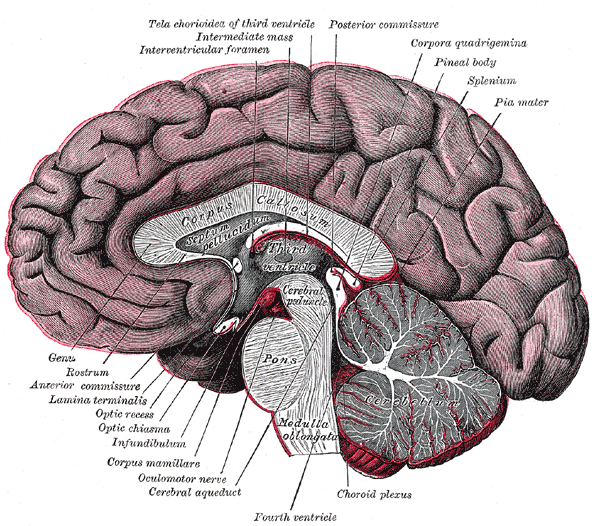
A question I've often had is, "What is a thought?"  Where exactly does it exist?  Obviously it exists in the physical world, via physical interactions; a mind must make a thought, not a rock.  But upon what principles is it operating?  Maybe an example might help:
That cat is there.
Now we have something.  Light is shining off the cat and into my eyes.  I take that information and create a model that tells me a range of things: shape, color, movement, dimension, location, texture, etc.  I then fit it into a narrative of meaning: a small mammal with specific features, a pet.  I then recognize it among my memories: I have seen this cat before.  All of this and who knows how much more happen at the conscious and unconscious level - the latter making up the majority of the processing.

So all of this is thought and it is essentially a transference of electromagnetic energy from the cat into the photoreceptor cells of my retina.  These cells transfer specific positional data via the interaction of each photon/wave against the electron state of specific pigment atoms within the optical cells, triggering specific enzyme cascades that transfer that "data" into my neural network, or mind.  The photons' vast variabilities are then fed into my cerebral structures that process and re-process, at near-light speed, and eventually rise to the well-ordered simplicity of "thought".

Through fundamentally simple principles then, this process unfolds, involving the physical interaction of impossibly large numbers of particles.  The process by which we "think" is the realization of all of this activity:
That cat is there.
While the physics of it all is relatively straightforward, the trick is wrapping one's mind around how this all relates to consciousness.  If I take all of this information and a "thought" is created in my brain - how is it that I am conscious of it?  Douglass Hofstadter describes the brain as a fundamentally self-reflective instrument.  He points to Descartes' ultimate definition: "I think, therefore I am."  The first think one ever knows about one's self is that one is actually thinking.  One is able to have a thought, and then perceive it.  "Look - a thought!"
That cat is there.
 If one imagines capacity for reflection on a scale, Hofstadter says, at the furthest end - at one, say - you might have a simple device.  He uses the example of a toilet ballcock as having basically one point of reflection: when the water rises to a certain level, a valve is closed and the flow is shut off.  At the other end of the scale, you might have the all-seeing, all-knowing omnipotent god who's capacity for reflection is as limitless as the information available to him.  The human mind might be somewhere in the middle, some of us more than others possessing the cognitive and emotional skills to be able to process and reflect on information.  While the mammalian brain, or that of the corvid might rank relatively high, as we move down the scale, the brain gets progressively smaller until we reach animal systems that are largely autonomic, and then largely dependent on individual cell regulation.

In this way the human brain is simply an organ that is capable of taking in large amounts of data from itself and the environment and "fleshing" out meaningful metaphors that we are able to essentially live within.  These become useful narratives in that we are able to construct them out of past experiences, and then predict future events with great accuracy.  To the extent that we are social creatures, we are so in no small part because not only are we able to create this narrative for ourselves, but we are able to sort of geometrically place a similar narrative onto others.  And our cats.
That cat is there.

The Four Fundamental Forces of the Universe


Strong Force: Holds quarks and gluons together, and protons/neutrons residually.
  • 10−15 m range
  •  mediated by gluons, which carry charge
Weak Force: Causes certain kinds of radioactive decay.
  • 10−18 m range
  •  mediated by W and Z bosons, which carry no charge
Electromagnetic Force: Acts between electrically-charged particles.
  • infinite range 
  • mediated by photons, which carry no charge
Gravity: Causes objects with mass to attract one another.
  • infinite range 
  • mediated by gravitons (?)

Sunday, July 11, 2010

A Case for Open Borders

We're stuck in an odd place in America today where immigration is concerned.  On the one hand, nearly everyone agrees that we must have closed borders, with selective admissions.  But the fact is that millions of illegal immigrants are already here, and many more are in the process of coming.  Building a truly secure border would require expensive fencing, cameras and patrol units.  Even then, there would likely be gaps.

So we are faced with tackling the problem via law enforcement.  Employers of illegal immigrants are targeted, and any illegal immigrants found are deported.  Yet this solution is difficult for various reasons.  Employers have many incentives to hire illegal immigrants.  They are plentiful, willing to work for little pay, and as illegal immigrants they are easier to exploit (poor conditions, safety hazards, regulations, etc.).  The immigrants have every incentive to work as they have risked all to be here.  Surviving without work is much more difficult. Dealing with state welfare institutions is either impossible or puts them at risk of deportation, as does any illegal activity.

From a human rights standpoint, every action targeted at illegal immigrants threatens American citizens who might find their rights diminished.  The balance of rights vs. security is an old and complicated one.  We must find a compromise between what rights we are willing to see sacrificed for every new security we agree to.  With the vast majority of illegal immigrants coming from the Mexican border, being a largely Hispanic population, new security measures designed to target illegal immigrants is going to affect Hispanic Americans disproportionately.  We see this in the new Arizona law sb1070 which places Hispanics in Arizona at much greater risk of having their rights violated.

A further complication, and one which may be the most tragic of all, is the issue of birthright citizenship and family dissolution.  Illegal immigrants often either bring their families with them to America, or have children once they are here.  If one parent is arrested and deported, the consequences to the family are severe.  In many cases the children might have been here illegally, possibly for most of their lives, and thus arrest and deportation means incredible burden. If a child has citizenship, the family is then faced with the prospect of how to secure for them the future they were guaranteed by law.

So this is where we are.  All of this is going on now, with no likelihood of change in the near future.  Profound resentment, especially in these economic times, has reached the boiling point.  The governor of Arizona is literally either making up stories herself, or repeating the lies of others:
"Well, we all know that the majority of the people that are coming to Arizona and trespassing are now becoming drug mules.  They're coming across our borders in huge numbers. The drug cartels have taken control of the immigration. … So they are criminals. They're breaking the law when they are trespassing and they're criminals when they pack the marijuana and the drugs on their backs.  I believe today and in the circumstances that we are facing, that the majority of the illegal trespassers that are coming in the state of Arizona are under the direction and control of organized drug cartels, and they are bringing drugs in."
"Law enforcement agencies have found bodies in the desert either buried or just lying out there that have been beheaded."
The range of serious solutions to the situation basically range from complete security at the border no matter the cost and draconian raids and round-ups, to a more liberal policy of "amnesty", in which there is a "path to citizenship" that illegal immigrants can pursue that allows them to continue living and working here.  The latter only differs from an outright open border policy in that immigrants are still deterred from entry at the border and businesses who hire illegal immigrants are penalized.  This policy has been used in the past, however generally on a case-by-case basis.

But I wonder whether we should even have closed borders at all.  My general outlook on life is to not believe in anything without a good reason for doing so.  Because many issues are so complicated, the authority of experts must often be trusted.  Other issues are less empirical, and more matters of philosophical principle.  Other issues are a robust combination of both - the experts disagree, and philosophical principle isn't unimportant.  As illegal immigration seems to fall into this last category, I feel comfortable taking the radical stance that what America needs to be doing is opening our borders to most anyone who desires entry.

According to Wikipedia, the main arguments against borders are as follows:
  1. That open borders are a threat to security and public safety.
  2. That, in prosperous countries, open borders would trigger  massive immigration, straining the domestic economy.That closed borders are necessary to protect the domestic culture(s).
  3. That closed borders help to prevent criminals from smuggling drugs, guns and other illegal items in quantities across the border.
  4. That closed borders make it more difficult to smuggle people across a country's border for the purpose of slavery, prostitution and similar criminal activities.
  5. That open borders are unnecessary in countries with legal avenues for immigration.

The only argument I see holding much validity is number 2.

On numbers 1 and 3, I see no real threat to public safety from open borders.  The vast majority of illegal immigrants are otherwise law-abiding, and criminals have not seemed to have been deterred much so far.  In fact, because increased adds to the price of drugs, closed borders may in fact increase violent crime.  On this front, a prevention program, possibly combined with legalization and taxation, that treats the problem of drug addictions seems a better, cheaper option.

On number 2, I'm not sure how much of a problem slavery and prostitution are.  I see no reason that simple law enforcement shouldn't be given this task.  Any gaps are likely already there, and the expense of a questionably secure border apparatus for solely this purpose seems inappropriate.

Number 5 isn't really an argument.

Now, it does seem reasonable to fear that completely open borders might trigger a mass-migration that the state wouldn't be able to handle.  But there are a number of reasons to doubt this.  First of all, if the labor market isn't able to handle them, the immigrants will quickly realize how limited their prospects are.  The only alternative is then to either make ends meet through illegal means or seek help from the state.  Neither seems a very attractive propositions for prospective immigrants.  The idea of relocating hundreds or even thousands of miles to engage in criminal activity seems an odd life choice.  What's more, illegal activity entails market pressures of its own.  The state is already quite stingy with welfare payments.  There seems no reason why it wouldn't still be able to require proof of citizenship for benefits.

A socio-economic and burden that does seem reasonable is the introduction of competition into the labor market.  Even assuming that minimum wage laws would still be enforced, numerous occupations would suddenly face an influx of foreign workers.  However, language and technical considerations would still give Americans an advantage.  The occupations most at-risk would be those in which these forms of human capital would not be required to the same extent.  This is the current greatest socio-economic impact of illegal immigration.  There is little reason to think that it wouldn't only increase were we to open our borders.

This is where I have the most difficulty finding my own moral perspective.  As a college-graduated, credentialed teacher, my job is in no way threatened by immigration.  I could see future immigrants receiving credentialing and posing a threat, but that prospect doesn't seem to bother me.  I know it may bother some, but I'm not sure whether I feel as though I have some God-given right to teach in America that any other equally-qualified candidate does not, regardless of citizenship.  I'm perfectly willing to accept that because I face no real threat from immigrant labor competition, I am missing some possibly persuasively principled argument.  But for now I can't foresee any.

As regular readers will note, I have a strong disposition towards viewing socio-economic achievement through the lens of social determinism; I believe the murderer is no more responsible for his actions than the millionaire.  Maybe as such, I see no difference between an American citizen and a Mexican citizen.  Why should an American have any more right to the American labor market than a Mexican?  If there is no existential threat to our entire economy (in which case open borders would become moot as we would all be doomed), the difficulties presented are zero sum: any net cost to American workers presents a net gain to foreign workers.

It is at this point that I think the conversation becomes about abstract notions of nationalism, and what it means to be a citizen.  I am entirely utilitarian in that I find the concept of nation-states compelling only in that they make sense in terms of practical governance.  Government needs to represent the people for whom it exists.  In this way the citizen gains access to democratic rights and privileges.  For instance, it would not make sense to allow foreign citizens from around the globe to vote in local elections. 

Foreign citizens need not enjoy every single right and privilege of citizens, but to the extent that it is practical for them to do so, they should be allowed them.  As I have argued thus far, there appears no practical reason why foreign citizens should not be allowed full access to labor markets.  In this way, foreign citizens would not be treated much differently than out-of-state residents.  We see no problem with accepting labor competition from any other state in the union.  Assuming there are no other social or economic costs, labor competition from foreign countries should be viewed no differently.

Alas, I'm afraid that there exists one last refuge in this argument, and it resides within the nationalistic notion of identity.  While many Americans no doubt cling to some form of unconscious bias towards some mysterious cultural quality of "American" that in their mind serves as a line of separation between themselves and non-citizens; that somehow by being an American citizen you are in some way different, and as such entitled to special privileges.  Obviously, any dark hatefulness under-girding this attitude is immoral.  No human life anywhere on the planet should be considered more worthy than any other.  To the extent that nationalism is used as the sole reason for valuing the quality of one life over another, the argument is really based in nothing more than personal greed and selfishness.

As has been pointed out many times before throughout our history, we are a nation of immigrants.  Implicit in this conception is the idea that human liberty transcends all boundaries, especially that of the nation state.  Inclusion in American society should require nothing more than an agreement to honor its rules and principles.  If the only thing that separates an illegal immigrant from a legal one is whether one was given permission from the state to enter, granting that permission to all simply removes that technicality.  As I mentioned previously, there is a necessary balance between security and freedom.  To the extent that the foreign citizen represents no threat to our security, either economic, social or political, they should be allowed all the freedoms citizens enjoy.  And that freedom includes the right to live and work here among us as equals.

Monday, July 5, 2010

It Takes a Village (of Non-Crazy People)

Sometimes we do things that we probably should not.  I probably should not have bothered watching conservative Jonah Goldberg spar with libertarian Will Wilkinson at Bloggingheads over the issue of patriotism.


On the subject of who it is we mean to share our patriotism with, Goldberg finds a way to work in his great She-Devil, Hillary Clinton for some liberal fascist pizazz:


There's a real irony in calling Hillary Clinton crazy here. A good definition of crazy is someone who stubbornly takes an irrational point of view and then blows it way out of proportion. Yet that is exactly what Goldberg is doing.  Clinton's quote:

"We as a country need to move to a society where there's no such thing as somebody else's child."

Now, his starting point is to take this quote out of context and attribute to it meaning that was never intended. This is deliberately unserious, and intellectually dishonest.

A serious interpretation of what Clinton meant is simply that we all need to share in responsibility for how children in society turn out, with the moral clarity as if they were our own children. This is an ancient progressive refrain, and one echoed in the book he likely got the quote from, It Takes a Village, which itself is from an old South African proverb. It is an expression of the oldest human experience, arguably from which all good laws come, of human brotherhood and empathy. I am my brother's keeper, etc.

A dishonest, unserious interpretation is that this phrase is scrawled on the signpost leading down the road to serfdom and tyranny. Clinton was expressing a crypto-fascist sentiment from which she was calling for a centralized state government that was going to take sons and daughters from their mother's arms, stamp them with a bar-code and make them wards of the state.

Goldberg then states,
"the simple fact is that because we are human beings, we will never be able to achieve that [crazy utopia]. And any attempt to achieve that, in any serious way, would create far more problems than it would solve."

Now, correct me if I am mistaken, but every child born in America is not only guaranteed a free 13 years of education, but is required to attend. Is this not an implicit acknowledgment that all children are, in a sense, our own children. In fact, there are many ways in which children are given constitutional protections that adults do not have, expressly because they are children, therefore not capable of granting themselves access to certain privileges, and if their parents do not provide said privileges the children will indeed be removed by the state.

Putting aside for a second the fact that we do all of this now, and having been doing so - sometimes hard-fought-for - for many decades, is Goldberg arguing that we should not be?

Because, in the end, why else do we not allow child labor, or require parents to feed and clothe their children, send them to school, etc., but for our explicit notion that - in some sense (and one I maintain Clinton is evoking) - "there is no such thing as someone else's child"? And to the extent that we are not doing enough on this front - and NCLB has shown beyond all shadow of a doubt that we are not - who could disagree with Clinton that we need to be trying harder?

For Goldberg to twist her words to his greedy, amoral and deceitful little ends is pathetic. And crazy.

Wednesday, May 26, 2010

Hobbes, Locke and Perilous Zeal

Damon Linker has a good post up on the difference between liberal and tea party political philosophy:
Speaking broadly, modern government moves between two poles, each of which has a seventeenth-century thinker as its champion, and each of which is focused on minimizing a particular form of injustice. On one side is Thomas Hobbes, who defended the creation of an authoritarian government as the only viable means of protecting certain individuals and groups from injustices perpetrated by other individuals and groups. On the other side is John Locke, who advocated a minimal state in order to protect individuals and groups against injustices perpetrated by governments themselves. Taken to an extreme, the Hobbesian pole leads to totalitarianism, while the Lockean pole terminates in the quasi-anarchism of the night watchman state.
A couple of interesting thoughts are expressed in the comments following the piece.  One writes:
There have been Hobbesian states (Hitler Germany, Stalin USSR, Mao China, and of course current North Korea). As far as I know there has never been a real Lockean, libertarian (right wing) or anarchist (left wing) state.
 and another:
The tea partiers have no trust in, and actually fear, government and prefer the Lockean solution whereas the left fears an even worse condition if the powerful have no countervailing force (i.e., government) and prefer the Hobbesian solution

I think combining the two gives a good description of why the tea partiers seem so often crazy and incoherent. The left is no longer supportive of the strong Hobbesian, having foolishly supported communism in the past. The examples have illustrated why such extremity is dangerous, and have thus moved toward a much more moderate free-market/welfare, democratic socialism - witness public schools, medicare, medicaid, regulation.

Yet the tea party (and Republicans in rhetoric) have no strong Lockean example from which to draw pause. Thus their fantasies are endlessly indulged, while arguing anything less is tyranny. What I can't see is how this could be explained by anything other than either sheer ignorance or dishonesty. In the mind of a developing adolescent we forgive this as cognitive immaturity - incoherence is understandable. But for adults to be so delusional seems crazy at best and immoral at worse.

Because in the end, do we really need the Lockean example? Communism was in large part a response to the sort of tyranny that arises from the unfettered capitalism of the late 1800's. The assumed trajectory, having not yet witnessed any real Hobbesian check, was monopoly and social and environmental exploitation and degradation. The notion that a nightwatchman state would ever possibly get better at checking already rampant private abuses was absurd.

I suppose that this current forgetfulness and Lockean pining has only been possible after the incredible success of government in providing for such unprecedented equality. Hence the tea party movement's classic line "Keep government out of my medicare". All of which would tilt towards a paradigm of abject ignorance.  This isn't necessarily a damnation of moral character.  The left has certainly had its share of naive and ignorant enthusiasm over the years, often resulting in horrendous consequences.  What began with a cogent insight into difficult political questions took on a life of its own and the ensuing abstraction became a self-perpetuating monster.

But that zenith occurred nearly 100 years ago.  I'd like to think that society has matured since then.  Yet obviously the human capacity for zeal and Utopian denialism is as strong as ever.  One wonders what structural forces can ever hope to keep these destructive tides at bay.  I suppose it may take another 100 years to find out.  Or maybe we'll just be asking the same question.