A doctor in the New York Times today writes about the difficulty in treating pain. He's caught between a pain rights movement that pushes for more humane treatment and the prescription of needed medications, and the dangers of users and addicts. He frames his article with a patient of his who has a history of substance abuse, and seems to be malingering. I have no doubt that this is a serious concern for doctors, who don't want to feel like they are being taken advantage of. Yet how much of a problem is this, and how many genuine sufferers of chronic pain are living in misery because of overly cautious doctors?
I recently had a horrible experience in finding a new doctor. After 20 years of chronic neck pain, and having tried nearly everything - from physical therapy to chiropractic to rolphing to wacky supplements, and ultimately a suicide attempt - A pain specialist covered under my previous insurance finally got things manageable. Unfortunately, aside from effexor, and over the counter ibuprophen and acetaminophen, the one pill that was a real breakthrough was the sleeping pill temazepam, which ended years of agonizing, restless, painful sleep.
Two doctors, after a brief consult, determined that I shouldn't be taking it, and that I simply had "insomnia". The first didn't want me taking anything at all, and the second told me that "people in the 3rd world didn't have the luxury of taking pills to get to sleep".
Great, now looking for my 3rd doctor made me feel like I was doctor shopping. Well, I was, but I simply wanted to get back to the treatment that I had been on for a few years and had been very effective.
My current doctor has no problem with temazepam for my neck pain, thankfully. But in looking for a doctor who would prescribe what I wanted I can't help but feel like I was manipulating the system, subverting skilled, trained authorities in favor of my own lay judgement. Of course, it is my body and I have 20 years of experience with what has and has not worked.
A bastard's take on human behavior, politics, religion, social justice, family, race, pain, free will, and trees
Showing posts with label chronic pain. Show all posts
Tuesday, May 14, 2013
Wednesday, February 2, 2011
Getting the Light Just Right
Keith Humphreys presents the following dillema in pain management:
It's a really sketchy call. Let me share some of my personal experience.
I've had moderate chronic neck pain since I was in a near-fatal surfboard accident in 1989. As the onset of the pain was slow - taking maybe 6-8 years to fully present, I watched my quality of life slowly deteriorate. Depression thus became a growing concern; suicide gradually came into focus as a sort of emergency escape hatch. The pain was essentially non-stop, worst at night, when sleep was difficult. Formerly a very athletic skateboarder, my life activities ground to a near halt; more than light/moderate activity risked intense spasms that could last days.
I attempted suicide a couple of months after the birth of my first daughter. Hard to fathom such a cruel act in retrospect, at the time it seemed perfectly logical. I was the primary caregiver (my wife taught classes during the day) and the baby was colicky. I was able to imagine my wife remarrying and finding a better life for her and my daughter with someone who was able to give them what I felt I could not.
I had been taking anti-depressants and over-the-counter tylenol/advil for years. I had a few sleeping pills I'd stashed from my time spent in a medical environment earlier in my career. Yet none prescribed. Anyway, what I took was some combination of those. I remember regretting it almost instantly. As the baby cried downstairs, I went to the toilet and tried to induce vomiting. But it was too late. I lost consciousness in a matter of minutes.
I found out later that my wife came home from work to find me blue on the couch. She called the ambulance and had to wait for it to arrive, with me dying by her side. They pumped my stomach and in two days I regained consciousness. I spent the next week in the psych ward. But it was largely unnecessary. I knew as soon as I woke up what I had done. It was as if something terrible had rushed out of me, and something beautiful had rushed in. The pain was still there, it has never left. But so was my wife, my daughter, my family, my friends, my art, my dreams. Keeping my mood up is often a daily battle. But it's never been so hard since. The suicide, like some taunting devil in the closet, has been banished far, far away.
I now take a doubled dose of anti-depressants and a sleeping pill. On really bad days I'll take a Xanax. The doctors I've seen over the years have all been very nervous about treating my pain with opioids. And for the most part I agree - I try to live without as many "crutches" as possible. It is partly just a matter of psychology. The less I worry about my pain, the less I, well, worry about my pain.
But sometimes you can't escape, and it can overwhelm you like a ton of bricks. A formerly beautiful day full of golden promise can become a wretched bog of shit to slog through. What a difference a "mood" makes.
I wonder if my pain could have been managed better, I might never have reached the depths of depression that nearly robbed my family of me. But that's a counter factual too impossible to know. And yet, there is a correlation between suffering and depression, between pain and suicide. There is a logic to the thought that the only way to stop the pain is to end your life. But it is a logic that misses a couple of key things. One of them is medical treatment. And the other is the extraordinary power of the mind to transcend physical suffering.
However, that power is not inexhaustible, and all it takes is a few life events to pile up and you have a powder keg of stressors that can break even the most strong-willed patient. It occurs to me that in this time I was without medical insurance. Ironically, this was because I had a pre-existing, chronic condition, and could not find coverage. It may have been no use. But a better system of pain management, possibly a routine series of visits with a physician every few months, might have helped. Ultimately, in many ways I got lucky. These cases can be tricky for the health care system to deal with. But I find it hard to come to the conclusion that less care would ever be better. Especially for those who need it most.
"Every public health official I talk to at the city, county, state and federal levels knows how serious prescription drug misuse and overdose are, yet is also struggling to find ways to limit the damage without causing harm to people in pain. If you can thread that needle perfectly, the world will beat a path to your door."
It's a really sketchy call. Let me share some of my personal experience.
I've had moderate chronic neck pain since I was in a near-fatal surfboard accident in 1989. As the onset of the pain was slow - taking maybe 6-8 years to fully present, I watched my quality of life slowly deteriorate. Depression thus became a growing concern; suicide gradually came into focus as a sort of emergency escape hatch. The pain was essentially non-stop, worst at night, when sleep was difficult. Formerly a very athletic skateboarder, my life activities ground to a near halt; more than light/moderate activity risked intense spasms that could last days.
I attempted suicide a couple of months after the birth of my first daughter. Hard to fathom such a cruel act in retrospect, at the time it seemed perfectly logical. I was the primary caregiver (my wife taught classes during the day) and the baby was colicky. I was able to imagine my wife remarrying and finding a better life for her and my daughter with someone who was able to give them what I felt I could not.
I had been taking anti-depressants and over-the-counter tylenol/advil for years. I had a few sleeping pills I'd stashed from my time spent in a medical environment earlier in my career. Yet none prescribed. Anyway, what I took was some combination of those. I remember regretting it almost instantly. As the baby cried downstairs, I went to the toilet and tried to induce vomiting. But it was too late. I lost consciousness in a matter of minutes.
I found out later that my wife came home from work to find me blue on the couch. She called the ambulance and had to wait for it to arrive, with me dying by her side. They pumped my stomach and in two days I regained consciousness. I spent the next week in the psych ward. But it was largely unnecessary. I knew as soon as I woke up what I had done. It was as if something terrible had rushed out of me, and something beautiful had rushed in. The pain was still there, it has never left. But so was my wife, my daughter, my family, my friends, my art, my dreams. Keeping my mood up is often a daily battle. But it's never been so hard since. The suicide, like some taunting devil in the closet, has been banished far, far away.
I now take a doubled dose of anti-depressants and a sleeping pill. On really bad days I'll take a Xanax. The doctors I've seen over the years have all been very nervous about treating my pain with opioids. And for the most part I agree - I try to live without as many "crutches" as possible. It is partly just a matter of psychology. The less I worry about my pain, the less I, well, worry about my pain.
But sometimes you can't escape, and it can overwhelm you like a ton of bricks. A formerly beautiful day full of golden promise can become a wretched bog of shit to slog through. What a difference a "mood" makes.
I wonder if my pain could have been managed better, I might never have reached the depths of depression that nearly robbed my family of me. But that's a counter factual too impossible to know. And yet, there is a correlation between suffering and depression, between pain and suicide. There is a logic to the thought that the only way to stop the pain is to end your life. But it is a logic that misses a couple of key things. One of them is medical treatment. And the other is the extraordinary power of the mind to transcend physical suffering.
However, that power is not inexhaustible, and all it takes is a few life events to pile up and you have a powder keg of stressors that can break even the most strong-willed patient. It occurs to me that in this time I was without medical insurance. Ironically, this was because I had a pre-existing, chronic condition, and could not find coverage. It may have been no use. But a better system of pain management, possibly a routine series of visits with a physician every few months, might have helped. Ultimately, in many ways I got lucky. These cases can be tricky for the health care system to deal with. But I find it hard to come to the conclusion that less care would ever be better. Especially for those who need it most.
Monday, June 28, 2010
The Nihlism of Pain
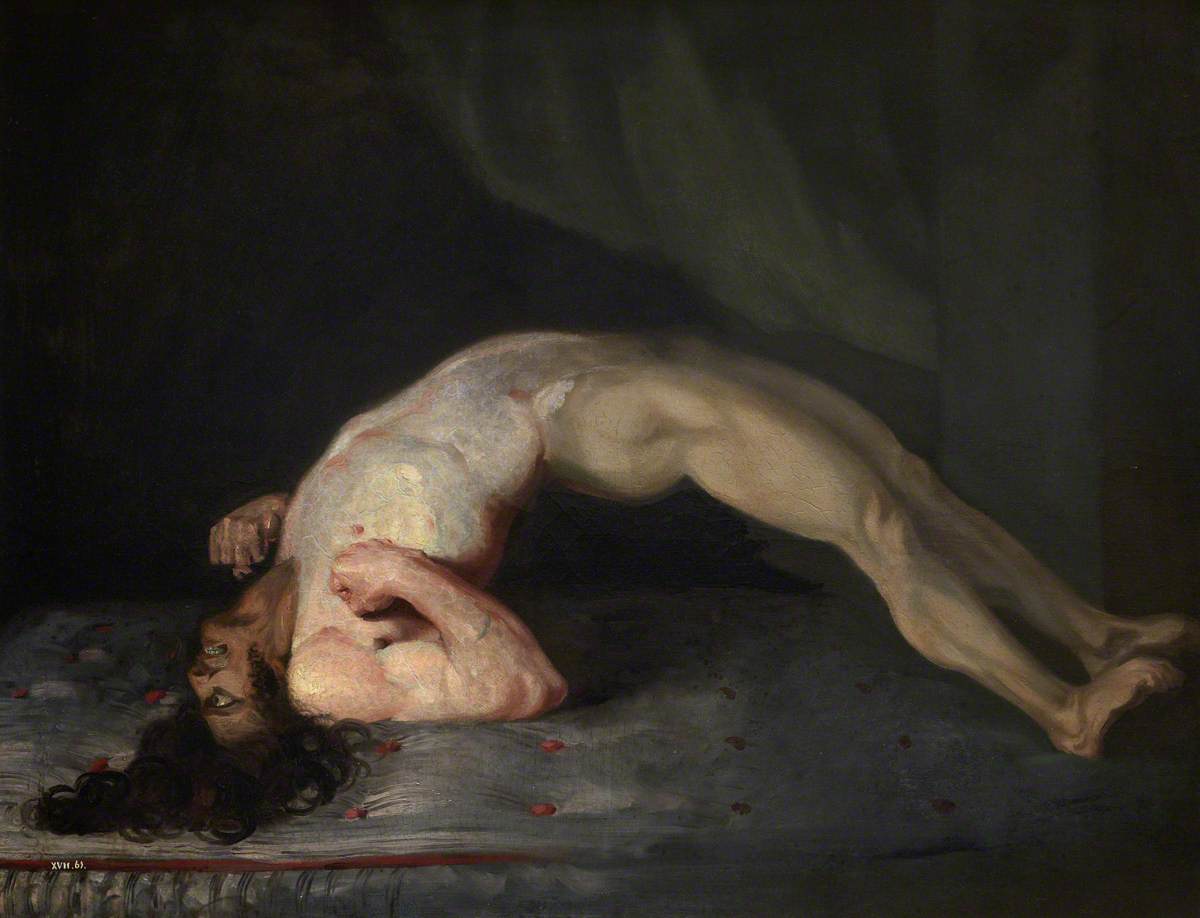
I'm not sure how to start this off, but I wanted to say a few things about the experience of living with chronic pain. One of the most jarring and confusing things about living with chronic pain is the extent to which one's daily rhythms and life habits are altered in ways that people who do not live with pain could not possibly understand.
Humans are social creatures. We cannot help but identify and define ourselves by shared experiences with others, from the most specific ethnic eccentricities to the largest sort of intangible aspects of simply being human. So a person in chronic pain, acutely aware of an absurd difference in daily experience, develops a sense of alienation. More and more, the juxtaposition of personal experience begins to erode social bonds at the edges. Things like walking or talking or sitting are sometimes difficult.
So a fragile dance begins to pick up in rhythm. The object of the game is to feel and appear normal. When in public this is an utter necessity. To the best of our ability, we all want to love and be loved. Well, some of us do. But society tends to shrink from suffering. Nothing worse than to be shrunk from.
That's less important. The real trick is in maintaining personal integrity at home. If a man's home is his castle, his body his temple, then chronic pain is like barbarians at the gate. And they're sneaky. Sometimes things look good - the sun is shining, the milk is flowing. That's when they like to pop out! Scabbards dangling, hatchets clanking, they throw you into the furnace. It's hot in there. You do things, say things you regret.
You recover, of course - you always do. And hopefully the damage isn't too bad. But a sense of impermanence sets in. Life can begin to feel like a series of spinning plates. Sure, you've got them all going now, the crowd is going wild - you're doing it, son, you're doing it!
Humans are social creatures. We cannot help but identify and define ourselves by shared experiences with others, from the most specific ethnic eccentricities to the largest sort of intangible aspects of simply being human. So a person in chronic pain, acutely aware of an absurd difference in daily experience, develops a sense of alienation. More and more, the juxtaposition of personal experience begins to erode social bonds at the edges. Things like walking or talking or sitting are sometimes difficult.
So a fragile dance begins to pick up in rhythm. The object of the game is to feel and appear normal. When in public this is an utter necessity. To the best of our ability, we all want to love and be loved. Well, some of us do. But society tends to shrink from suffering. Nothing worse than to be shrunk from.
That's less important. The real trick is in maintaining personal integrity at home. If a man's home is his castle, his body his temple, then chronic pain is like barbarians at the gate. And they're sneaky. Sometimes things look good - the sun is shining, the milk is flowing. That's when they like to pop out! Scabbards dangling, hatchets clanking, they throw you into the furnace. It's hot in there. You do things, say things you regret.
You recover, of course - you always do. And hopefully the damage isn't too bad. But a sense of impermanence sets in. Life can begin to feel like a series of spinning plates. Sure, you've got them all going now, the crowd is going wild - you're doing it, son, you're doing it!
Sunday, May 24, 2009
Mood as the News
On the front lines of emotional illness...
This weekend, reeling from the likely prospect that I will not be being hired back in the fall, I've somehow managed to avoid the lapping tendrils of outright depression. Long a stalwart nemesis of mine, entangled as it is in the existential threat chronic pain poses throughout my days, I'm fortunate to have - at least as of this writing - managed to keep it at bay. God knows why (that saucy bastard!), but I've been able to abide in the belief that my employer's decision wasn't reflective enough of my true capacity as an educator to fully warrant the painful cognitive battlefield of self-deconstruction. Oh, I hear her calling, at least once every few minutes, but like a cheeky damsel I chasten her with a limp wrist and wiggle her elsewhere. So, let's continue to strike while the iron is hot, shall we?
From the positive state, it is difficult to imagine how much could be given over to a negative state of conflict.
The negative mood consumes everything and makes everything relative to its perceived unresolved tension. Every small thing becomes indicative of that same vast, unresolved struggle.
The positive mood is always emphasizing the positive. The negative is there, but more or less resolved. And if not, it is more than buoyed by the comfort in knowing - truly appreciating - the positive. In a positive state, things could happen in one's life that could never happen in a negative state without causing systemic risk. A happy glow surrounds everything.
This is not so much to do with the inherent qualities of that thing (or idea), but its perceived meaning from within each state. The state consumes one and refracts conscious reality through its prism. Things are looked for (or not looked for), but the emphasis is always dependent on the state. The glass is full, or empty; opportunity is there, or not; the self is good, or bad.
The positive state is perfection: it is ebullient, resilient, decisive, generous, and objective.
The negative state is flaw: it is cynical, mordant, sluggish, selfish and biased.
These seem to exist on a spectrum, or at the very least seem to each have spectrums that overlap. The excesses of the positive state - over-generalization and self-delusion - are base characteristics of the negative state. While the positive state exhibits both through a lack of self-reflection, the negative state does so through an excess of it.
The trick is dealing with genuine catastrophe. For at once one is stricken by the emotion pain of having suffered a blow, and the realization that some real flaw exists in one's self and must be corrected. This is never an easy task, however. If it were so easy to sort out what mistakes were made, they likely never would have been. On occasion, this crashing wave seems to wipe the slate clean, receding at once to provide clarity and absolution from past sin.
But to degree that one suffers from melancholic tendencies, the wave never seems to recede. It washes one under, every hour driving the victim deeper and deeper into his watery grave. The choice is never then to simply put things into the past and return to the surface. Shackles are there! Quickly, they must be unfastened! The blindness of the foggy deep all around, the overwhelming sense of doom welling into bright bubbles of burning panic exploding all around.
It is in this desperate, frigid scene that important decisions must be made. What is real must be sorted from fiction. Relative importance must be measured and adjusted, matters then sorted accordingly. The past must be reconstituted and evidence examined. A framework must be erected, refuse removed in rusty, finicky trucks and labels affixed for future reference. Slowly, things must be rebuilt.
And then, just like that, one emerges. All that seems so far away, so long ago. It is as if these really are two places, two very different states of consciousness. Yet for those of us prone to falling, the water is never more than a few unfortunate events away.
This weekend, reeling from the likely prospect that I will not be being hired back in the fall, I've somehow managed to avoid the lapping tendrils of outright depression. Long a stalwart nemesis of mine, entangled as it is in the existential threat chronic pain poses throughout my days, I'm fortunate to have - at least as of this writing - managed to keep it at bay. God knows why (that saucy bastard!), but I've been able to abide in the belief that my employer's decision wasn't reflective enough of my true capacity as an educator to fully warrant the painful cognitive battlefield of self-deconstruction. Oh, I hear her calling, at least once every few minutes, but like a cheeky damsel I chasten her with a limp wrist and wiggle her elsewhere. So, let's continue to strike while the iron is hot, shall we?
From the positive state, it is difficult to imagine how much could be given over to a negative state of conflict.
The negative mood consumes everything and makes everything relative to its perceived unresolved tension. Every small thing becomes indicative of that same vast, unresolved struggle.
The positive mood is always emphasizing the positive. The negative is there, but more or less resolved. And if not, it is more than buoyed by the comfort in knowing - truly appreciating - the positive. In a positive state, things could happen in one's life that could never happen in a negative state without causing systemic risk. A happy glow surrounds everything.
This is not so much to do with the inherent qualities of that thing (or idea), but its perceived meaning from within each state. The state consumes one and refracts conscious reality through its prism. Things are looked for (or not looked for), but the emphasis is always dependent on the state. The glass is full, or empty; opportunity is there, or not; the self is good, or bad.
The positive state is perfection: it is ebullient, resilient, decisive, generous, and objective.
The negative state is flaw: it is cynical, mordant, sluggish, selfish and biased.
These seem to exist on a spectrum, or at the very least seem to each have spectrums that overlap. The excesses of the positive state - over-generalization and self-delusion - are base characteristics of the negative state. While the positive state exhibits both through a lack of self-reflection, the negative state does so through an excess of it.
The trick is dealing with genuine catastrophe. For at once one is stricken by the emotion pain of having suffered a blow, and the realization that some real flaw exists in one's self and must be corrected. This is never an easy task, however. If it were so easy to sort out what mistakes were made, they likely never would have been. On occasion, this crashing wave seems to wipe the slate clean, receding at once to provide clarity and absolution from past sin.
But to degree that one suffers from melancholic tendencies, the wave never seems to recede. It washes one under, every hour driving the victim deeper and deeper into his watery grave. The choice is never then to simply put things into the past and return to the surface. Shackles are there! Quickly, they must be unfastened! The blindness of the foggy deep all around, the overwhelming sense of doom welling into bright bubbles of burning panic exploding all around.
It is in this desperate, frigid scene that important decisions must be made. What is real must be sorted from fiction. Relative importance must be measured and adjusted, matters then sorted accordingly. The past must be reconstituted and evidence examined. A framework must be erected, refuse removed in rusty, finicky trucks and labels affixed for future reference. Slowly, things must be rebuilt.
And then, just like that, one emerges. All that seems so far away, so long ago. It is as if these really are two places, two very different states of consciousness. Yet for those of us prone to falling, the water is never more than a few unfortunate events away.
Subscribe to:
Posts (Atom)