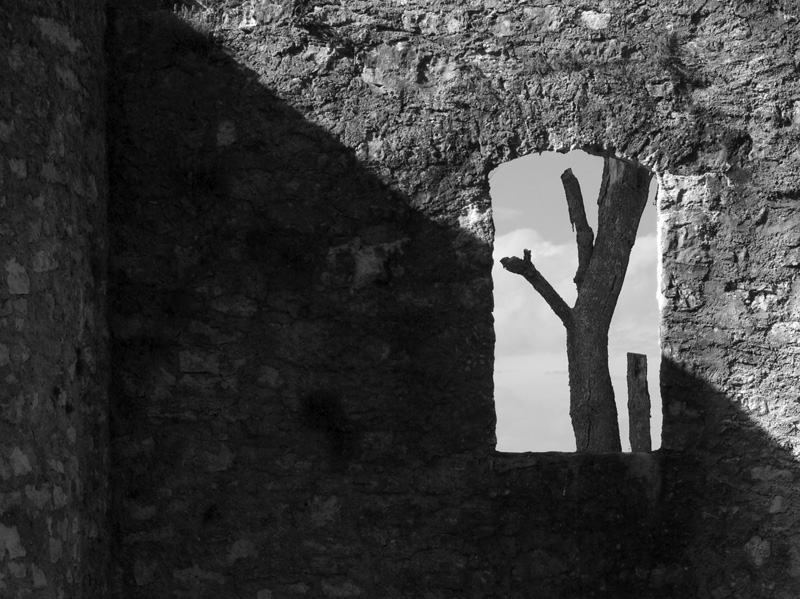
As the tagline at the top of this blog suggests, I am a bastard. Well, now it has become more official than ever. For the second year in a row, I have been given a rating of "unsatisfactory" by an administrator, and asked not to return next year. Try as I did to do everything right, to do everything they wanted me to, in the end I could not do the job. As I have argued on this blog for years, the job was incredibly difficult, and only the most amazing teachers had any hope of pulling it off. I must now admit that, at least in this particular type of classroom, I am not an amazing teacher. That might sound like I'm making excuses for myself by hiding behind inflated expectations. But the expectations didn't feel inflated. They felt crushing, demoralizing and impossible - the kind I'd agonize over as I drove home each day, as I played with my daughters, as I sat at the dinner table, as I tried to unwind in the final hours of the evening, as I closed my eyes and tried to sleep, haunted in my dreams.
For three years I have taught what can only be described as juvenile delinquents. First, for two years at the continuation high school, where stories of substance abuse, physical and sexual violence, and mental illness were the norm. Then for the past year at a regular education high school, teaching the students whose grades were so poor that they were placed into lower-level science courses. These students weren't nearly as bad, with about 40% of them failing all their classes, another 40% in serious risk of failing, and a final 20% managing to quietly do their work and behave themselves.
Both administrators' main concern was my inability to adequately engage my students. At the continuation school, this was a joke. Teachers were evaluated on their ability to deliver direct instruction to a class of quiet, engaged, obedient learners - despite the reality of who the students really were and what they were capable of. (What they really needed was out of the question). I did my best to pretend to give the principal what he wanted, but ended up spending too much time talking to the students about their problems and trying to simply provide a safe, positive environment away from the chaos of their young lives outside school.
Expectations could be higher at the regular high school. These students were much higher functioning. There was a broader range of abilities. While many of the students could do little more than highly scaffolded, fill-in-the blanks worksheets, their emotional and behavioral problems getting in the way of higher-order participation and self-directed learning, many others were genuinely interested in the subject at hand. My job was to meet the needs of both these types of learners. On the one hand, I had to deliver quality, meaningful, engaging instruction while at the same time making the curriculum accessible to the majority of students for whom simple, repetitive tasks were all that was within reach of their emotional and hence cognitive zone of proximal development. It was a forgone conclusion among all the other teachers that, in regard to this specific student population, "they love worksheets".
The sad truth of this is that it reflects the institutional, structural bind the students and teachers are in. Of course the students don't "love" worksheets. But given the practical limitations of the classroom environment, this is how they can at least be successful, even while hating school and feeling trapped in its Kafkaesque, social Darwinist chains; unable to have developed the proper emotional and cognitive capacities for success, they are forced to bow their heads and plow ahead with little understanding of where they are headed, from lash to lash, all the while being reminded of the seemingly futile existence they and their peers share. For them, disobedience is an ongoing political act, the only dignified response they have to a system in which they feel unable to participate effectively. The bargain on offer is that if they simply stay within the lines of respectable behavior, they will earn their freedom. Because they are so poorly developed, and so fraught with emotional, behavioral and cognitive problems which the institution cannot hope to begin to address, school becomes not a place of inspiration but control.
So the dynamic is set: an authoritarian teacher keeps them in line while delivering unto them simplistic, rote behavioral tasks designed primarily to keep them quiet and obedient until graduation. The company line is that the students are choosing their lot in life. The poorly performing students have no one to blame but themselves. The teachers are expected to hold them to this, delivering consequences as needed. As a practical matter, this is what the students need to hear: they have choices, there are consequences for their actions, and they need to become aware of them.
But from a larger, sociological standpoint, the system is failing them miserably: socio-economics is responsible for their underdevelopment, public institutions have not been designed to properly intervene, and the simplistic model of authoritarian teacher keeping them in line while delivering a curriculum that can only be designed to fit into a narrow range of cognitive and behavioral limitations facilitates a model of education that ignores the development of the totality of a student in favor of scoring a few points on academic memorization and self-control for some, while killing inspiration and ignoring real student needs of most. One might call this "Miguel's Window": the explicit design of educational programs to make the most of a poorly-developed, poorly-resourced student population through the use of authoritarian, control-oriented instruction.
At the beginning of the year, when I had not yet realized the reality of the developmental lack in my student population, I had attempted to engage them with more student-centered, higher-order thinking curriculum. It immediately became obvious that the students wouldn't be able to handle such instruction: they were frequently off-task, using the independence as an excuse to not do their work. For them, schoolwork was something to avoid as much as possible in favor of socializing with their friends, destroying class materials, pranking each other and generally avoiding any and all academic pursuits. Rigor was impossible. Studying was out of the question, as homework assignments would simply be ignored. Keeping expectations high was resulting in failure rates of 80-90%. (At the semester, I was told at an evaluation that a 40% failure rate in my classes was unacceptable, primarily because they didn't have the staff for that many summer school classes. But, I was told, I needed to maintain high standards). Phone calls home with this population are nearly useless. So far this year, I've made at least a hundred calls, mostly unreturned messages, wrong numbers, or conversations with exasperated parents who tell me they don't know what to do with their child anymore.
On this blog I've mentioned the notion of "Rambo Escalante", the illusive master teacher who is able to overcome his student's disadvantages and inspire them to greatness. Administrators regularly argue that the teacher is indeed the number one factor in a child's education, despite the fact that either the evidence proves them wrong, or that in thousands of schools across the country, where socio-economics is by far the biggest determinant of student success, most teachers are not doing their job.
So, maybe I could have been that teacher. Maybe my lessons could have been so exciting and engaging that behavior wouldn't be an issue and my students would all be successful. Or maybe I could have been at the very least the teacher who keeps his students so frightened and buckled-under that all do their work and are engaged in every single lesson. (In one critical comment on my final evaluation, one student was observed drawing a picture of a boat instead of writing down my notes, and I didn't catch it. Shame on me.)
I accept full responsibility for not having the best classroom management. My students frequently took out their phones, had side conversations, through things, drew on their desks, cursed, or didn't take their notes. I did my best to correct them. I picked my battles. I wrote "incident reports", I wrote referrals, I made calls home. I tried to catch them all, but there were so many, and I would get tired. I would get angry and yell at them when they wouldn't listen. I would sometimes smack my hand on the table to communicate my frustrated irritation and seriousness. The worksheets are so depressing. The constant reminders to behave were depressing. The resentment my students felt towards me, towards the school, towards their friends, towards life - it was all so hard to take day in and day out. It was so hard to know that I was merely acting as a conduit through which socio-economic inequality was being perpetuated through benign neglect and practical moral compromise. The worst students had the worst lives, were the poorest, the darkest, while the best students had the best lives, were the least poor, were the whitest.
This will have been my seventh year in education. What began as naive optimism eventually decayed into disappointment, anxiety, confusion, fear, anger and depression. I loved my kindergarten students - who couldn't. With them, at least, I felt I was doing good. But even that job became impossible when I was asked to teach a combination class of kindergarten students who didn't know what letters were and first graders who were ready to take of reading and writing. At one point I was designing 16 rotating "centers" a day - reading in the morning and math in the afternoon, so that I could juggle 4 different direct instruction lessons and maintain some semblance of classroom order. (Imagine teaching a group of 7 students on the carpet to write paragraphs while overseeing the rotation of thirteen five-year olds through four different academic subjects via independent learning stations, then switching grades.) After that, the years deteriorated into the charade of teaching the process of protein transcription to emotionally disturbed high-schoolers.
So, the news I got this week was somewhat of a relief. I mostly agreed with the administrator who told me that my classroom management wasn't good enough. I could not be the teacher he wanted me to be. But the truth is, I do not want to be that teacher. I hope he is able to find someone who is willing and able to do it. But me? I'm done playing that game. I refuse to sacrifice any more of my time and emotional well-being - on which I have a dependent family - in the service of a system that is actively harming students by pretending to offer them what they need. It may need to tell itself it is because there is no alternative. But unfortunately, the process of telling the story binds it to a model that does not work, and keeps it from exploring or championing alternatives.
At this point, I don't feel qualified to say what those alternatives might look like. If we had the funding, a good start might be to take the disadvantaged, under-developed kids and give them more of a special-education model, segregating them into small intervention groups in which their needs can be met on an individual basis, without the absurd expectation that they will all prosper in mainstream classrooms. But I'm still to close to the system to see around it right now. I need to back away and get some perspective.
I don't know what my future will look like. It may or may not involve education. If it does, it will be with very young children, where I can still effect change within the system. I'd like to work with poor families, providing real support and effective intervention. I might explore special education,where there might at least be more realistic models for supporting a students needs. But wherever I end up, I need to be me. I'm not a stiff, strict man who tucks his shirt in tightly and issues rigid orders, and I'm not a man who takes orders I feel are impractical, misguided or would otherwise have me ply my skills to ineffective ends.
I went into education because I believed I could make a difference, that I could find a place in a system that seemed so central to our democratic values of giving every child a reasonably equal shot at life. I've come to see the futility of this vision, that my commitment, creativity and capacity to empathize with children was simply no match for the vast number of forces arrayed against them from birth, and the severe limitation of public schooling to effect real change in their lives. In the end, the best I was expected to offer them was soul-crushing, mindless routines designed for control, inspired by fear and domination. The only light being let in was through "Miguel's Window", and it was a cold, cruel light. For me to continue to shine, I'll have to look elsewhere.
A bastard's take on human behavior, politics, religion, social justice, family, race, pain, free will, and trees
Saturday, March 30, 2013
Friday, March 22, 2013
The Complexities of Poverty
Chicago just announced it was closing 50 public schools. Of course, these were the "lowest performing" schools. Of course, these were the poorest and blackest. Citing budgetary constraints as the primary issue, nevertheless it was an opportunity for the neo-liberal, reform-minded officials to apply their particular brand of educational ideology. Closing schools has been a key pillar of the reform movement, which views teacher/school quality as the root of the problem. Better schools and teachers, so it goes, will close the achievement gap and provide equality for all. A more radical progressive argument says the problem of poverty and disadvantage is far larger and more pernicious than can be handled simply better teaching and curriculum. However , the neo-liberal reformer apologizes for the ravages of an economic system which inflicts intense social destruction on families, and deligitimizes their disadvantages by assuming them to be so minimal as to be solved merely by better teaching.
One of the tropes regularly offered in support of this illusion is an example of how one family in poverty outperforms another when simply offered the same chance at success. This argument is ancient among conservatives, the classic Horatio Alger story of someone pulling themselves up by their own bootstraps as proof that if they can do it, anyone can, thus disproving structural inequality as an oppressive force. Similarly, education reformers point to the success of certain charter schools, saying essentially, "if they can do it, why can't other schools?"
Yet the problem with these arguments is that they rely on faulty comparisons, ignoring the complexity of large data sets in favor of narrow, cherry-picked results. Both examples take a view of poverty, which no one can argue doesn't correlate with disadvantage, that misses the specific qualities of poverty that actually cause disadvantage to begin with. By excluding these causal relationships, they are able to emphasize cases in which the causal relationship doesn't exist, and people are able thus to free themselves from its shackles. For instance, a Horatio Alger who while poor, has not been molested since the age of 11 is a very different young man than the Horatio Alger who has not. Or grew up without a father. Or grew up with a mother who didn't know how nurture him. Or was bullied because he was gay, etc.
In the reformist film Waiting for Superman, a portrait was painted of a community of poor parents whose children's success was determined merely by whether or not they won a lottery to get into a neighborhood charter - ostensibly a "good" school. Yet the reality of good vs. bad schools is that they are overwhelmingly determined by SES. That is, the families themselves. This seems contradictory. These are all highly motivated parents, who want the best for their children, so what gives? The simplistic answer is that they are being held back by "bad" public schools. There is some truth to this. But the bigger picture is more complex.
In any given classroom that draws from a heterogeneous population of poor students, you are going to have a range of family stories. Statistics bear this out, but I can personally attest to witnessing this in my own classrooms. The higher performing students are well behaved, come from relatively stable homes, and are motivated to learn. These are the students whose parents show up on parent night, and are generally involved in their children's education. The middle-ground students are less stable, often experiencing a variety of stresses in their lives that impact their academic engagement. Their parents are harder to get a hold of, and generally less available. The lowest performing students have a variety of behavioral issues, and their home-lives tend to be the most unstable. Their parents might have substance abuse problems, issues with the law, and are frequently very difficult to get a hold of. These students take up most of the teacher's time, and generally place a heavy burden on the rest of the class. Some of these students will of course be successful despite their backgrounds, but it is a daily struggle. Just the other day, I overheard one of my students tell a friend that, when she told her mom about another student who was causing problems with her, that she should "beat that bitch's ass". "But Mom, I said, "as the student went on to describe the conversation, "I can't get in trouble again for fighting because of my probation! I don't care, she said - that bitch deserves it!"
In the film Waiting for Superman, you can guess which parents are clamoring to get into the exclusive charter schools.
Too often, we see such a simplistic model of how SES relates to a student's human capital, or their total abilities to be successful. SES is a powerful general predictor, but it is just that - general. Too often it is assumed to represent more than it should. As it is mostly used in education, it refers only to parent income. But that is only one measure of what is a much more complex picture of SES.
A proper measure of SES would include not only family income but things like parent education, whether the family is intact, are there health issues both physical and psychological, neighborhood safety, substance abuse, etc. The number of factors is almost endless, and there are limits to what can reasonably be measured when designing policy. But that doesn't mean that confining ourselves to a simplistic model frees us from being limited by our data. Just the opposite, it means our data is superficial, and any conclusions we derive from it will be limited.
So, by looking only at parent income, two families could look similarly disadvantaged on paper, while in reality having wildly different levels of disadvantage.
One of the tropes regularly offered in support of this illusion is an example of how one family in poverty outperforms another when simply offered the same chance at success. This argument is ancient among conservatives, the classic Horatio Alger story of someone pulling themselves up by their own bootstraps as proof that if they can do it, anyone can, thus disproving structural inequality as an oppressive force. Similarly, education reformers point to the success of certain charter schools, saying essentially, "if they can do it, why can't other schools?"
Yet the problem with these arguments is that they rely on faulty comparisons, ignoring the complexity of large data sets in favor of narrow, cherry-picked results. Both examples take a view of poverty, which no one can argue doesn't correlate with disadvantage, that misses the specific qualities of poverty that actually cause disadvantage to begin with. By excluding these causal relationships, they are able to emphasize cases in which the causal relationship doesn't exist, and people are able thus to free themselves from its shackles. For instance, a Horatio Alger who while poor, has not been molested since the age of 11 is a very different young man than the Horatio Alger who has not. Or grew up without a father. Or grew up with a mother who didn't know how nurture him. Or was bullied because he was gay, etc.
In the reformist film Waiting for Superman, a portrait was painted of a community of poor parents whose children's success was determined merely by whether or not they won a lottery to get into a neighborhood charter - ostensibly a "good" school. Yet the reality of good vs. bad schools is that they are overwhelmingly determined by SES. That is, the families themselves. This seems contradictory. These are all highly motivated parents, who want the best for their children, so what gives? The simplistic answer is that they are being held back by "bad" public schools. There is some truth to this. But the bigger picture is more complex.
In any given classroom that draws from a heterogeneous population of poor students, you are going to have a range of family stories. Statistics bear this out, but I can personally attest to witnessing this in my own classrooms. The higher performing students are well behaved, come from relatively stable homes, and are motivated to learn. These are the students whose parents show up on parent night, and are generally involved in their children's education. The middle-ground students are less stable, often experiencing a variety of stresses in their lives that impact their academic engagement. Their parents are harder to get a hold of, and generally less available. The lowest performing students have a variety of behavioral issues, and their home-lives tend to be the most unstable. Their parents might have substance abuse problems, issues with the law, and are frequently very difficult to get a hold of. These students take up most of the teacher's time, and generally place a heavy burden on the rest of the class. Some of these students will of course be successful despite their backgrounds, but it is a daily struggle. Just the other day, I overheard one of my students tell a friend that, when she told her mom about another student who was causing problems with her, that she should "beat that bitch's ass". "But Mom, I said, "as the student went on to describe the conversation, "I can't get in trouble again for fighting because of my probation! I don't care, she said - that bitch deserves it!"
In the film Waiting for Superman, you can guess which parents are clamoring to get into the exclusive charter schools.
Too often, we see such a simplistic model of how SES relates to a student's human capital, or their total abilities to be successful. SES is a powerful general predictor, but it is just that - general. Too often it is assumed to represent more than it should. As it is mostly used in education, it refers only to parent income. But that is only one measure of what is a much more complex picture of SES.
A proper measure of SES would include not only family income but things like parent education, whether the family is intact, are there health issues both physical and psychological, neighborhood safety, substance abuse, etc. The number of factors is almost endless, and there are limits to what can reasonably be measured when designing policy. But that doesn't mean that confining ourselves to a simplistic model frees us from being limited by our data. Just the opposite, it means our data is superficial, and any conclusions we derive from it will be limited.
So, by looking only at parent income, two families could look similarly disadvantaged on paper, while in reality having wildly different levels of disadvantage.
Sunday, March 3, 2013
Better Childhoods
In a latest newsletter, education commenter Robert Bligh sorts out some stunning numbers:
He then makes a useful point: "What kids need is not better schools, but better childhoods."
This is a damning social indictment, which in its truth paints the dillema in stark terms: the problem isn't in the classroom, but in families themselves, thus limiting the power of larger society to intervene. What kind of policy would create better families? How much of the effects are going to be indirect, such as availability of quality employment, reduction in crime or substance abuse, or child and health care?
To begin with we must ask ourselves what it actually means to have a poor childhood in the first place. Reflecting on my own classroom teaching science courses designed for lower-performing high school students, I am surrounded by evidence of poor childhoods. It is a fact that socio-economics correlates with academic performance, and this is no less true for my students.
While my knowledge of my students' home lives is limited, it is almost a truism to say that those who are struggling in school are doing so because of trouble at home. The number one problem most struggling students have is one of motivation, in keeping up their faith in the prospect of education being a rewarding experience. For those most at-risk, the ones with consistently poor academic performance, those struggling to pass their classes, the problem is not the difficulty of the courses, but rather simply their willingness to maintain focused on completing their work and paying attention in class. If a student is able to concentrate in class, and has the determination to succeed, the teacher is able to demand more of them knowing that they will be successful.
I teach lower-level science courses. Most of my students have demonstrated a history of receiving low grades in prior years, and so they have been counseled to take less demanding coursework, so that they stand a chance of passing their courses and eventually being able to graduate. I see first-hand the origins of their academic failure, as they struggle to meet even the lower bar I set in my classroom. Don't get me wrong, I would love to raise it. The problem is that I would only be setting them up to fail; just this last semester, I gave failing grades to 40% of my students. After bending over backwards for many of them - accepting late work, designing modified curriculum, awarding them points for simple tasks, not assigning them homework or other projects requiring them to work independently - nearly half still could not manage to complete the minimum standards for a passing grade.
So, what is the problem here? They were being held accountable by me when I would not give them passing credit. Yet this was not enough. They clearly lacked enough intrinsic motivation within themselves to demonstrate the most basic acceptable behavior.
Essential to the conservative worldview is the notion of personal responsibility and free choice. A conservative colleague of mine, one very familiar with the type of students I teach, once commented to me that it isn't hard to be successful - just do your work! The implication is that these students are making a conscious choice to fail, and thus it is their own fault. When and if they graduate, and go on to work for poverty wages because of a lack of personal investment and commitment, they have no one but themselves to blame.
The problem with this is, as they say, turtles all the way down. That is, the assumption is that these low-wage workers have made their own choices. But the choices they made began in high school. And yet, when looked at demographically, as a group these students have one thing in common - disadvantage. College graduates, as a class making much more money than high school graduates, in turn make more than high school dropouts, tend to come from families with higher incomes, more education, less mental health issues, life problems, etc. If there really was such a thing as free choice going on, something by definition accessible to every conscious individual, you would expect there to be no correlation between family background and personal choice. Children of high school dropouts would be as likely to "choose" to do well in school as those of college graduates. Instead, we see very strong correlative relationships between family background and academic success. Furthermore, what in high school are described as free choices - not paying attention in class, not completing assignments, etc. - also highly correlate with poor performance in middle school, in turn correlating with poor performance in elementary, in turn correlating with low levels of academic preparedness in kindergarten.
So what appears to be free choice is actually rooted in something larger, something deeper in the student's history. And as we descend backwards in time, it becomes more and more difficult to describe the child's decision-making process as "free". That is, a 17 year old senior who doesn't finish his homework seems like a choice that is as free as any an individual might make. Yet a first-grader's choice to play with his pencil instead of finish his paragraph is intuitively understood to be a product of cognitive or emotional limitations, especially ones that demand a rigorous external disciplinary structure. As a child grows, the choices he makes, clearly rooted in the developmental environment in which he has been raised, slowly transform, as his consciousness and self-awareness become more apparent, into choices that seem less rooted in his developmental environment. But with enough information about his history, one can empirically trace a line of causality between this environment and his teenage, even his adult, behavior. What's more, without even knowing the specific individual, one can predict his teenage and adult behavior merely by knowing the socioeconomic circumstances of his childhood with a frightening degree of reliability.
Proponents of early childhood education point all of this out, arguing that the earlier disadvantaged children are given the skills to succeed in school, the more likely they are to overcome the challenges of poverty. This is a laudable policy position. But it remains to be seen just how effective it can ultimately be, as long as larger social trends are at play.
There is only so much a school environment can offer a child, at least the kinds of environments currently on offer in mainstream educational pedagogic policy. The problem in education is seen as one of an academic skills deficit, and so policy is designed to better deliver to students these skills. The research is clear that disadvantaged children come to kindergarten years behind advantaged peers in vocabulary and numeracy. The thinking is that by catching these kids up quickly, the achievement gap will be erased. This is true enough as far as it goes. However, something more troubling lurks underneath. Child development is about more than mastery of academic skills. More important are the deeper, more difficult to quantify areas of a child's growth.
A troubling memory haunts me, one indicative of a larger problem in education. As a graduate student in the Portland State college of education, I once proposed to a professor that there were other things being taught in the classroom aside from the academic standards that were surely important to the children's development. Obviously disturbed by my question, she shot back that if I were to be teaching things in the classroom that were not in the state academic standards, then I should think about a different career. On the spot, I tried to quickly think of an example of something important to a child's development that fell outside the rigid lines of the standards. I can't remember what I said, but it was true that I wasn't capable of addressing the question. It was largely an intuition I had that there was more to school, more to learning than mastering academics. However, the professor wasn't just uninterested in my inquiry, she was actively offended by it.
My question never did get answered at university. In the years that followed, I taught classroom after classroom of disadvantaged students, at all grade levels, first as a substitute in Reading, Pennsylvania, then in the communities that surrounded Palm Springs, CA - a resort community with an insatiable appetite for low-wage, immigrant service workers, then as a kindergarten teacher in Indio, CA, then as a high school science teacher at a continuation school, and now at a regular high school in the poverty-ridden high desert. Again and again, I've seen our education system failing in its best attempts to deliver to disadvantaged students skills equal to those of advantaged students. I've seen bad teaching, but mostly I've seen smart, dedicated, passionate teachers doing their best to deliver high-quality instruction in what often seem like impossible circumstances.
Teachers of disadvantaged students are expected to teach their students the same academic content as advantaged peers, and are then measured by their students' performance on tests of this academic content. Allowances are made for the fact that disadvantaged students struggle more academically, and so will generally have lower test scores. However, progress is expected, under the assumption that eventually, through good teaching, disadvantaged students will one day all perform at the level of advantaged peers, the achievement-gap thus closed. The underlying, implied premise here, is that despite any disadvantages students might face, quality educational instruction is capable of erasing the effects of poverty and disadvantage from American society. A liberal notion, countering the unwieldy conservative premise that the disadvantaged only have themselves to blame, it seeks to correct the injustice of structural disadvantage through technocratic, government intervention.
However, as socialist as this sounds in principle - that society is coming together to guarantee a basic level of education to all students - the reality is anything but. The actual delivery of government intervention through public education makes little account for levels of disadvantage among actual school children. From Baltimore to Chicago to New York City to Los Angeles, disadvantaged students are provided roughly the same service as their advantaged peers: one teacher per 30 children, in one classroom, with a set of curriculum, a stack of textbooks and a desk for each kid. Title I funding, apportioned by need, allows disadvantaged students a free or reduced breakfast and lunch, with a few funds left over for maybe an extra counselor and a few teacher's aids.
This, as a remedy to the inequities of socioeconomic disadvantage. When people speak of "throwing money at the problem", as they claim we have done, this is what they are talking about. Instead, what we need, many will argue - indeed at this point majorities across the political spectrum, from the leaders of the Republican party to the Democratic president and his secretary of education, as a group advocates of what is called "education reform", is better teaching, higher standards, and innovative charters. The real problem standing in the way of closing the achievement gap, as they tell it, comes down to low-quality teachers and the unions that protect them.
There is no doubt that a great teacher can have dramatic effects in the classroom, providing a much more enriching experience than a bad teacher. And there is no doubt that union contracts can have the effect of making it difficult to remove these teachers from the classroom. However, the issue is much more complex. To begin with, a "bad" teacher in a classroom of disadvantaged kids might be perfectly adequate in a classroom of advantaged kids; I can attest from personal experience that the two jobs are entirely different. Advantaged kids are generally academically prepared, have less stress in their lives due to more stable homes, cleaner, safer and more optimistic neighborhoods, causing them to have more intrinsic motivation and fewer behavioral problems. The difference between a student who is unmotivated, unhappy, hates school, doesn't do his homework and is more interested in showing his friends how tough and cool he is, and a student who is happy, motivated, excited about learning and unconcerned with rebellious peer pressure, is unfathomably wide. This is the difference between a soldier running training exercises and a soldier under fire on the battlefield. "Good" teachers at disadvantaged schools have to be amazing just to be good. There is a reason the least experienced teachers tend to teach at these schools: few want to. The job is harder - more stressful, more demanding, and generally emotionally exhausting. In the labor market of education, experience is leverage, and it is generally used to purchase a more enjoyable and, well, manageable work day.
Our current education model is not addressing this disparity in the profession. The simple reason is that it doesn't have the money. It isn't even worthwhile imagining what it might mean to truly make teaching a classroom of disadvantaged students a job with demands roughly equivalent of teaching a classroom of advantaged students if there isn't the money to do it. But this gets to the more complicated answer: what would it actually take to make such changes? Proponents of education reform, with a current majority of political support, focus only on the quality of the teacher, with nary a word to say about anything else that might improve a student's academic success. Some seem genuinely offended by the notion that we look at anything but the performance of the teacher, much less discount that the problem even lies with teacher effectiveness at all. Many go so far as to suggest that doing so is merely making excuses, and not, as Michelle Rhee stiffly asserts, "putting students first". I can't help but be reminded of my college professor's bullying suggestion that I think about leaving the profession entirely.
But one might as easily turn the question around, and ask if in ignoring the larger issues, and focusing solely on a problem - the teacher - that may be of only marginal import - is to be making excuses, or to not be putting students first. Is it, for instance, putting students first to pack 30 students from Chicago's south side into a classroom with one teacher, when, as a demographic group, the students are likely to be suffering from any number of social ills that are actively impeding the teachers ability to teach them, and their ability to learn? Is it putting students first to give a free or reduced breakfast and lunch, maybe access to a counselor or part-time teachers aide but otherwise expect students from broken homes, with incarcerated parents, violent neighborhoods, uneducated parents who work long hours for low pay at stressful, unrewarding jobs, to succeed in school with a teacher who can't possibly address the larger issues that impact their lives and their ability to learn?
Robert Bligh proposes that what children need are better childhoods. Can the state provide that? I'm not so sure - we've never tried. Our economic system is dependent on millions of low-wage workers. Our system of property forces them into segregated neighborhoods. Anything that might effect your ability to leverage yourself in the labor force will push you further down the economic rung, further into one of these neighborhoods. Families whose heads-of-household suffer from health problems, mental illness, substance abuse, lack of education or lack of loving, supportive childhoods will be forced to live together in communities of disadvantage. A lack of social capital will come to define their relationships, segregating them further not just by geography but by cultural and social networks. A recent NPR story described a study which directly linked certain disadvantaged children's temperaments with behavioral problems, depending on how much nurturing they received at home.
Given the severity of the disadvantage poor students face, our educational system as currently designed is no where near capable of delivering on a promise of delivering unto them the depth of skills they need, finally closing the achievement gap. In our continued emphasis on cold academic standards, we miss the larger story of what it means to grow up healthy and happy. If disadvantaged students came to school with low levels of stress, feeling pleasant, loved, and optimistic about their future, would they need an "amazing" teacher? I don't think so.
For so long we've been asking the wrong questions. Just like a military, when faced with an existential threat, only sees combat as the best option, so too has our approach to the achievement gap been "militarized". We have a public education system that graduates children ready to take on the world, and when they aren't ready, we think the solution is to fix the education system. But just as diplomacy seeks to solve problems peacefully, by forging an alternative path to war, what we need to close the achievement gap is to look for answers outside our traditional education system.
This isn't to say that education isn't a crucial aspect of a child's development, but rather to point out the seemingly obvious fact that there is a lot more to raising successful children than academic curriculum delivered in a traditional classroom setting. Children need to feel loved. They need to feel safe. They need to feel special and important. If we are relying on a teacher in a classroom of students to be the vehicle through which a deficit in these things is compensated for, we are destined for failure.
Maybe the solution to the education problem isn't really education at all.
An American Childhood Without Preschool
Time from conception to kindergarten = 50,000 hours
Time from conception to age 18 = 164,000 hours
Time from birth to kindergarten = 44,000 hours
Time from birth to age 18 = 158,000 hours
Class time from kindergarten to graduation = 14,000 hours
Portion of childhood spent in school = 8.9 percent
Portion of childhood spent someplace else = 91.1 percent
He then makes a useful point: "What kids need is not better schools, but better childhoods."
This is a damning social indictment, which in its truth paints the dillema in stark terms: the problem isn't in the classroom, but in families themselves, thus limiting the power of larger society to intervene. What kind of policy would create better families? How much of the effects are going to be indirect, such as availability of quality employment, reduction in crime or substance abuse, or child and health care?
To begin with we must ask ourselves what it actually means to have a poor childhood in the first place. Reflecting on my own classroom teaching science courses designed for lower-performing high school students, I am surrounded by evidence of poor childhoods. It is a fact that socio-economics correlates with academic performance, and this is no less true for my students.
While my knowledge of my students' home lives is limited, it is almost a truism to say that those who are struggling in school are doing so because of trouble at home. The number one problem most struggling students have is one of motivation, in keeping up their faith in the prospect of education being a rewarding experience. For those most at-risk, the ones with consistently poor academic performance, those struggling to pass their classes, the problem is not the difficulty of the courses, but rather simply their willingness to maintain focused on completing their work and paying attention in class. If a student is able to concentrate in class, and has the determination to succeed, the teacher is able to demand more of them knowing that they will be successful.
I teach lower-level science courses. Most of my students have demonstrated a history of receiving low grades in prior years, and so they have been counseled to take less demanding coursework, so that they stand a chance of passing their courses and eventually being able to graduate. I see first-hand the origins of their academic failure, as they struggle to meet even the lower bar I set in my classroom. Don't get me wrong, I would love to raise it. The problem is that I would only be setting them up to fail; just this last semester, I gave failing grades to 40% of my students. After bending over backwards for many of them - accepting late work, designing modified curriculum, awarding them points for simple tasks, not assigning them homework or other projects requiring them to work independently - nearly half still could not manage to complete the minimum standards for a passing grade.
So, what is the problem here? They were being held accountable by me when I would not give them passing credit. Yet this was not enough. They clearly lacked enough intrinsic motivation within themselves to demonstrate the most basic acceptable behavior.
Essential to the conservative worldview is the notion of personal responsibility and free choice. A conservative colleague of mine, one very familiar with the type of students I teach, once commented to me that it isn't hard to be successful - just do your work! The implication is that these students are making a conscious choice to fail, and thus it is their own fault. When and if they graduate, and go on to work for poverty wages because of a lack of personal investment and commitment, they have no one but themselves to blame.
The problem with this is, as they say, turtles all the way down. That is, the assumption is that these low-wage workers have made their own choices. But the choices they made began in high school. And yet, when looked at demographically, as a group these students have one thing in common - disadvantage. College graduates, as a class making much more money than high school graduates, in turn make more than high school dropouts, tend to come from families with higher incomes, more education, less mental health issues, life problems, etc. If there really was such a thing as free choice going on, something by definition accessible to every conscious individual, you would expect there to be no correlation between family background and personal choice. Children of high school dropouts would be as likely to "choose" to do well in school as those of college graduates. Instead, we see very strong correlative relationships between family background and academic success. Furthermore, what in high school are described as free choices - not paying attention in class, not completing assignments, etc. - also highly correlate with poor performance in middle school, in turn correlating with poor performance in elementary, in turn correlating with low levels of academic preparedness in kindergarten.
So what appears to be free choice is actually rooted in something larger, something deeper in the student's history. And as we descend backwards in time, it becomes more and more difficult to describe the child's decision-making process as "free". That is, a 17 year old senior who doesn't finish his homework seems like a choice that is as free as any an individual might make. Yet a first-grader's choice to play with his pencil instead of finish his paragraph is intuitively understood to be a product of cognitive or emotional limitations, especially ones that demand a rigorous external disciplinary structure. As a child grows, the choices he makes, clearly rooted in the developmental environment in which he has been raised, slowly transform, as his consciousness and self-awareness become more apparent, into choices that seem less rooted in his developmental environment. But with enough information about his history, one can empirically trace a line of causality between this environment and his teenage, even his adult, behavior. What's more, without even knowing the specific individual, one can predict his teenage and adult behavior merely by knowing the socioeconomic circumstances of his childhood with a frightening degree of reliability.
Proponents of early childhood education point all of this out, arguing that the earlier disadvantaged children are given the skills to succeed in school, the more likely they are to overcome the challenges of poverty. This is a laudable policy position. But it remains to be seen just how effective it can ultimately be, as long as larger social trends are at play.
There is only so much a school environment can offer a child, at least the kinds of environments currently on offer in mainstream educational pedagogic policy. The problem in education is seen as one of an academic skills deficit, and so policy is designed to better deliver to students these skills. The research is clear that disadvantaged children come to kindergarten years behind advantaged peers in vocabulary and numeracy. The thinking is that by catching these kids up quickly, the achievement gap will be erased. This is true enough as far as it goes. However, something more troubling lurks underneath. Child development is about more than mastery of academic skills. More important are the deeper, more difficult to quantify areas of a child's growth.
A troubling memory haunts me, one indicative of a larger problem in education. As a graduate student in the Portland State college of education, I once proposed to a professor that there were other things being taught in the classroom aside from the academic standards that were surely important to the children's development. Obviously disturbed by my question, she shot back that if I were to be teaching things in the classroom that were not in the state academic standards, then I should think about a different career. On the spot, I tried to quickly think of an example of something important to a child's development that fell outside the rigid lines of the standards. I can't remember what I said, but it was true that I wasn't capable of addressing the question. It was largely an intuition I had that there was more to school, more to learning than mastering academics. However, the professor wasn't just uninterested in my inquiry, she was actively offended by it.
My question never did get answered at university. In the years that followed, I taught classroom after classroom of disadvantaged students, at all grade levels, first as a substitute in Reading, Pennsylvania, then in the communities that surrounded Palm Springs, CA - a resort community with an insatiable appetite for low-wage, immigrant service workers, then as a kindergarten teacher in Indio, CA, then as a high school science teacher at a continuation school, and now at a regular high school in the poverty-ridden high desert. Again and again, I've seen our education system failing in its best attempts to deliver to disadvantaged students skills equal to those of advantaged students. I've seen bad teaching, but mostly I've seen smart, dedicated, passionate teachers doing their best to deliver high-quality instruction in what often seem like impossible circumstances.
Teachers of disadvantaged students are expected to teach their students the same academic content as advantaged peers, and are then measured by their students' performance on tests of this academic content. Allowances are made for the fact that disadvantaged students struggle more academically, and so will generally have lower test scores. However, progress is expected, under the assumption that eventually, through good teaching, disadvantaged students will one day all perform at the level of advantaged peers, the achievement-gap thus closed. The underlying, implied premise here, is that despite any disadvantages students might face, quality educational instruction is capable of erasing the effects of poverty and disadvantage from American society. A liberal notion, countering the unwieldy conservative premise that the disadvantaged only have themselves to blame, it seeks to correct the injustice of structural disadvantage through technocratic, government intervention.
However, as socialist as this sounds in principle - that society is coming together to guarantee a basic level of education to all students - the reality is anything but. The actual delivery of government intervention through public education makes little account for levels of disadvantage among actual school children. From Baltimore to Chicago to New York City to Los Angeles, disadvantaged students are provided roughly the same service as their advantaged peers: one teacher per 30 children, in one classroom, with a set of curriculum, a stack of textbooks and a desk for each kid. Title I funding, apportioned by need, allows disadvantaged students a free or reduced breakfast and lunch, with a few funds left over for maybe an extra counselor and a few teacher's aids.
This, as a remedy to the inequities of socioeconomic disadvantage. When people speak of "throwing money at the problem", as they claim we have done, this is what they are talking about. Instead, what we need, many will argue - indeed at this point majorities across the political spectrum, from the leaders of the Republican party to the Democratic president and his secretary of education, as a group advocates of what is called "education reform", is better teaching, higher standards, and innovative charters. The real problem standing in the way of closing the achievement gap, as they tell it, comes down to low-quality teachers and the unions that protect them.
There is no doubt that a great teacher can have dramatic effects in the classroom, providing a much more enriching experience than a bad teacher. And there is no doubt that union contracts can have the effect of making it difficult to remove these teachers from the classroom. However, the issue is much more complex. To begin with, a "bad" teacher in a classroom of disadvantaged kids might be perfectly adequate in a classroom of advantaged kids; I can attest from personal experience that the two jobs are entirely different. Advantaged kids are generally academically prepared, have less stress in their lives due to more stable homes, cleaner, safer and more optimistic neighborhoods, causing them to have more intrinsic motivation and fewer behavioral problems. The difference between a student who is unmotivated, unhappy, hates school, doesn't do his homework and is more interested in showing his friends how tough and cool he is, and a student who is happy, motivated, excited about learning and unconcerned with rebellious peer pressure, is unfathomably wide. This is the difference between a soldier running training exercises and a soldier under fire on the battlefield. "Good" teachers at disadvantaged schools have to be amazing just to be good. There is a reason the least experienced teachers tend to teach at these schools: few want to. The job is harder - more stressful, more demanding, and generally emotionally exhausting. In the labor market of education, experience is leverage, and it is generally used to purchase a more enjoyable and, well, manageable work day.
Our current education model is not addressing this disparity in the profession. The simple reason is that it doesn't have the money. It isn't even worthwhile imagining what it might mean to truly make teaching a classroom of disadvantaged students a job with demands roughly equivalent of teaching a classroom of advantaged students if there isn't the money to do it. But this gets to the more complicated answer: what would it actually take to make such changes? Proponents of education reform, with a current majority of political support, focus only on the quality of the teacher, with nary a word to say about anything else that might improve a student's academic success. Some seem genuinely offended by the notion that we look at anything but the performance of the teacher, much less discount that the problem even lies with teacher effectiveness at all. Many go so far as to suggest that doing so is merely making excuses, and not, as Michelle Rhee stiffly asserts, "putting students first". I can't help but be reminded of my college professor's bullying suggestion that I think about leaving the profession entirely.
But one might as easily turn the question around, and ask if in ignoring the larger issues, and focusing solely on a problem - the teacher - that may be of only marginal import - is to be making excuses, or to not be putting students first. Is it, for instance, putting students first to pack 30 students from Chicago's south side into a classroom with one teacher, when, as a demographic group, the students are likely to be suffering from any number of social ills that are actively impeding the teachers ability to teach them, and their ability to learn? Is it putting students first to give a free or reduced breakfast and lunch, maybe access to a counselor or part-time teachers aide but otherwise expect students from broken homes, with incarcerated parents, violent neighborhoods, uneducated parents who work long hours for low pay at stressful, unrewarding jobs, to succeed in school with a teacher who can't possibly address the larger issues that impact their lives and their ability to learn?
Robert Bligh proposes that what children need are better childhoods. Can the state provide that? I'm not so sure - we've never tried. Our economic system is dependent on millions of low-wage workers. Our system of property forces them into segregated neighborhoods. Anything that might effect your ability to leverage yourself in the labor force will push you further down the economic rung, further into one of these neighborhoods. Families whose heads-of-household suffer from health problems, mental illness, substance abuse, lack of education or lack of loving, supportive childhoods will be forced to live together in communities of disadvantage. A lack of social capital will come to define their relationships, segregating them further not just by geography but by cultural and social networks. A recent NPR story described a study which directly linked certain disadvantaged children's temperaments with behavioral problems, depending on how much nurturing they received at home.
If the baby had.... an insecure attachment to his or her mother, the child's later behavior was often deeply troubled. These were by far the worst of all of the kids.These children will go to schools together, and bring their disadvantages with them, only to be presented with an education system woefully inadequate to meeting their needs, to offering them the support they need to succeed.
Given the severity of the disadvantage poor students face, our educational system as currently designed is no where near capable of delivering on a promise of delivering unto them the depth of skills they need, finally closing the achievement gap. In our continued emphasis on cold academic standards, we miss the larger story of what it means to grow up healthy and happy. If disadvantaged students came to school with low levels of stress, feeling pleasant, loved, and optimistic about their future, would they need an "amazing" teacher? I don't think so.
For so long we've been asking the wrong questions. Just like a military, when faced with an existential threat, only sees combat as the best option, so too has our approach to the achievement gap been "militarized". We have a public education system that graduates children ready to take on the world, and when they aren't ready, we think the solution is to fix the education system. But just as diplomacy seeks to solve problems peacefully, by forging an alternative path to war, what we need to close the achievement gap is to look for answers outside our traditional education system.
This isn't to say that education isn't a crucial aspect of a child's development, but rather to point out the seemingly obvious fact that there is a lot more to raising successful children than academic curriculum delivered in a traditional classroom setting. Children need to feel loved. They need to feel safe. They need to feel special and important. If we are relying on a teacher in a classroom of students to be the vehicle through which a deficit in these things is compensated for, we are destined for failure.
Maybe the solution to the education problem isn't really education at all.
Saturday, February 9, 2013
The Final Question
Susan Ohanian argues against the Common Core Standards, getting at so much of what is lost when we treat children as
widgets, instead of the amazing, blooming little people they really are.
However, I do think there is a deeper problem that NCLB was at least hoping to address (yet failing miserably and dragging down public education in the process). This is the very real issue of socio-economic inequality and differences in human, financial and social capital in society - what I call *societal capital*. This means families in which parents have less education, less cognitive development and knowledge to pass on to their children, less time to give their children because of working long hours (for low pay), high levels of stress because of mental or physical illness, or life crises.
Socioeconomic inequality can almost be defined as an inability to leverage societal capital into developing one's young. Larger, structural forces in society conspire to perpetuate low levels of capital among the poor, primarily by shunting them into segregated communities with lower overall infrastructure and opportunity.
NCLB and "reform" has attempted to close the achievement gap that SES inequality creates, yet without addressing any of the actual causes. Schools "fail" because of SES, yet we pretend they are the answer to SES. It is completely backwards. Take all the teachers from a "good" school and switch them with all the teachers from a "bad" school and the schools will stay the same. This is because the underlying problem is the same, and unless addressed, it will remain so.
The billion dollar question, however, is how best to do this, and whether it is even possible. We can radically transform public education with real reforms that target poor schools with interventions such as dramatic cuts in class size - maybe down to 10-15, multiple full-time counselors, parent liasons that follow up with families in distress, whether because of violence, illness, homelessness, etc. A teacher with a child who is performing below grade-level and seems to have real academic, emotional, behavioral, etc. problems ought to be able to call upon a wealth of resources to find out what is really going on.
As a high school teacher, the students I teach who are most at-risk are those with the most dysfunctional home-lives. I routinely make phone calls home yet phones are often out of service, or the parents is at a loss as to what to do. Try as I might in the classroom, there are limits to what I can do, especially when the student's developmental disadvantage is disrupting learning for the rest of the students. When I taught at the elementary level, the problem wasn't much better. Parents of struggling students tended to have difficulty knowing how to best offer their children the kind of development at home that would help facilitate academic success. This could have been the result of any number of disadvantages associated with SES. One parent of a chronically disobedient child worked long hours and appeared to be a recovering addict, who frequently lost her temper with her son. Many others spoke little English. Many struggled at low-paying jobs. None had college educations. Contrast this with higher SES neighborhood schools and the story is generally the opposite - students come from homes with more societal capital, and their academic performance reflects it.
Seeing as we have yet to fully implement the type of radical reform of poor schools I mentioned, it is hard to say how effective this sort of technocratic policy solution - remedying the effects of poverty through services - might be. You also then have the problem of mixed neighborhoods, in which only a portion of the school population is lower-SES. These students still struggle, despite the effects of going to a "good" school. This would be expected, considering the degree to which one's societal capital is made up of capital from one's family and home-life; even in an environment of opportunity, there is still less to leverage. These students would need the same kind of setting and services a poor school might be designed to provide.
Yet what if these services aren't enough? What if it just isn't practical to try and make up for the diminished societal capital of millions of families, having become so depleted over lifetimes and generations of disadvantage? What if the only solution is to radically rethink the structure of our economy itself? As it stands, our economy depends on a massive underclass of tens of millions making poverty wages. Our system of property and real estate establishes neighborhoods and communities defined by very different levels of societal capital. Low income is often the result of lower societal capital - things like one's human capital development, one's family situation (i.e. having to care for children as a single parent with no time or money for career advancement), possible mental illness such as depression or anxiety disorders, or other health issues. The fact that one is poor because he or she is paid a low wage because of life circumstances that make it difficult or impossible to advance their career means that their disadvantage is being taken advantage of.
To the extent that our economy depends on their labor, we are taking advantage of their disadvantage. Thus as a society who benefits from their position, we ought to be held responsible for improving it - if indeed we believe in equality and fairness. As a metaphor, imagine having desire to see something interesting going on on the other side of a fence. Unfortunately, the fence is six inches too tall, yet just your luck, a man has fallen down drunk before you, and standing upon his back, you just might be able to catch a glimpse of the excitement. Of course you wouldn't take such an opportunity. Yet what if instead the opportunity was to avail yourself of any of the the innumerable services proffered by individuals with too little capital to find more respectable, and better paying employment.
Well, we tell ourselves there but the grace of God go we, and complete the transaction. The modern economic system conspires to make their plight as friendly as possible. Just as prostitutes no doubt must pretend to enjoy servicing their customers, so too must desperate low-wage laborers "do it with a smile".
This is the deeper moral flaw in public education - that the achievement gap belies the gap in societal capital, enforced on a daily basis by a complex society that finds the question of its own culpability too uncomfortable too spend much time on. After all, what else might we do? What alternative is there? This is the question.
I’ve never taught kindergarten, but I have spent lots of time in pre-Common Core kindergarten classrooms in 26 states—from poor rural to poor urban to affluent suburban. I’ve witnessed children’s delight and inventiveness in the play house, the sand table, the building block area. I’ve read the books they’ve written, watched their impressive mathematical reasoning. Those kindergartens were wonderful places to be. My first objection to this model lesson on teaching complex text is the rigidity of the scripted lesson, the lack of spontaneity, the lack of joy. Everything is teacher-directed and the two teachers have miles to go and CCSS promise to keep.
However, I do think there is a deeper problem that NCLB was at least hoping to address (yet failing miserably and dragging down public education in the process). This is the very real issue of socio-economic inequality and differences in human, financial and social capital in society - what I call *societal capital*. This means families in which parents have less education, less cognitive development and knowledge to pass on to their children, less time to give their children because of working long hours (for low pay), high levels of stress because of mental or physical illness, or life crises.
Socioeconomic inequality can almost be defined as an inability to leverage societal capital into developing one's young. Larger, structural forces in society conspire to perpetuate low levels of capital among the poor, primarily by shunting them into segregated communities with lower overall infrastructure and opportunity.
NCLB and "reform" has attempted to close the achievement gap that SES inequality creates, yet without addressing any of the actual causes. Schools "fail" because of SES, yet we pretend they are the answer to SES. It is completely backwards. Take all the teachers from a "good" school and switch them with all the teachers from a "bad" school and the schools will stay the same. This is because the underlying problem is the same, and unless addressed, it will remain so.
The billion dollar question, however, is how best to do this, and whether it is even possible. We can radically transform public education with real reforms that target poor schools with interventions such as dramatic cuts in class size - maybe down to 10-15, multiple full-time counselors, parent liasons that follow up with families in distress, whether because of violence, illness, homelessness, etc. A teacher with a child who is performing below grade-level and seems to have real academic, emotional, behavioral, etc. problems ought to be able to call upon a wealth of resources to find out what is really going on.
As a high school teacher, the students I teach who are most at-risk are those with the most dysfunctional home-lives. I routinely make phone calls home yet phones are often out of service, or the parents is at a loss as to what to do. Try as I might in the classroom, there are limits to what I can do, especially when the student's developmental disadvantage is disrupting learning for the rest of the students. When I taught at the elementary level, the problem wasn't much better. Parents of struggling students tended to have difficulty knowing how to best offer their children the kind of development at home that would help facilitate academic success. This could have been the result of any number of disadvantages associated with SES. One parent of a chronically disobedient child worked long hours and appeared to be a recovering addict, who frequently lost her temper with her son. Many others spoke little English. Many struggled at low-paying jobs. None had college educations. Contrast this with higher SES neighborhood schools and the story is generally the opposite - students come from homes with more societal capital, and their academic performance reflects it.
Seeing as we have yet to fully implement the type of radical reform of poor schools I mentioned, it is hard to say how effective this sort of technocratic policy solution - remedying the effects of poverty through services - might be. You also then have the problem of mixed neighborhoods, in which only a portion of the school population is lower-SES. These students still struggle, despite the effects of going to a "good" school. This would be expected, considering the degree to which one's societal capital is made up of capital from one's family and home-life; even in an environment of opportunity, there is still less to leverage. These students would need the same kind of setting and services a poor school might be designed to provide.
Yet what if these services aren't enough? What if it just isn't practical to try and make up for the diminished societal capital of millions of families, having become so depleted over lifetimes and generations of disadvantage? What if the only solution is to radically rethink the structure of our economy itself? As it stands, our economy depends on a massive underclass of tens of millions making poverty wages. Our system of property and real estate establishes neighborhoods and communities defined by very different levels of societal capital. Low income is often the result of lower societal capital - things like one's human capital development, one's family situation (i.e. having to care for children as a single parent with no time or money for career advancement), possible mental illness such as depression or anxiety disorders, or other health issues. The fact that one is poor because he or she is paid a low wage because of life circumstances that make it difficult or impossible to advance their career means that their disadvantage is being taken advantage of.
To the extent that our economy depends on their labor, we are taking advantage of their disadvantage. Thus as a society who benefits from their position, we ought to be held responsible for improving it - if indeed we believe in equality and fairness. As a metaphor, imagine having desire to see something interesting going on on the other side of a fence. Unfortunately, the fence is six inches too tall, yet just your luck, a man has fallen down drunk before you, and standing upon his back, you just might be able to catch a glimpse of the excitement. Of course you wouldn't take such an opportunity. Yet what if instead the opportunity was to avail yourself of any of the the innumerable services proffered by individuals with too little capital to find more respectable, and better paying employment.
Well, we tell ourselves there but the grace of God go we, and complete the transaction. The modern economic system conspires to make their plight as friendly as possible. Just as prostitutes no doubt must pretend to enjoy servicing their customers, so too must desperate low-wage laborers "do it with a smile".
This is the deeper moral flaw in public education - that the achievement gap belies the gap in societal capital, enforced on a daily basis by a complex society that finds the question of its own culpability too uncomfortable too spend much time on. After all, what else might we do? What alternative is there? This is the question.
Sunday, January 27, 2013
Cognitive Cleansing
I've been reading The Culture of Fear, by Barry Glassner, in which he does a masterful job deconstructing so many of the popular hysterias we've all been so used to hearing about in the media - drugs, crime, youth culture, etc.. Written in 1999, it has a somewhat dated feel, in that the cataloguing mainly covers the eighties and nineties. Yet at the same time, this allows the modern reader a sophisticated perspective on current events; things have hardly changed.
What's maybe the most interesting theme of the book, is Glassner's hypothesis that hysterias are fundamentally rooted in cognitive error. Society is complex, sometimes uncomfortable and confusing, and very often brutal. When faced with cognitive limitations in our understanding of why things are the way they are - so often painfully so - we have a habit of looking for real, understandable explanations to ease the sense of unease that arises from feeling as if we are at the mercy of things we don't understand.
So, for instance, the perennial fear of the aged, youth rebellion, attaches to whatever the latest youth craze is - no matter how limited in scope or consequence - and decries it as evidence that civilization is going to hell. Of course, this has been the refrain for decades, even millennium.
But other, very real fears, such as income inequality and the dangers of poverty and all that comes with it, find their focus not on larger, complicated political and economic questions about how to organize society, but rather in simplistic, iconic issues. These issues gain salience as emblems for the larger, inchoate anxiety about things more nebulous such as government, corporations, scientists, politicians, or - so often unfortunately - minority groups. Thus, relatively isolated dangers can come to take on over-sized import in the public imagination. Frequently, the dangers aren't even real to begin with. Based on flawed science or sloppy reporting, the actual truth is less important than the story that is being told in which the larger anxiety is given a seemingly real and substantive causation.
A perfect example of this is Glassner's discussion of the hysteria surrounding breast implants. Maybe the most profound example of sexist, decadent patriarchal values, cosmetic breast augmentation is a moral horror to many. And so when reports that implants were causing pain, disease and even cancer in women, the story was perfect. See, one might say, this despicable cultural phenomenon now has physical consequences. As satisfying as the notion might have been, it wasn't true, study after study showed.
Of course, as we also witness again and again, facts have a hard time standing up to cognitive bias, when the story feels as though it is being threatened. Even though whether or not breast implants are safe says nothing about the objectification of women and patriarchal values, once one has become sufficiently invested in the notion that they are bad because they are dangerous, it becomes difficult to persuade them otherwise.
Another fascinating chapter of the book deals with vaccines, the perennial go-to source of anxieties about "big government" and "big science". Written before the Wakefield scandal, in which a deeply flawed study was published in reputable medical journal purporting to show a link between a frightening rise in autism and vaccines, Glassner recounts how vaccine fears in the early eighties about a completely different vaccine, and completely different diseases, caused a major stir even though in the end there was no evidence of any problem whatsoever, and children were in fact much better off getting their shots.
Confirmation bias is all over us. It is unavoidable as as necessarily cognitively limited members of a complex society. Yet Glassner's book implies some genuinely good advice. Society is prone to hysteria. Media accounts are often based on sloppy reporting. Scientific studies take time, yet are ultimately our best chance at objectivity, as peer review and institutional reputation provide checks on bias.
Yet as consumers of information, we must be vigilant. If you have a position on something that someone might disagree with, try and examine it as if you were them. It is enormously difficult to do so. Can you examine your assumptions objectively? What are the benefits of reaching your conclusion? Is there a larger story you are trying to tell that the particular explanation satisfies?
Society is far from perfect. Yet how much of its imperfection actually results from people who are wrong, who have accepted untruths, who are not thinking clearly, whose feelings about issues are misguided? A good deal, no doubt. In Glassner's book, while he certainly has a liberal bent, he spares no particular ideology. He is genuinely after what is true. If we imagine ourselves similarly, we would all do well to follow his lead.
What's maybe the most interesting theme of the book, is Glassner's hypothesis that hysterias are fundamentally rooted in cognitive error. Society is complex, sometimes uncomfortable and confusing, and very often brutal. When faced with cognitive limitations in our understanding of why things are the way they are - so often painfully so - we have a habit of looking for real, understandable explanations to ease the sense of unease that arises from feeling as if we are at the mercy of things we don't understand.
So, for instance, the perennial fear of the aged, youth rebellion, attaches to whatever the latest youth craze is - no matter how limited in scope or consequence - and decries it as evidence that civilization is going to hell. Of course, this has been the refrain for decades, even millennium.
But other, very real fears, such as income inequality and the dangers of poverty and all that comes with it, find their focus not on larger, complicated political and economic questions about how to organize society, but rather in simplistic, iconic issues. These issues gain salience as emblems for the larger, inchoate anxiety about things more nebulous such as government, corporations, scientists, politicians, or - so often unfortunately - minority groups. Thus, relatively isolated dangers can come to take on over-sized import in the public imagination. Frequently, the dangers aren't even real to begin with. Based on flawed science or sloppy reporting, the actual truth is less important than the story that is being told in which the larger anxiety is given a seemingly real and substantive causation.
A perfect example of this is Glassner's discussion of the hysteria surrounding breast implants. Maybe the most profound example of sexist, decadent patriarchal values, cosmetic breast augmentation is a moral horror to many. And so when reports that implants were causing pain, disease and even cancer in women, the story was perfect. See, one might say, this despicable cultural phenomenon now has physical consequences. As satisfying as the notion might have been, it wasn't true, study after study showed.
Of course, as we also witness again and again, facts have a hard time standing up to cognitive bias, when the story feels as though it is being threatened. Even though whether or not breast implants are safe says nothing about the objectification of women and patriarchal values, once one has become sufficiently invested in the notion that they are bad because they are dangerous, it becomes difficult to persuade them otherwise.
Another fascinating chapter of the book deals with vaccines, the perennial go-to source of anxieties about "big government" and "big science". Written before the Wakefield scandal, in which a deeply flawed study was published in reputable medical journal purporting to show a link between a frightening rise in autism and vaccines, Glassner recounts how vaccine fears in the early eighties about a completely different vaccine, and completely different diseases, caused a major stir even though in the end there was no evidence of any problem whatsoever, and children were in fact much better off getting their shots.
Confirmation bias is all over us. It is unavoidable as as necessarily cognitively limited members of a complex society. Yet Glassner's book implies some genuinely good advice. Society is prone to hysteria. Media accounts are often based on sloppy reporting. Scientific studies take time, yet are ultimately our best chance at objectivity, as peer review and institutional reputation provide checks on bias.
Yet as consumers of information, we must be vigilant. If you have a position on something that someone might disagree with, try and examine it as if you were them. It is enormously difficult to do so. Can you examine your assumptions objectively? What are the benefits of reaching your conclusion? Is there a larger story you are trying to tell that the particular explanation satisfies?
Society is far from perfect. Yet how much of its imperfection actually results from people who are wrong, who have accepted untruths, who are not thinking clearly, whose feelings about issues are misguided? A good deal, no doubt. In Glassner's book, while he certainly has a liberal bent, he spares no particular ideology. He is genuinely after what is true. If we imagine ourselves similarly, we would all do well to follow his lead.
Monday, January 21, 2013
My Fingers Are Not Elephants
Sometimes it's better to not comment at all. By that strange wiggly-worm process by which one so often meanders the internets, I found myself yesterday watching you tube videos of a man putting forth his explanation, in no uncertain terms, of a scientific process by which one could unlock secret spiritual powers. I was more interested than I might have been by the absurd charade because it seemed to have been part of a larger, quasi-spiritual, pseudoscientific movement.
The original rabbit link had come from a facebook friend whose affinity for magical thinking is matched only by his passion for science - his feed is a magnificent cascade of authentic scientific appreciation of the natural world interspersed with almost manic platitudes about cosmic energies and galactic spiritual convergences backed up by mathematical formulas derived from religious scripture (often laid out in obsessive charts). Apparently he did indeed do graduate work in the hard sciences at Berkeley, some controversy eventually ejecting him from a NASA project in astrobiology (I can only imagine it had something to do with his spiritualistic interpretations).
A childhood friend of mine in Santa Cruz, CA, that hotbed of new-agism, I've come to realize he is far from alone in his wild theories. Spending some time looking at his ideas, I found myself recalling just how fervent so many in that city were in their particular brand of late 20th century mysticism. A link on the page of a friend of his, a student at UC Santa Cruz, pointed me to a website devoted to something called "DNA Awakening".
After spending much longer than I probably should have watching a young bearded man named Peter (oddly, his surname was absent from the site - legal issues?) pontificating into his webcam, I gathered from the confused and rambling lecture, that our DNA was actually designed to receive electromagnetic signals from hidden dimensions of the universe, yet without proper spiritual training we would not be able to pick them up, and thus not be able to reach higher planes of consciousness. He was also peddling "courses" in that you could purchase from him for a few hundred dollars.
At some point, Peter may indeed have gotten to the part where he explained what evidence for any of this actually was - what the physical process was behind the hypothesis, how you might measure it, and whether there was any research to back it up. I mean, hidden dimensions, higher levels of consciousness, electromagnetic frequency interaction with organic molecules, the translation of that interaction into cognitive awareness, etc. - you would think that even a shred of evidence for any of it would be sort of Earth shattering and worthy of at least a few million dollars of research funding.
Of course, there was none of that. In one segment, he lamented quite passionately how painful it was to hold such radical, unorthodox views among such a skeptical public. I can imagine. His explanation was classic ad hominem: the skeptics' objections arose not from rational, logical conclusions, but rather from deep fears about the truth of what he was claiming, and the uncomfortable cognitive dissonance it creates. Ironically, this sort of rhetorical tactic works beautifully for anyone who himself is fearful of cognitive dissonance and wishes to avoid the possibility of objective analysis of his assumptions.
Which brings me to what I think is the crux of the issue. What are our standards for truth? Sure, none of us can know much of anything for certain, but we can know things, and some things are not true. For instance, my fingers are not elephants. Seems a reasonable enough claim to make. I could be a brain in a vat, but in the meantime, I need to live my life. Part of that means practical, day-to-day navigation of a world that makes sense. Another part, rooted indeed in the fundamental truth that my consciousness is limited, means a lifelong quest to understand myself and the world around me. And logic and observation are the basic principles in which this process must unfold. Believing that my fingers are, or could at any moment be elephants would not only be impractical, but it would represent a major failure to fulfill my goal of understanding the world. It would be a sort of nihilism, a sort of giving up on life itself, a death of consciousness.
But what about the larger world, the one beyond my immediate knowledge and understanding? I can know my fingers with a high degree of certainty. But with most things I must place my faith in external authority. This is a logical step. If I know that certain things exist, or could plausibly exist based on what I already am confident I know, I can then delegate - in a manner of speaking - the gathering and organization of knowledge to others whom I trust. If my wife tells me she saw a man in a clown suit standing by the freeway, as unlikely as it might be, it certainly is not out of the realm of what I know is possible, and therefor I can trust her statement with confidence. If she told me she saw a man levitating by the freeway, I would have to be much more skeptical. The logical device known as Occam's Razor tells me that I ought to trust the most likely probability: that my wife was either mistaken or has developed a mental illness, and not that multiple laws of nature had suddenly been broken.
Gravity I understand pretty well. But when it comes to more complex questions, my trust is tested somewhat further. I don't have personal access to a Doppler radar device, nor the expertise to run one, but when the weather man says a large hurricane is forming over the Atlantic, I trust him. He could, of course, be lying, and if he were the only weatherman in the world I would be much more skeptical. But he is not. His reporting is backed up by the reputation of his organization, which is in turn backed up by other organizations who would take great glee in pointing out his mistakes.
This is not a foolproof scheme, obviously. The weather is hardly controversial. For other, more complex issues it is often hard to feel confident in one's authorities. Yet a few guiding principles allow one to maintain a healthy balance between complete skepticism and complete naivete. The first, of course, is one's own knowledge. I know that 2 + 2 = 4, and I'm going to be very skeptical of a larger claim based on its denial. The second is institutional authority itself. The larger an institution is, the more connections it has to other institutions, the harder it would be for false information to be knowingly peddled for any great length of time, especially if the facts are readily available. Of course, if flawed assumptions are shared by all, then falsities can linger.
But this is quite a different thing than a falsity being conspired upon by large numbers of people within and across institutions, which is the general claim of those with radical, unsubstantiated claims. The truth, according to them, cannot be uncovered and shared because it is being actively kept from us by conspirators. While conspiracies indeed have occurred, I can think of none that have involved the secreting away of knowledge so radical that it would upend standard, accepted assumptions. For instance, conspiracies such as Whitewater or tobacco industry efforts to knowingly sell dangerous products involved quite plausible activities. Their covering-up was limited to a very small group of people within isolated organizations. Wiretaps were found. Internal memos were found. Politicians are often sneaky, and the tobacco industry faced an existential threat.
Conspiracies such as the link between vaccines and autism or a faked moon landing were not plausible at all. With the former, one study was published and faced enormous push-back in peer review against its published results by thousands of scientists and doctors spread across hundreds of reputable institutions, and subsequent studies were done and made available publicly. With the moon landing, decades of research and experimentation had been done in the open, all culminating in an almost completely public event, involving hundreds of respected institutions.
As far as I know, no conspiratorial claims about "DNA awakening" are being made (although I wouldn't be surprised). Rather, the willingness to go out on such a pseudoscientific limb seems to have more to do with a particular susceptibility to magical thinking among the new age subculture. First and foremost, a sort of deep spiritual yearning is present. This then seems to drive the individual towards a scaffolding upon which to invest their yearnings. New age culture is nothing if not a smorgasbord of quasi-religious, pseudoscientific errata.
The spiritual yearning is deeply dissatisfied with traditional, "Western" ideology and its tired baggage, and so seems to ingratiate itself to any cultural tradition, no matter how obscure or bizarre (maybe the more so the better) - as long as it is not Judeo-Christian or European in origination. From this, you get all manner of cultural flotsam and jetsom - funny smelling oils from Turkmenistan, healing ointments made by llamma herders in Peru, astrological navigations written in Sanskrit.
Yet, while "Western" authority is swapped out for that of, well, anything else really - hunter-gatherers in Botswana will likely do, what is maybe most fascinating is the sort of factual relativism that erupts, opening the door for seemingly any old kooky therapy, life lesson, mystical teaching , or spiritual world view. Much like Protestantism overthrew Catholicism's grip on Biblical interpretation, the New Age movement goes a step further and overthrows reality itself. Not satisfied with the fact that viruses cause colds, try this magnetic bracelet. Want to be happy? Drink this concoction of herbal teas and rub this root salve on your temples. Not OK with the thought that no evidence for aliens have ever existed? Go this guy's seminar and hear about how he transformed his life by communicating with an ancient race of one-eyed super-beings through meditation. Want to levitate? Want to teleport? Want to talk to your dead relatives in a past life? Why not?
At this point anything could be true, because nothing is, really. And when Peter tells you that your DNA are vibrating in harmonic convergence with cosmic energies, what is stopping you from believing him. Science has become "science". Truth has become "truth". Authority has become "authority". My fingers may not be elephants. But maybe I'm just not "seeing" the world correctly.
I left a comment on Peter's you tube video, poking fun at his naivete and misguided assumptions. But I shortly thought better of it and deleted it. What good was I doing? This was his religion we're talking about here. Well, religion in quotes, but same difference. I felt bad for mocking him. The internet, the world doesn't need any more of that. He's not really hurting anyone who isn't already on board. In order to believe in such things one must already have given up on objective truth or reality.
Its a funny thing, this vapid posture of openness to anything and everything all the time forever and ever. We all have our ways of escaping. Religion is probably the oldest, and ultimate form of it. Sense. Making sense of the world, finding meaning. One could hardly argue that it isn't a worthy endeavor. So many have struggled with so much, and have such a need for comfort. Who am I to take the pillow from their head, even if it is nothing but an illusion? Lord knows we need illusions.
The original rabbit link had come from a facebook friend whose affinity for magical thinking is matched only by his passion for science - his feed is a magnificent cascade of authentic scientific appreciation of the natural world interspersed with almost manic platitudes about cosmic energies and galactic spiritual convergences backed up by mathematical formulas derived from religious scripture (often laid out in obsessive charts). Apparently he did indeed do graduate work in the hard sciences at Berkeley, some controversy eventually ejecting him from a NASA project in astrobiology (I can only imagine it had something to do with his spiritualistic interpretations).
A childhood friend of mine in Santa Cruz, CA, that hotbed of new-agism, I've come to realize he is far from alone in his wild theories. Spending some time looking at his ideas, I found myself recalling just how fervent so many in that city were in their particular brand of late 20th century mysticism. A link on the page of a friend of his, a student at UC Santa Cruz, pointed me to a website devoted to something called "DNA Awakening".
After spending much longer than I probably should have watching a young bearded man named Peter (oddly, his surname was absent from the site - legal issues?) pontificating into his webcam, I gathered from the confused and rambling lecture, that our DNA was actually designed to receive electromagnetic signals from hidden dimensions of the universe, yet without proper spiritual training we would not be able to pick them up, and thus not be able to reach higher planes of consciousness. He was also peddling "courses" in that you could purchase from him for a few hundred dollars.
At some point, Peter may indeed have gotten to the part where he explained what evidence for any of this actually was - what the physical process was behind the hypothesis, how you might measure it, and whether there was any research to back it up. I mean, hidden dimensions, higher levels of consciousness, electromagnetic frequency interaction with organic molecules, the translation of that interaction into cognitive awareness, etc. - you would think that even a shred of evidence for any of it would be sort of Earth shattering and worthy of at least a few million dollars of research funding.
Of course, there was none of that. In one segment, he lamented quite passionately how painful it was to hold such radical, unorthodox views among such a skeptical public. I can imagine. His explanation was classic ad hominem: the skeptics' objections arose not from rational, logical conclusions, but rather from deep fears about the truth of what he was claiming, and the uncomfortable cognitive dissonance it creates. Ironically, this sort of rhetorical tactic works beautifully for anyone who himself is fearful of cognitive dissonance and wishes to avoid the possibility of objective analysis of his assumptions.
Which brings me to what I think is the crux of the issue. What are our standards for truth? Sure, none of us can know much of anything for certain, but we can know things, and some things are not true. For instance, my fingers are not elephants. Seems a reasonable enough claim to make. I could be a brain in a vat, but in the meantime, I need to live my life. Part of that means practical, day-to-day navigation of a world that makes sense. Another part, rooted indeed in the fundamental truth that my consciousness is limited, means a lifelong quest to understand myself and the world around me. And logic and observation are the basic principles in which this process must unfold. Believing that my fingers are, or could at any moment be elephants would not only be impractical, but it would represent a major failure to fulfill my goal of understanding the world. It would be a sort of nihilism, a sort of giving up on life itself, a death of consciousness.
But what about the larger world, the one beyond my immediate knowledge and understanding? I can know my fingers with a high degree of certainty. But with most things I must place my faith in external authority. This is a logical step. If I know that certain things exist, or could plausibly exist based on what I already am confident I know, I can then delegate - in a manner of speaking - the gathering and organization of knowledge to others whom I trust. If my wife tells me she saw a man in a clown suit standing by the freeway, as unlikely as it might be, it certainly is not out of the realm of what I know is possible, and therefor I can trust her statement with confidence. If she told me she saw a man levitating by the freeway, I would have to be much more skeptical. The logical device known as Occam's Razor tells me that I ought to trust the most likely probability: that my wife was either mistaken or has developed a mental illness, and not that multiple laws of nature had suddenly been broken.
Gravity I understand pretty well. But when it comes to more complex questions, my trust is tested somewhat further. I don't have personal access to a Doppler radar device, nor the expertise to run one, but when the weather man says a large hurricane is forming over the Atlantic, I trust him. He could, of course, be lying, and if he were the only weatherman in the world I would be much more skeptical. But he is not. His reporting is backed up by the reputation of his organization, which is in turn backed up by other organizations who would take great glee in pointing out his mistakes.
This is not a foolproof scheme, obviously. The weather is hardly controversial. For other, more complex issues it is often hard to feel confident in one's authorities. Yet a few guiding principles allow one to maintain a healthy balance between complete skepticism and complete naivete. The first, of course, is one's own knowledge. I know that 2 + 2 = 4, and I'm going to be very skeptical of a larger claim based on its denial. The second is institutional authority itself. The larger an institution is, the more connections it has to other institutions, the harder it would be for false information to be knowingly peddled for any great length of time, especially if the facts are readily available. Of course, if flawed assumptions are shared by all, then falsities can linger.
But this is quite a different thing than a falsity being conspired upon by large numbers of people within and across institutions, which is the general claim of those with radical, unsubstantiated claims. The truth, according to them, cannot be uncovered and shared because it is being actively kept from us by conspirators. While conspiracies indeed have occurred, I can think of none that have involved the secreting away of knowledge so radical that it would upend standard, accepted assumptions. For instance, conspiracies such as Whitewater or tobacco industry efforts to knowingly sell dangerous products involved quite plausible activities. Their covering-up was limited to a very small group of people within isolated organizations. Wiretaps were found. Internal memos were found. Politicians are often sneaky, and the tobacco industry faced an existential threat.
Conspiracies such as the link between vaccines and autism or a faked moon landing were not plausible at all. With the former, one study was published and faced enormous push-back in peer review against its published results by thousands of scientists and doctors spread across hundreds of reputable institutions, and subsequent studies were done and made available publicly. With the moon landing, decades of research and experimentation had been done in the open, all culminating in an almost completely public event, involving hundreds of respected institutions.
As far as I know, no conspiratorial claims about "DNA awakening" are being made (although I wouldn't be surprised). Rather, the willingness to go out on such a pseudoscientific limb seems to have more to do with a particular susceptibility to magical thinking among the new age subculture. First and foremost, a sort of deep spiritual yearning is present. This then seems to drive the individual towards a scaffolding upon which to invest their yearnings. New age culture is nothing if not a smorgasbord of quasi-religious, pseudoscientific errata.
The spiritual yearning is deeply dissatisfied with traditional, "Western" ideology and its tired baggage, and so seems to ingratiate itself to any cultural tradition, no matter how obscure or bizarre (maybe the more so the better) - as long as it is not Judeo-Christian or European in origination. From this, you get all manner of cultural flotsam and jetsom - funny smelling oils from Turkmenistan, healing ointments made by llamma herders in Peru, astrological navigations written in Sanskrit.
Yet, while "Western" authority is swapped out for that of, well, anything else really - hunter-gatherers in Botswana will likely do, what is maybe most fascinating is the sort of factual relativism that erupts, opening the door for seemingly any old kooky therapy, life lesson, mystical teaching , or spiritual world view. Much like Protestantism overthrew Catholicism's grip on Biblical interpretation, the New Age movement goes a step further and overthrows reality itself. Not satisfied with the fact that viruses cause colds, try this magnetic bracelet. Want to be happy? Drink this concoction of herbal teas and rub this root salve on your temples. Not OK with the thought that no evidence for aliens have ever existed? Go this guy's seminar and hear about how he transformed his life by communicating with an ancient race of one-eyed super-beings through meditation. Want to levitate? Want to teleport? Want to talk to your dead relatives in a past life? Why not?
At this point anything could be true, because nothing is, really. And when Peter tells you that your DNA are vibrating in harmonic convergence with cosmic energies, what is stopping you from believing him. Science has become "science". Truth has become "truth". Authority has become "authority". My fingers may not be elephants. But maybe I'm just not "seeing" the world correctly.
I left a comment on Peter's you tube video, poking fun at his naivete and misguided assumptions. But I shortly thought better of it and deleted it. What good was I doing? This was his religion we're talking about here. Well, religion in quotes, but same difference. I felt bad for mocking him. The internet, the world doesn't need any more of that. He's not really hurting anyone who isn't already on board. In order to believe in such things one must already have given up on objective truth or reality.
Its a funny thing, this vapid posture of openness to anything and everything all the time forever and ever. We all have our ways of escaping. Religion is probably the oldest, and ultimate form of it. Sense. Making sense of the world, finding meaning. One could hardly argue that it isn't a worthy endeavor. So many have struggled with so much, and have such a need for comfort. Who am I to take the pillow from their head, even if it is nothing but an illusion? Lord knows we need illusions.
Saturday, January 19, 2013
It Shall Be the Fuck Ups
![]() |
| Statue of Benkos Bioho, 16th century slave |
She doesn't have to explain the weariness in her voice; I know it all too well. It comes from teaching five subjects a day to students a majority of whom are either failing outright or barely passing, struggle to stay focused, have poor organizational skills, frequently miss class, do the minimum amount of work required (even at a substantially lowered bar), frequently disrupt class and get in trouble, and generally find education repellent. It comes from struggling to find the line between holding to high expectations yet at the same time recognizing practical realities of what the students can actually do (their "zone of proximal development"), and maybe most importantly, empathizing with what can only be described for many of them as tragic home lives and understanding that this socializing force lies at the root of their relentlessly poor performance,
When I entered education, I did so after having spent my undergraduate years trying to understand the roots of social inequality that I saw all around me as I drove back and forth across the class boundaries clearly demarcating the San Francisco and Oakland neighborhoods in which I worked as a delivery driver. I was convinced that through education, students could be empowered to transcend the shackles of socio-economic disadvantage. If they came to love learning, they would set themselves on a path to consciousness. I had experienced enough brain-numbing, authoritarian teaching in my own education to see the glorious value of empathetic, compassionate and inspiring teachers.
Yet after nearly ten years of teaching, first as a substitute in various districts, then as a teacher in various grade levels, I've come to more fully appreciate the ultimate limitations of education as liberation, especially within the context of traditional instruction. The brutal truth is that the level of developmental disadvantage and relentless life hardship is so great for so many students, that the educational system by itself is woefully inadequate to address their needs.
The classroom is not the proper arena for social change. It can be a place of rich learning, socialization and self-discovery. But this can only happen if children's more basic needs are being met. If a student has not been reared in such a way as to develop age-appropriate cognitive and emotional skills, or is living in an environment at home which causes high levels of stress, the effects of formal schooling are only going to have marginal impact. Some students, luckily, will possess the right mixture of luck and temperament to overcome such disadvantage, but on whole, most will not - an empirical truth backed up by fact. Children have basic developmental needs. In a recent article for the New Republic, Jonathan Cohn lays out just how powerful this developmental disadvantage is. Research shows that a good portion of a child's developmental trajectory is laid down in its first two years.
a scientific revolution that has taken place in the last decade or so illuminates a different way to address the dysfunctions associated with childhood hardship. This science suggests that many of these problems have roots earlier than is commonly understood—especially during the first two years of life. Researchers, including those of the Bucharest project, have shown how adversity during this period affects the brain, down to the level of DNA—establishing for the first time a causal connection between trouble in very early childhood and later in life. And they have also shown a way to prevent some of these problems—if action is taken during those crucial first two years.Unfortunately, these are years that are, among disadvantaged populations, going to be spent - by definition - in a context of developmental disadvantage. And these are only the first two years of life. By age 5, development is already deeply behind advantaged peers. The gap only grows. By the time the child reaches high school, all manner of life trauma and developmental drought have conspired to bring the full weight of social inequality pressing down upon his neck until he either drops out, destined if not for jail then a life of minimum wage toil, or barely squeaks by with a diploma, however with a penchant for rebellion and nihilism that so diminish his sense of self-efficacy that hopes and dreams seem impossible, if even extant in the first place. Yes, there are those who escape, providing fodder for myths of free will and self-empowerment free from social constraint. But upon closer examination these prove little more than feeble justifications for a bias towards a status quo which denies structural effects of inequality and seeks to confirm its own flawed assumptions.
For us to continue to pretend that minor education reforms - those centered around the classroom experience, teaching and curriculum - are adequate to deliver social equality to millions of disadvantaged children in America is to ignore the desperate reality of their situation. If we take a sober look at what these children truly need in order for them to be successful, our gaze cannot but survey a landscape of broken homes, neglect, family crises, neighborhood decay, substance abuse, and a generalized, creeping sense of communal despair at a future of low-wage work and frustrated opportunity.
No one likes to be treated unfairly. Even if they don't understand why, they intuitively know that the game is stacked against them. This seems a basic cognitive truth, grasped by no less than primitive apes, as this video clearly demonstrates.
What the scientist in the video is illustrating is just how obvious injustice is, even to a monkey, who understands quite clearly that he is being punished for doing the same work. Now, apologists for the status quo might object, claiming that the disadvantaged don't do the same work. The students in my class are not doing nearly the work of their more successful classmates. But this is a misunderstanding of human psychology, and the nature of motivation and reward. Yes, they are fuck ups. They draw pictures on the desk instead of thinking about the lesson. They throw papers at their friends instead of copying down notes. They smoke pot instead of do their homework.
But what is work? And what does it take to complete it? An advantaged student who has been given adequate development in a safe, emotionally satisfying and cognitively rich environment hardly has to work to be successful. Her heart and mind are quiet as she sits, pencil in hand, her book open and organized to digest the lesson. She has had no conflict with a family member or friend, no sleepless night, no hangover from an escapist substance. The lesson makes sense because it meshes smoothly with neural patterns in her memory that have been laid down neatly for years. She makes it look easy because it is. For her.
Compare her to a child of disadvantage, whose heart is beating fast, stress hormones pumping through his veins, who never had a father, whose family is poor and suffers the slings and arrows of any number of social problems that might have landed them in poverty, who's found solace in a stance of rebellion and a respected identity as one who is unbounded by external rules and limitations. He didn't come prepared, and he has no intention of completing his work. But he knows how to play the game well enough to stay out of trouble just enough not to get sent to the principle, yet who is damned if he is going to sit there and suffer through 50 minutes of academic labor. Because it isn't easy for him. If the girl next to him makes it look easy, he knows how hard it is. Trying to concentrate on the teacher's voice, reading the assignment on the board, remembering to get out his notebook and pencil (if he even remembered to bring it), is the academic equivalent of mining for granite with your bare hands in the hot sun (and considering how hopeless the entire endeavor seems - today, and every day for years now - there is no paycheck to look forward to.
Work, for him, is just showing up and not punching anyone in the face. Work is maintaining sanity one day at a time. Work is struggling to finding a way to squeeze something meaningful and fulfilling out of this relentlessly antagonistic world. Assuming in him that the task is simple: just do your work and behave, is a vicious insult to everything he has ever learned about the world.
Cohn outlines some good directions for policy in his article. But we have a deeper problem, one that we have yet to come up with a solution for, and can only fumble to put band-aids on. We live in a system in which societal capital is leveraged for individual advantage. In a non-linear trajectory, advantage secures more advantage, while disadvantage secures ever more disadvantage. A war on poverty, a war on inequality must grapple with this fundamental aspect of our system at large, in which both are built in to and perpetuated by the nature of the system itself. A system of enormous productive power, it also breeds exploitation of the disadvantaged by ensuring their continued existence. If there can be distilled a singular dilemma that propels this blog, it is this: Some one must clean the floors. It shall be the fuck ups. And we shall fuck them up.
Subscribe to:
Posts (Atom)