Showing posts with label morality taxes. Show all posts

Thursday, August 11, 2011

The Flat Tax Society

I wish I could claim credit for the title of this post.  That goes (as far as I can tell) to Michael Kinsley, writing about the phenomenon in the New Yorker in 1995.  As true then as it is now, conservatives embraced the concept of cutting taxes for the rich, for corporations - in the name of "fairness".  I suppose what has changed since then is the degree to which the Republican party has shifted even further right.  But when House Majority leader Dick Armey drafted flat tax legislation in 1995, this very right-wing idea was front and center.

Today people are talking about Mitt Romney's statement that "corporations are people too".  Jonathan Chait points out that a favorable interpretation would be that he is actually correct.  While there is a legal implication for corporate personhood,
That is not the point Romney was making.  Romney was saying that taxes on corporations are in fact borne by people. Romney probably wouldn't admit that these are people who partially or completely own corporations, and thus far richer in the aggregate than the general public. But the fact is that they are people. Raising taxes on corporations is simply raising taxes on a certain category of people.
It was further pointed out to me that a significant portion of corporate shareholders are indeed middle class pensioners, 401k holders, etc., and that taxes on corporations come at the expense of these people, not the "fat cats" we tend to think of when we think of the wealthy CEOs, managers and large individual stockholders.

The original heckled response was that corporations ought to be taxed to pay our bills.  And Romney put his foot in his mouth before he was even able to make the inevitable supply-side case that not only should we not tax corporations, but that we shouldn't be taxing anyone.  By which of course, he means the rich - the "job creators", etc.  This is now the standard Republican answer to every problem.

Because taxes are no longer an important civic responsibility, to be shared especially by those who most can afford to.  Teachers, police, medicare and social security are expenses that a decent society is willing to pay.  It does so through taxes.  The regressive, "flat tax" idea assumes these expenses will be paid for by because we'll get enough revenue from the increased growth unleashed by having flattened our tax base.

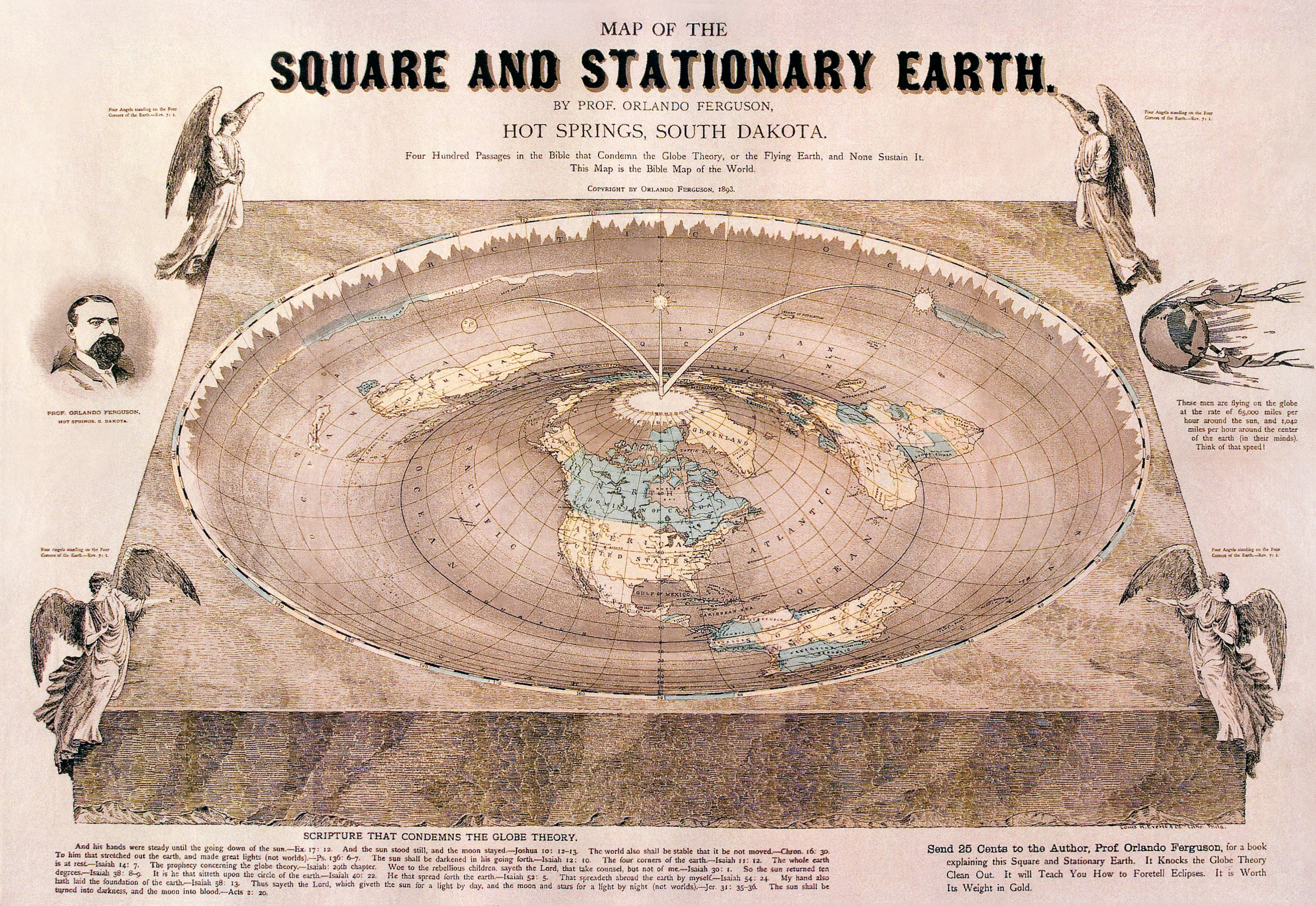
We did a slight form of this with the Bush tax cuts 10 years ago, and the growth never appeared.  There never has been evidence of this so called supply-side miracle.  Yet people still call for cutting taxes on the rich.  Like members of the Flat Earth Society, they continue to deny evidence in favor of ideological fantasy.  Either that, or they cynically promise that growth will pay our bills, while secretly knowing that a future collapse is inevitable. 

Friday, July 8, 2011

The Moral Imperative of Taxation

Peter Bruegel the Elder - Greed

 "For the love of money is the root of all evil: which while some coveted after, they have erred from the faith, and pierced themselves through with many sorrows." Timothy 6:10

Like any biblical passage, there can be many interpretations to the meaning of the passage above.  This particular passage has become a popular saying, reduced to the shorter, and even more generalizable, "Money is the root of all evil".   However, there are two main ways in which the phrase is likely read.

In the first, the emphasis is placed on a condemnation of greed.  Money should not be worshiped, but instead take its place behind more important things in life, such as friends or family.  To become greedy is to become enslaved by selfishness, and prone to losing sight of proper values.

The second, an extension of the first, holds not only that greed is wrong, but that it is what often drives social ill.  One man's greed, to the extent that it must be fulfilled,  becomes an issue of power over others, whom he ends up treating not as real humans whose lives he affects by his decisions, but as a sort of background noise to his ambition.  Other humans, whom he should feel compassion for, become at best uncomfortable distractions, at worst, tools to exploit.

While most people would agree with the former interpretation, it is the latter that raises the issue of social inequality as an extension of greed.  There is an implication that we all strive toward economic justice.  Yet there are many who have a vested interest in maintaining the morality of social inequality.  To return to the bible, the gospel according to Mathew 19:23 echoes Timothy, in which Jesus is claimed to say,
“Truly I tell you, it is hard for someone who is rich to enter the kingdom of heaven. Again I tell you, it is easier for a camel to go through the eye of a needle than for someone who is rich to enter the kingdom of God.”

Or maybe, "it is easier for a camel to go through the eye of a needle than for a defense of inequality to be predicated on the interpretation of Timothy 6:10 as merely being about greed and not not about a larger social truth"!

Some would ask whether it is really true that the more the rich have, the less others have.  Surely the hard work of one individual does not result in the poverty of another.  Yet this is certainly not always so.  What if some people don't have access to the means of obtaining wealth, whether physically or because they lack the know-how.  Is their taking part in the same economic system not reinforcing their limited position?  Just because there is someone out there willing to work for peanuts, does it mean that he or she is making the most of him or herself, and not being taken advantage of by the larger system?

What would Timothy have said to this? I suppose the beauty of religious teaching is that it is ultimately about moral authority, as in doing what is right. The individual is asked to look within himself and find an integrity between his actions and his beliefs.

Of course, we are all flawed, "sinners" (in my atheistic sense), who regularly choose the less righteous path. Peter Singer speaks very well on the ethics of distance, in that saving a dying man directly before you is obvious, where as a man across an ocean is not. There is a direct correlation between concern for those less fortunate and physical proximity to their suffering.

I've seen no better illustration of this that the scene in Schindler's List, in which he, realizing that the lives of Jews had literally come down to payments rendered, looks down at his gold ring and realizes that he could have saved just one more.

I suppose this is why I cringe when calls for the rich to pay their "fair" share are so frequently reduced to mere expressions of jealousy or resentment. I think there are plenty of principled reasons why one might prefer that the rich not have their wealth taken from them in the form of taxation - government is inefficient, some programs are counter-productive, etc. I find those positions variously wrongheaded or mistaken, but they are at least only political or philosophical judgements.

The real question that the wealthy need to ask themselves is what is the point of life here on Earth? As an atheist, it may be easier for me to slide into selfish materialism, with no regard for my fellow man. But where some would say God created us in his image, and thus compels us to sacrifice for the less fortunate, I simply believe that evolution - both biologically and culturally - gave us the ability to empathize and feel compassion for fellow man.

Thus, the dying man before me is in stark contrast with my feelings of solidarity with him, and my ability to help him. Therefore morally, I am required to act. So whether I pay my taxes so that the sick may be healed, or invest all extra moneys into business, or charity, I am bounded morally to every man woman or child alive - each of their consciousnesses floating around in each of their skulls - not yet able to realize the potential that I realize in myself.

As I said before, we are all "sinners". With my $1500 how much good could I have done? The emotional, behavioral and psychological calculations we do are complex. Does the happiness the TV brings me allow more to be more productive? Did striving to have it in the first place make me work harder? In this way, do I get to consider my luxury night out a charitable contribution, in the form of future productivity. My, how we could rationalize ourselves into oblivion there!

So, I suppose, let us make these determinations individually. But let us do it within reason. I would argue that the return on investment, the ratio of productivity for monetary gain to productivity for other reasons (sense of accomplishment, security, enjoyment, etc.) bends rather limply towards personal excess. Does the man who makes an extra million for a personal yacht really need that yacht to work hard? We must remember that the wealthy have long since passed the point of needing to worry about enjoying the simple things in life. There is a reason for the term "luxury".

And again, this is discussion is twofold: it asks a moral question of the individual, but it asks a moral question of society as well. We must, as citizens of a democratic government, ask ourselves what we think is fair for our members to contribute to our vision of the common good - whether military, roads, schools, etc. It is certainly a question that requires looking at individuals and their wealth, and making a judgement as to what is fair for them to contribute, and thus what is fair for them to possess.

We cannot refrain from making that determination. As voting citizens, we are by definition responsible for judging our neighbors. As long as it is our duty to uphold the welfare of our state, a welfare that depends on the actions of its citizenry, we take a position by merely living within the state. We can decide to completely leave them alone, and to demand no taxes from them, but that is just as moral a position as demanding 100% of their wealth. Both have direct impact upon the state we share.

Returning to Timothy's claim, the individual morality cannot but imply a social morality. Each individual must decide for himself what is right, in terms of his brief life on this planet. But, as a citizen of a democratic state, he now must apply that morality to his neighbor, to the extent that it directly affects the business of the state.

Am I OK with my lifestyle, and the degree to which I care for my fellow man? Maybe, maybe not. That is an issue of integrity, and by no means an easy question. It is one that is asked and answered with every decision we make - or do not make - every second of the day. Yet because of the realities of governing, we must try and find our best moral position when we enter the voting booth.

And so if I, as a human, sinning man, sometimes find it difficult to act with integrity to my moral values, what effect should this have on my voting? Should I vote my morality, or my reality? For instance, I think it is wrong to make animals suffer before they die. I try and buy humane meats and dairy. But sometimes I find it hard to resist. So how should I vote? Should my voting reflect my lack of integrity, or should it reflect my aspirations?

And so when I see others living in ways in which I know - were I them - could be better spent reducing suffering and promoting liberty, should I cast judgement upon them at the ballot box? Do I have a right to hold them accountable to my own moral principles? To not do so would seem to be an expression of a lack of integrity just as profound as were I to be in their position. In my perfect world, they would either be paying taxes to government programs that guarantee access to services I deem important, or at least giving that money to charities or invest it in job-creating businesses.

But I know that doesn't happen. They do not act in accordance with my moral beliefs, with how I believe it is right to act in our state, and that all citizens ought to act in order to ensure my vision of the common good. If I have the right to ask them to be taxed at all, I ought to have the right to have them taxed at an amount I deem morally correct. Like Timothy, I can ask them to pass judgement on themselves. But as a citizen, I must pass judgement on them myself. __________________
Sunday, June 19, 2011

Dining with the Rich

A common critique of theleft  is that they want to punish the rich, or that they are jealous of them - "Eat the rich" is a slogan they decry as emblematic of this supposed class envy. I suppose that could be true, but it would be hard to prove. 

Instead, I think a more serious response would acknowledge the usual claims about inequality. First, a large gap in incomes is usually indicative of other inequalities, such that income mobility - or freedom, in a real sense* - is limited. There could be any number of reasons for this, i.e. in typical post-colonial 3rd world countries ownership of land, wealth and access to power is distributed highly unevenly. Even in 1st world countries, there is a high correlation between access to social capital and wealth.

A second claim, and it largely follows from the first, is that tax structures should take into account this social capital dynamic, and assume that greater incomes were born from greater access to capital. Thus, tax burdens should be progressive.

Third, and this is somewhat separate from the concept of social capital, but it is simply true that those with greater incomes can afford to pay more in taxes without as considerable a cost to their standard of living. Because basic things like rent, food, utilities and transportation make up the largest portion of lower-income families' spending, taxes will eat into that much faster than they would upper-income spending - the bulk of which, at progressive rates - is concentrated more in luxury amenities and investment capital.

Because there are many things that a government does that will not be done in the private sector, it must generate revenue somehow. Income inequality, and philosophical beliefs regarding it would need to factor in. 

So those are just a few of the issues involved in the critique of income inequality, and policy response.  I have no doubt that envy does play some role in this - who does not want to live like a king?  Yet there is a difference between jealousy when things are perceived to be fair, and jealousy when things are not.  I suppose in an ironic twist, conservatism's philosophical apology for inequality might indeed provide a soothing rational and justification for those who might otherwise feel they are on the losing side of an unequal class structure.  Conservatism in this way would serve as a sort of  - to echo Marx - "opiate" for the pain of extant power imbalances.

(* The issue of freedom and liberty may be concepts that the left should be more vocal on, from a messaging standpoint. The right uses them to great advantage, leveraging their historical and patriotic import, and in no small way slanders the left as anti-freedom and anti-liberty. Yet the left could just as easily stand behind those terms in criticizing the right for the same thing, albeit for different philosophical reasons.)

Tuesday, April 20, 2010

The Delicate Balance

Kevin Drum points to the continuing profitability of Wall Street.  He raises several propositions for why this might be the case.
rising demand, reduced competition, higher leverage, and the growth of opaque OTC derivatives that are easy to overprice because they're one-off products that can't be easily compared to each other.
He ends with a prognosis that, even with financial reform,  the sector will still be profitable for the foreseeable future.

I guess the odd thing is that most of us got a real lesson in finance after the real-estate bubble popped and we saw how connected the two were.  What seems not to make sense is how, after the housing market has completely unraveled, there's massive unemployment, and the rest of the economy is in the dumps, etc. -  the financial industry seems to be doing great. 

So why aren't they suffering along with the rest of us? (with the added moral frustration that, as the main cause of the crisis they aren't feeling its effects).

But although finance was making money off the housing bubble, it wasn't dependent on it.  I certainly have little idea how they actually make their money, but I think I'm safe in assuming that they've pretty well got their hands in multiple pots.  Minus a robust housing market, the economy is still a behemoth, and thus a large amount of financial "cream", as it were, is still there for the taking.

A common critique is that these people are parasitic; they don't add wealth but merely siphon it away via arcane structural mechanisms.  If true, the moral outrage is justifiably greater.  But I'm not sure how to really address that inequality.  Obviously, finance should not be allowed to endanger the rest of the economy.  But to the extent that it is not - yet still simply leaching away wealth, how would one go about making things more fair without imposing complicated and likely ineffective regulations? 

And what would these be other than a way to inhibit the making of money off wealth?   After all, capitalism is largely based on  model in which wealth is a sort of exponential power to make more money.  What is a landlord if not a parasite off of his renters?  The financial sector is simply an extreme distillation of this process.

I think in the end, we have two simple moral goals: we don't want people to unfairly benefit from structural means to wealth, and we want to increase access to  structural means for those who otherwise do not have it.  Classically, the main argument for allowing inequality to persist is that it provides social motivation.  While certainly true, the degree to which this dynamic exists is unclear.  For instance, how much more motivation is there in acquiring a $3 million dollar salary vs. $4 million?

 While those salaries are generally out of reach for most people, there is a large number of people who range in income from between $40k a year to $120k.  While that difference is relatively small - $80k - it represents a possible 3 fold increase in income.  Yet even then we still see a great number of people not achieving a doubling or tripling of their salary in their lifetime.  This could be because of a lack of motivation, but it seems more likely that it simply isn't possible for most people, no matter how hard they work.  And even if it were, they may simply enjoy the work they do, and are not willing to make the sacrifices required to earn considerably more. 

So even with a 300% salary increase as motivation, it still isn't enough.  One could conclude then, that the opportunity for a millionaire to increase his salary by a mere 25%.  Of course, maybe these individuals are simply more motivated by nature.  This is probably the case.  But that only weakens the idea that they would require more social motivation.  In fact, if you talk to many wealthy people, they will tell you that it is less about the actual monetary enjoyment then the sense of success.  When many in the financial industry are making hundreds of millions of dollars, one has to wonder whether this isn't very true.

So if we cannot easily change the fundamental dynamic of capitalism: that wealth = power, which obviously has many benefits but can lead to structural inequalities, then we are left with trying to limit its excesses and increasing equality of access to its rewards by the citizenry.  The former is generally done via regulations and progressive taxation, which then helps to pay for the latter.  We may not be able to ever eliminate structural inequality in capitalism without overly damaging its positive dynamic.  But we can take steps to make it more fair.