Wednesday, December 21, 2011

Conservatism's Secret Logic

As Ron Paul surges in the polls, old questions arise about his involvement with racist publishing.  A particularly ugly quote from one of the articles published in his newsletter:
Given the inefficiencies of what DC laughingly calls the criminal justice system, I think we can safely assume that 95 percent of the black males in that city are semi-criminal or entirely criminal.
Paul denies culpability, but Ta-Nehisi Coates doesn't buy it.
Had I spent a decade stewarding an eponymous publication steeped in homophobia and anti-Semitism, I would not expect my friends and colleagues to accept an "I didn't write it"excuse. 
I really can't say I'm surprised by any of it.  Much of conservatism is predicated on the same assumptions that would predicate racism. This is why it has always made perfect sense for there to be considerable overlap between racists and conservatives. I think the vast majority of conservatives despise the idea, yet privately rue the dogged logic that much of what they believe is entirely consistent with the racist cognitive framework. It’s a dirty truth, and the conservatives have two options: live in denial, or live dirty. The Ron Pauls, Pat Buchanans, Rush Limbaughs, Charles Murrays, etc. of the world have merely found themselves on the dirty end.

Monday, December 19, 2011

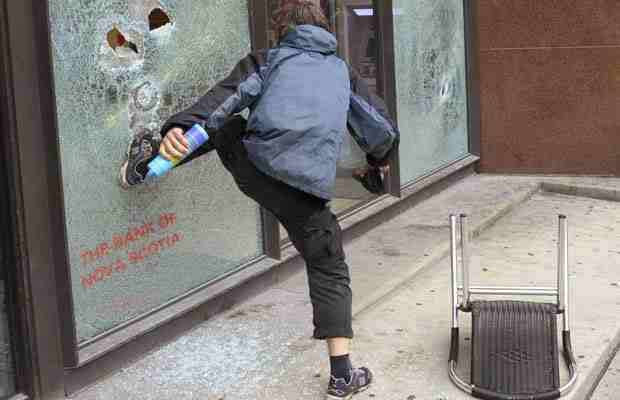
Broken Windows and Diamond Rings

An uncomfortable reality of political ideology is the degree to which any given stance is predicated at least in part on economic assumptions.  Try as we might to corral a sense of objectivity and rationality into our views, at some point we must admit that there is just so much we do not know about the ways in which economies work.  This, even as stark and fundamental disagreement can be found among leading economists.

So take, for instance, the controversial concept of government stimulus, which in our recent case represented close to a trillion dollars of federal spending.  Projections have varied widely as to how stimulative it truly was, or could have been.  As soon as you begin to look closely at the underlying arguments, it becomes clear that any lay understanding is woefully inaccurate in forming anything but a shallow and fragile understanding.

And so, it is with this admittedly devastating caveat, that I, intrepid blogger, attempt to carve into the following subject.

I've long wondered about the relative merit of various forms of economic activity, in terms of their effect on overall productivity.  For instance, is a dollar spent on busfare to one's employer of more value than a dollar spent on a chocolate candy?  My question follows largely from the fact that as wealth has become increasingly concentrated into the hands of the rich, there has no doubt been a subsequent shift in the types of economic activity, from utilitarian spending to luxury spending.  Is the former type of spending better for overall growth?  It would seem that to the degree that spending is non-utilitarian, it is wasteful, and thus not only distasteful in terms of a moral reckoning in what ought to be a more fair and equitable society - as a sort of ill-gotten decadence, but distasteful in purely economic terms, as a net drag on the economy.

On first glance, one might say that there should be no real difference.  In each case, the dollar spent moves into the hands of another worker, who then uses it to purchase more goods and labor, and the production continues to be spread throughout the economy.  Monies spent on chocolate will fill the pockets of the chocolatier, who in turn pays his workers, buys his cocoa, etc.

Yet what about this feeling that paying for chocolate is somehow decadent?  It is certainly a luxury expense.  But what does that really mean?  No one will live or die because of it, unlike say basic food stuffs.  But no will will live or die, either, because of money spent on busfare.  Yet without it, considerable hardship might befall the rider; he may lose his job; he may have to purchase a car, leading to desperate sacrifices in other areas of his life.  Maybe the best way to think about the issue is in terms of the productive possibilities of each form of spending.  What are all the ways in which a bite of chocolate, by itself, contributes to productivity.  It surely has some merit, in that it represents a reward, something to strive for that encourages hard work elsewhere.  However this is a limited effect, and in many cases, certainly to the degree that its purchase has indeed been out of decadence, having long ago lost any meaningful pull on behavior, it could have as easily been done without.  Again, this is luxury spending, by definition.  Busfare cannot be done with in the same way.  When we look at long-term drivers of productivity, we see things like the invention of the steam engine,the automobile, the internet.  Chocolate, not so much.  While there have no doubt been great innovations in luxury, their utility in encouraging productivity is conspicuously unaccounted for.

In 1850, French political economist Frédéric Bastiat wrote the following parable about economic activity and productivity.  To economic theorists, it is known as The Broken Windows Fallacy.
     Have you ever witnessed the anger of the good shopkeeper, James Goodfellow, when his careless son happened to break a pane of glass? If you have been present at such a scene, you will most assuredly bear witness to the fact that every one of the spectators, were there even thirty of them, by common consent apparently, offered the unfortunate owner this invariable consolation—"It is an ill wind that blows nobody good. Everybody must live, and what would become of the glaziers if panes of glass were never broken?"
     Now, this form of condolence contains an entire theory, which it will be well to show up in this simple case, seeing that it is precisely the same as that which, unhappily, regulates the greater part of our economical institutions.
Suppose it cost six francs to repair the damage, and you say that the accident brings six francs to the glazier's trade—that it encourages that trade to the amount of six francs—I grant it; I have not a word to say against it; you reason justly. The glazier comes, performs his task, receives his six francs, rubs his hands, and, in his heart, blesses the careless child. All this is that which is seen.
     But if, on the other hand, you come to the conclusion, as is too often the case, that it is a good thing to break windows, that it causes money to circulate, and that the encouragement of industry in general will be the result of it, you will oblige me to call out, "Stop there! Your theory is confined to that which is seen; it takes no account of that which is not seen."
     It is not seen that as our shopkeeper has spent six francs upon one thing, he cannot spend them upon another. It is not seen that if he had not had a window to replace, he would, perhaps, have replaced his old shoes, or added another book to his library. In short, he would have employed his six francs in some way, which this accident has prevented.
Bastiat's Fallacy is popular among Austrian economists, and those who favor small government.  Their attraction is based on the parable's illustration of hidden costs; they believe that government spending is not zero sum and represents money that could not have been spent elsewhere.  While this is true enough, what ultimately matters is the projected utility of the spending.  Of course wasteful government spending is a net loss in productivity.  Yet government spending that directs investment in a worthwhile investment that increases productivity, such as a bridge, or public school, is a net benefit.

My interest in the parable is also its illustration of hidden costs, although I'm more concerned with the effects of concentrated wealth and the hidden costs of luxury spending.  To the extent that luxury spending is by itself almost entirely unproductive, and that concentrated wealth encourages it, one can argue that the concentration of wealth leads to, as Bastiat's parable might frame it, much broken glass.  Better this wealth be put to productive use.  Lord knows there is no lack of need for it in today's society.

Not only are there hidden costs to pointless consumer spending, or that which has little inherent value, but so too are there hidden costs in frivolous investment.  I think it fair to claim that much of what caused the 2008 financial crisis was a direct outgrowth of sloppy investment: concentrated wealth led to overflowing pools of money, the manipulation of which was coordinated by greedy investment bankers who saw an opportunity to make enormous profits from money that was primed for recklessness by its decadent acquisition.

I recognize that I'm now far out of my comfort zone in understanding the Great Recession.  But one can confidently make a couple of claims.  Luxury spending and sloppy banking represent poor investments, and as such are defined by their hidden costs - their monies could have been put to more productive use.  There will be many who point to the many government boondoggles as evidence of waste.  The response to this is that there is plenty of good that government does (and often that which only government can do), and the larger controversy has likely much more to do with ideology and one's political and social preferences.  But the Broken Windows Fallacy simply reminds us that there are always hidden costs to spending.  These costs place spending in moral terms, that spending represents a choice between different net social outcomes.  This is a choice we make both as individuals and as citizens of a democratic government.


Saturday, December 17, 2011

A Radical Reformation

Diane Ravitch evokes the grinchitude of Ebeneezer Scrooge as she compares the current ed reform movement to Dickens' callous crank.  Reminding us that poverty is the real issue, she points to a new paper by Helen Ladd, professor of economics at Duke, "one of the nation's leading experts on issues of accountability".  Mentioning that Ladd also co-authored an excellent opinion piece summarizing the paper in the NY Times, she quotes the abstract:
Current U.S. policy initiatives to improve the U.S. education system, including No Child Left Behind, test-based evaluation of teachers and the promotion of competition, are misguided because they either deny or set to the side a basic body of evidence documenting that students from disadvantaged households on average perform less well in school than those from more advantaged families. Because these policy initiatives do not directly address the educational challenges experienced by disadvantaged students, they have contributed little—and are not likely to contribute much in the future—to raising overall student achievement or to reducing achievement and educational attainment gaps between advantaged and disadvantaged students. Moreover, such policies have the potential to do serious harm. Addressing the educational challenges faced by children from disadvantaged families will require a broader and bolder approach to education policy than the recent efforts to reform schools.
While this is an excellent argument for why reform efforts are misguided and naive, it fails to offer a compelling alternative.  I applaud the critique of current ed reform, but I would like to see more proposals for how this translates into policies that truly transform our broken system and address the many issues that ed reform does not.
In the paper, Ladd proposes nothing new: "early-childhood and preschool programs; school-based health clinics and social services; after-school programs and summer programs".  I have no problem with any of these ideas - all are sorely needed and crucial.  But I don't see any of them, even taken as a whole, as being game changing.

The problem may be primarily in the way these programs get rolled out; each is mostly isolated from the rest, with no cohesive, comprehensive intervention in the specific family.  This leads to a lot of families falling through the cracks, issues not being followed up on, and chronic problems not being treated.  Providing targeted interventions in a family isn't easy, but it only becomes harder the more services stay segregated and don't coordinate. 

An idea I've been kicking around for a few years is a sort of radical restructuring of public schools that organizes them less by geography (which is largely a proxy for income), than by rigorous human and social capital assessment. 

Beginning at birth, parents would be required to take generalized assessments - residence, income, education, substance abuse history, mental illness, health, etc.  These would trigger deeper assessments as needed.  From this data, we begin to identify and target areas in which family interventions are required.  This could begin with environmental interventions (paint, carpet, pollution, etc.) that seek to remove and reduce contaminants.  There would also be home nurse visits, and targeted parenting classes, incentivized by special coupons either for extra services or rewards - maybe sponsored by community business groups.

Yet all of this would be highly centralized and continually monitored and assessed, triggering completion or addition of new services and classes.  As the child develops, he would also be monitored for developmental progress and assigned requisite services.  A central database would track the family in realtime, updating things like job status of immediate family and relatives, criminal offenses, enrollment in substance abuse programs, etc. 

While all of this may seem like a sort of terribly invasive totalitarianism, its goal would always be to offer scaffolding for human and social capital development.  Assessments would trigger gradual disengagement by the state as needed.  Currently, the "nanny" state isn't doing a very good job meeting these families' needs.  Yet social expenditures on education, interventions, policing and incarceration, are still necessary - yet not organized in a way that is ultimately very productive and transformational.

As the child develops and approaches the traditional age of Kindergarten enrollment, there would be a seamless integration between the K-12 system and pre-K.  Based on continued family evaluation, the child would be placed in an elementary school not by location, but by need.  As it stands, geography is already a pretty good proxy for human and social capital.  But there would be more differentiation between schools, and yet not based arbitrarily on income/geography, but on real family evaluation data and criteria.  What this would allow for is flexibility and much more highly focused intervention delivery.  As such, depending on the level of interventions offered, these "schools" would function almost as family treatment centers, where a type of human and social capital triage would take place.  Psychological services would be available 24 hours a day, parenting classes, daycare, fitness and enrichment, drug treatment, etc. would all be offered along-side traditional academic elementary classes.

Yet these classes wouldn't be exactly traditional.  They would be staffed by experienced, highly paid, credentialed teachers trained in poverty intervention.  Curriculum would be designed accordingly, accounting for cognitive and language deficits previously assessed for in the family database.  Class sizes would be dramatically reduced, again according to needs assessment, to 10-15 students.  Multiple aids would be available, each trained in various special needs of students. 

A major benefit of such centralized "schools" (social service centers, really), would be the availability of community resources.  I could think of fewer better interventions in a struggling community than for adults in rehab or probation to come and participate in reading groups with elementary or middle school children.  So much of the dysfunction and nihilism we see in these communities is a direct result of the breakdown in community bonds and cross-generational engagement.  Apart from reading groups, these mentors could function as volunteers in many areas of academic enrichment - PE, field trips, art, etc.

I anticipate the following objections to this radical conception of the merging of social services and education: cost, logistics, and intrusiveness.  I'd like to see a projection of what such a system would cost.  My guess is what it saves in consolidation of resources and increased productivity would alone pay for the added services.  But long-term, the savings that would result from a dramatic targeting and investment in human and social capital would not only generate financial capital through a more effective and educated workforce, but it would also enormously reduce the expense of rehabilitation and incarceration.

As for logistics, I'm sure a variety of models could be experimented with.  Federal funding could be made available that incentivizes competition and creative solutions, fostering inter and intra--state experimentation.  In my work in social services, I can only see agencies welcoming the increased ability to do their work more effectively.

Intrusiveness might be the main sticking point for a lot of people.  This sounds like big-government on steroids.  But so are treatment facilities, police, prisons, and of course, schools.  The reality is that poor communities need our help.  Their lack of human and social capital defines their need for help and intervention.  To the degree that a family demonstrates no need for services, none will be necessary.  I think if you asked poor families themselves, they would jump at the chance for better health care, better education, better daycare, and generally more support to be successful.

Monday, December 5, 2011

Ruin Porn

In the mid-1990's I had a job delivering meals and groceries to people living with AIDS in San Francisco.  Much of my job was spent filling in the gaps that volunteers could not cover.  In our office, we had a map of the city, with pushpins marking all our clients.  Far and away, the highest concentrations were clustered in areas of high poverty, especially the Tenderloin district, where single-occupancy-residencies (SRO's) were common.

These were tall buildings, often eight or nine stories, usually managed by an immigrant family on the first floor, protected by a cage and responsible for regulating entry into and out of the building.  The buildings were old, likely nearly a century, but they had fallen into deep disrepair.  The clunky elevators with manual gates would often break down; paint was peeling; carpets were torn and stained; trash piled up at smelly chutes that dripped with grime.  There was air of dingy lawlessness and danger, occupants ranged from the old and infirm to young and drug-addicted, deeply psychotic to suspiciously sociopathic.  Many of my clients had a triple-diagnosis: drug abusing, mentally ill, and HIV positive.  Many of them came from poverty, and AIDS was merely a bi-product of their lifestyle.  But many had lost it all, and gone there to die.

A girlfriend at the time had an artist friend in LA whose work was appearing in a local gallery.  I was taken back a bit when I saw where the gallery was located - Fifth street, two blocks south of Market, the heart of the Tenderloin, where I worked on a daily basis.  I had gotten used to many of the locals, and as we walked towards the gallery, I began to recognize some of their faces.  Off the clock, on a Sunday afternoon, their lives were no longer my work, they were now my fellow citizens.  I had punched out a long time ago, yet they were still here, wandering the same stretch of sidewalk, muttering the same laments, hiding from the same predatory gangsters and back-alley villains, clutching the same dirty cigarettes.  

It made sense when we entered the gallery.  It was a minimal space, essentially a bare storefront stripped of any refurbishment.  Concrete and cracked tile floors, stained walls and rusty, leaking plumbing jutting from the ceiling.  I don't recall what the art was, but it was bleak - photographs I think.  The desperation and sadness of the gallery environment reinforced the intended sentiment.

Yet for me, it reinforced something else.  It pained me to be existing in a state of mind, a state of conscious experience that not only was in close proximity to such tragic suffering, but that was being asked to actively benefit from it.  Like blood money is the profit from violence, one might call this blood art, as it was profiting from a kind of violence done to a community.

A term for this phenomenon has been coined: ruin porn.  I'm not sure where it first came from, but it seems closely tied to the popularity of art created around the decrepitude of Detroit.  French photographers Yves Marchand and Romain Meffre published a photo essay in Time entitled Detroit's Beautiful, Horrible Decline.
"St. Margaret Mary School" - Yves Marchand and Romain Meffre


It isn't an inaccurate title.  The photographs are beautiful.  The subject is terribly sad.  An obvious commentary is central to the work: a fall from grace.  Just what has fallen, and maybe more importantly, why it has fallen, is left to the viewer to ponder.  On the blog Hyperallergic, Kyle Chayka reminds us that ruin porn is nothing new.  Art has long been concerned with death and decay.  As long as architecture has been made, its inevitable slow collapse has been documented.
"Architectural momento mori exist as well in ruin porn from centuries ago. Think we came up with anything new, shooting cavernous disused spaces? These photographers would do well to catch up on their Piranesi, an 18th century architect and printmaker whose etchings of the ruins of Rome are staggeringly epic, baroquely detailed and tragically decayed, a clear forerunner to the visual language of the Detroit photographers." 
Yet the ruins of Rome evidence a tragedy that occurred centuries ago, to people many generations past.  What happens when the tragedy is taking place all around us?  Granted, most of the viewers of ruin porn will not have lived in these neighborhoods.  It isn't as if they are being entertained by the suffering of their neighbors.

But that's part of the problem.  A class distinction runs right through this work.  When I visited the Tenderloin art gallery, I did not have to live there.  I was attending college part time;  I went home to a clean, safe neighborhood; I had the luxury of taking the 10,000ft. view.  With the coolness of a mortician, my palate for art appreciation was cleansed and prepped by an invisible, yet indispensable privilege.

Marie Antoinette, in the final days before her execution, was living behind walls of sublime ignorance, inhabiting a decadence in sharp contrast to the common citizenry.  Many false rumors were spread of her, promoting an inflated sense of her greed and debauchery.  Yet even these rumors never suggested that she might be taking pleasure in the "beautiful" demise of her country.


We, elite as we may be in our appreciation of high art and cultural criticism, are neither kings nor queens.  Most of us would surely like to help those who must live with the consequences of ruin and decay.  Part of the beauty we see in this art surely comes from its satiation of a deep anxiety that all members of the modern world feel.  There is a sense of alienation, loneliness in modern civilization, in which one must at all times grapple with two distinct realities of our consciousness: that of our family, friends and relations, and that of the anonymous, unknown public with whom we share so much, yet of whom we know so little.

In this art we see an expression of the promise we all feel in our daily lives as we make our way through work, traffic, public engagement, digestion of current events and our identity as reflected in endlessly changing times; the ruin has come to what had once possessed so much promise: the carefully laid brick, measured and tailored edges, artfully designed color pallets and purposeful textures.

But then we see the promise destroyed.  Just as our hopes and dreams seem so often seem precariously balanced on the edge not only of disaster in the form of horrible accidents, lost jobs or political defenestration, but more reliably, the simple, gradual lowering of expectations as hopes and dreams gradually slip away, steadily crushed by the weight of time and responsibility, dying the death of a thousand cuts.  There is a truth here that we are proud to see exposed.  Life's edges, perfect as we can ever plan them to be, will inevitably have a roughness that we cannot deny.  Death is a part of living.

All of this is good.  It is what art is for.  But as we gaze at our respective navels, there is a world of hurt more tragic happening to people just outside this frame.  We cannot allow ourselves to indulge our own private narratives on the backs of such suffering, exploiting its demonry for our own private exorcisms.  We must be reminded that art can be a useful and profound representation, but that for so many, it is not a representation, but a reality.


Sunday, December 4, 2011

The Retribution Mistake

Many criminals - likely a large majority, in my opinion, would stand a good chance of rehabilitation if only we took the effort seriously.  But then there are those that, despite our best efforts, are too far gone.

Pedophilia I think is a perfect example of this. As far as we know, it can't be cured; it seems to be a sexual preference (for prepubescent children) much like hetero or homosexuality. While different therapies can somewhat limit the behavior, the impulse will always be there.

In discussions of determinism, both sides should be able to agree that there are at least limitations on freedom; people will always have different capacities for behavior, whether genetic or learned. Pedophilia seems likely to have a genetic root. It therefore makes sense to at least have some compassion for people who have been born into a body that, due to a design flaw, makes them want to do bad things to children.

In embracing a determinist outlook, I think it is reasonable to suppose that were society at large to move in that direction, much of the stigma surrounding pedophilia would fade, and pedophiles would be more able to "come out", as it were, and volunteer for treatment. There would still be harsh penalties for offenses, as a deterrent, but otherwise people would be considered mentally ill and "prone to violence".

I think of those who argue for social retribution, in which there isn't an emotional satiation claimed, but rather a sort of "social evening"; I understand it to be a sense that the wrong committed needs to be corrected for through punishment, at the most extreme being a death sentence. The calculation seems to be made under the assumption that the individual made a choice. Would retribution still apply if the individual had no choice. A better example might be if someone had a brain tumor that destroyed his sense of empathy, turning him from an otherwise kind person into a murderer?

In other words, if the notion of choice were removed, would the desire for retribution still exist? Is there a point where retribution no longer seems appropriate? Looking at violent attacks by animals, many feel that retribution is necessary, even if the animal - a bear say, or puma - was merely behaving naturally, and could be set free into the wild. This notion seems to stretch the concept.

But I think it might argue against the concept of social retribution. For even assuming that to the degree that no personal impulse towards retribution exists in such cases, the argument could still hold that a wrong has been done against society, and must be "paid for". Of course, the debtor is a wild animal. When a tree crushes a family in their home, a wrong has also been done against society. Yet seeking retribution on the tree would be absurd.

Or would it? How much of a difference is there really between individual bloodlust and the concept of social retribution? The former seems highly biased, and therefor distasteful, but how much is the latter, seemingly more calm and rationally considered, not merely a different version of that same impulse? Human nature has been shown over and over to suffer from very peculiar and emotionally driven impulses, even in the total abstract.

Experimental studies have found all kinds of evidence for the ways in which our decisions are guided by impulses we are not even aware of. For instance, the study in which people refused to put on a jacket that was told was once worn by Hitler. Or our tendency in the trolley car experiment to greatly favor those close to us as opposed to those further away. I mention these not to necessarily illustrate that these are wrong feelings, or that we should feel them, but that they can lead us to illogical premises and bad policy outcomes.

What becomes difficult is in determining just how much this bias is at work in our thinking - especially concerning bigger philosophical issues in which it isn't clear where our thinking - our "preference" - is really coming from; in this way, politics and philosophy can be like a matter of taste, where we just "know it when we see it". I can't say for certain that the concept of social retribution is based upon a biased sense of justice - that it is more a matter of personal taste than reason - but I can see how it might be.

Saturday, December 3, 2011

The Reality of "Choice"

Gail Collins writes about the growth of online K-12 charter schools, the most successful being for-profit K-12, Inc.
"...a big private online education business. It was founded by a former Goldman Sachs banker and by William Bennett, the Republican writer and talk-show host, with an infusion of cash from the former disgraced junk-bond king Mike Milken. Its teachers generally work from their homes, communicating with their students by e-mail or phone. (At one point in Arizona, essays of students attending an online academy run by K12 were outsourced to India for correction. K12 says the program was a pilot and was discontinued.)"

Having taught at a charter school with a major emphasis on homeschooling, and that was increasingly moving towards an online model, I can speak to some of the concerns people have about these schools.  There was little transparency in terms of how the school was run, and financed its activities.  This is a critique of charter schools in general, removed as they are from conventional public school accountability.  This was especially concerning to me, as I worked at one of the satellite campuses, which was located in a poor neighborhood and drew from a largely disadvantaged population.  I worried that the students' needs were not being met and being given short-shrift by the charter's more middle-class, home-schooled demographic priorities.

Another concern people have with online programs is that they'll further inhibit poor brick and mortar schools' ability to serve the special needs of their populations.  As with brick and mortar charters, they will further siphon off the families with means, leaving behind the families with the fewest resources.  The poor are often thought of as a homogeneous demographic, defined only by financial capital.  But in reality there exists a great diversity of means, in terms of human and social capital, the efficacy of individual parenting, family education levels, issues with substance abuse or criminality, etc.  Statistically, only a very small percentage of poor parents have been actively trying to get their children into charter schools as alternatives to traditional public schools.  These are the parents who would be raising higher performing students, and realize that their students are being subjected to the many negative social pressures and forces at work in ghettos.  This is simply a function of geography and property values.

The effect of this movement of high-capital families out of poor schools is to further segregate communities by means.  While certainly a great benefit to those who know how to take advantage of the process, those left behind are further isolated and concentrated in their disadvantage.  For instance, an average poor classroom might have 20% of its students suffering from emotional, behavioral, and academic deficits owing to severe neglect and strife at home, and another 20% enjoying the benefits of a cognitively stimulating and loving environment at home, able to complete work and be actively engaged in positive learning.  In a class of 30-35 students, this presents an enormous challenge for a teacher in differentiating his instruction to adequately meet the needs of every child.  In removing the top 20% of students, you are essentially (if my math is correct) removing 100% of the highest performers, in return for a 5% increase in the lowest and 15% increase in middle performers.

Now, in a perfect world, this may not be the worst thing.  There are many advantages to less differentiation, or more homogeneity in a classroom.  With a smaller range of needs, the teacher is better able to manage his instructional specificity.  At the site level, resources can be more focused and delivered more efficiently.  Unfortunately, this doesn't really happen.  The poor have a tendency to get neglected.  In the classroom, more low-performing students means more interruptions, more truancy, more remediation, lower standards, and greater teacher burnout.  Class sizes remain the same, only increasing the teacher's burden.  At the site level, while more services are often offered, the decline in parent means translates into less local community resources, and more demand for interventions, requiring ever more services and attention.  Socially, the negative pressures are reinforced, while the positive pressures are reduced.  Net negativity is thus increased.

It doesn't have to be this way.  If class sizes were reduced, more services were offered, and resources were made available for teachers and staff to leverage, you would have a system in which high concentrations of disadvantage and dysfunction were ripe for efficient, targeted intervention.  Yet the system would have to be designed to support this extra burden.  From the ground floor up, it would take into account the population's special needs, and not expect teachers to primarily bear the burden.  Currently, "teacher accountability" is frequently mentioned, but more rarely is "systemic accountability".  Where is the accountability when systems are in place that shovel highly needy, at-risk populations into traditional classroom environments.  It is as if schools, teachers and students are set-up to fail.

I would not be as skeptical of educational innovations such as charter schools or online programs, if they were understood in the context of larger socioeconomic issues in education.  For many poor parents, online schooling might make the most sense, and be a good fit for their child's needs.  For many others, their children's needs may be better served by an environment that can set the bar higher, knowing that students will be able to competently meet it, as opposed to simply being set-up for failure.

I've long thought a rigorous socio-economic assessment regime could be designed that measures and then places families into school settings designed to appropriately meet their specific needs.  To me, this is truly what "choice" looks like.  It isn't bottom-up, in terms of parents being "allowed" to send their children wherever they like.  But that concept assumes that poor families are homogeneous in their ability to best see to their children's development.  The reality is that many poor families need top-down help, and giving them "choice" is a false notion, implying that poor performing families are "choosing" not to be successful.  Everyone wants to be successful, even the families struggling with poor parenting skills, single-parenthood, substance abuse, etc.  But they don't know how.  The sad reality is that we only have two choices when it comes to many poor families - the nanny state, or the neglectful parent state.  Contrary to the fantasies we would like to believe about human behavior, reality is that, due to the many disadvantages and behavioral constraints besetting poor communities, owing to numerous historical and systemic factors, we are in a position of "parenthood", in that if left to fend for themselves, too many families - and their children - will not be successful.  That is the reality.  That is the reality of "choice".


Sunday, November 27, 2011

Me and My Brain

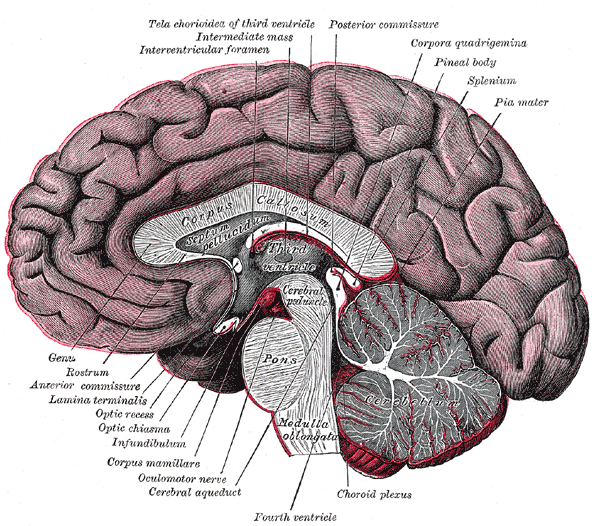
As a longtime sufferer of depression, I've relied on pills designed to treat chemical imbalances in my brain.  These pills are controversial, with conflicting opinions on whether they are really more effective than placebos.  Millions of people swear by them, many claiming that they have clearly been effective in treating their depression.  Of course, such data is anecdotal, as would be any that I could offer.  I can say anyhow, that my depression has been somewhat reasonably managed for years.

When I first began taking the medication, about seven years ago, I did recall a significant feeling that my conscious state had been altered.  Almost impossible to describe, it was as if a kind of numbness came over me, taking "the rough edges" off of things.  My psychological history in the subsequent years was complicated.  In some ways I did seem to feel a certain sense of relief.  Yet a couple of years later, shortly after my first daughter was born, I attempted suicide.  I had certainly entered a deeply depressed state, one in no small part induced by geographic and social isolation, as well as the stress of being the primary caregiver for a colicky infant, all while suffering from devastating chronic neck pain.

So in one sense the medication failed me, or at least was not effective enough to prevent suicidal depression.  But the trouble with measuring the efficacy of antidepressant medications is that the population being treated suffers from an illness that is very difficult to properly diagnose, properly quantify, and much less understand the pathology of.  To what extent was my depression and my behavior driven by brain chemical imbalances, and to what extent was it driven by my habit of mind, or cognitive framing of the world?

Philosophically, the debate over what consciousness is, or to what degree we can understand it, is contentious.  Much of conscious human experience is not well understood, and little data exists to support hypotheses as to either what causes it, or what it even is.  Thomas Metzinger, director of the Theoretical Philosophy Group and current president of the Association for the Scientific Study of Consciousness, defines consciousness as "the appearance of a world".  It is a good start, but doesn't offer much of a clue as to where it comes from or what it in fact is.

There are many phenomena that we can't really explain very well, and yet must start somewhere if we are to hypothesize - especially if there are real-world consequences of our assumptions either way. Critiques of materialism usually see people as assuming too much, relying too readily on a physical framework as a best guess. Critiques of the opposite - immaterialists? - see people as ignoring what seem to be perfectly reasonable logical conclusions drawn from our knowledge of the physical world.

I tend to fall into the latter camp. I'm reminded of the old creationist thought experiment, the clearly "designed" phenomenon in the natural world, such as Mt. Rushmore or a house in a desert, in which physical processes are assumed to be incapable of such complexity. This can be contrasted with a thought experiment designed to illustrate Occam's Razor, where a broken, blackened tree is found in a field - in the absence of clear evidence, one might assume any number of explanations, some more fantastic than others. Yet the most likely, the most reasonable explanation would be that lightening has probably struck it down.

Surely, many biological processes - certainly those involving the brain and/or consciousness - are lacking in a great deal of evidence. But there is also much that we do know, and would be remiss in not taking into full account, if not inferring even further material hypotheses.  For my part, I look forward to advances in this exciting area of science.  Not only for what medical breakthroughs it might provide in the treatment of psychiatric illness, but for what it might tell us about broader, older philosophical assumptions about human behavior and the social structures they inform.