Saturday, March 19, 2011

Reflections

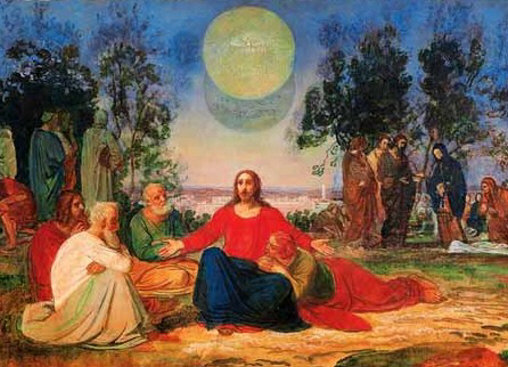
Creation of Light, Gustave Doré
Yesterday in Texas, a 20-month old toddler was found drunk on 4 Loko, the notorious caffeinated alcoholic beverage.  Police found the mother outside the apartment complex with friends.  Apparently she had fallen asleep in bed while drinking, then woke and went outside.  After a roommate found the infant tangled in sheets, turning blue, she called 911.  When they arrived they found the toddler wandering drunkenly outside. The mother's mug shot was plastered front and center below the headline.

Lashawnda Allen, 32, lives in a poor section of North Houston, most likely in this apartment complex.  The nearest elementary school ranks 4/10 according to statewide exams.  I was able to find her My Space page, on which she has posted pictures of her toddler, her 5 month old, and random pictures of her mugging for the camera.  The backgrounds in the pictures are of grimy apartment walls, dirty carpet and a barren concrete walkway in front of a row of government-style housing.  There is no picture of a father figure to be found, aside form a somewhat steely-eyed young boy Lashawnda notes is her cousin.

This story plays out daily in poor (often minority) communities across the nation.  Broken homes, substance abuse, poverty and despair.  These are the worst possible conditions under which to raise a child.

A terribly tragic story.  Yet what struck me were the comments that followed the piece I read.  A brief glance at responses across the internet shows a similar reaction.

"Drunk while in the care of such small children and in the middle of the day???? I can't imagine even having the desire when my kids were babies to start pounding down booze. What an idiot."

"This kind of story frightens the hell out of me on a lot of levels. We hear of them more and more often too. Are we as a nation really dumbing down this much? I realize not everyone has the benefit of a good education but the sheer lack of common sense here boggles me."

"What a waste of space. I don't understand how these people are smart enough to figure out how to "breed"."
The patten being expressed in the majority of comments on this story shows a profound lack of understanding of the causal mechanisms at work in low-income, disadvantaged communities.  The idea that this woman is an "idiot" is absurd.  Of course, what she did was terrible and shows a profound level of ignorance and dysfunction.  Yet there are reasons she developed into the person she is.

Many of the students I work with come from just these types of environments.  Not only have they received almost zero positive role-modeling in their lives, but the culture in which they live has social norms that would be unrecognizable to those who have not grown up in the ghetto.  The students live in a world in which the future stretches no further than the coming weekend, and sex, drugs and fighting are respectable pleasures in a bleak reality of absent or imprisoned fathers, overworked or depressed and dysfunctional mothers, and extensive peer groups where delinquency is the rule, not the exception.

It is a natural human impulse to become angry over what we do not understand.  Why didn't this mother - "these people" - make better decisions?  Yet she is doing the best she knows how to do, in a world of shadows in which she cannot see the way out.  Let us be angry at this, the disenfranchisement and despair that plagues the ghetto.  Let us try and find ways to help, instead of passively sitting back, judging from a distance, assuming that we would have known to different had we been raised in such a world.  Let us be thankful that we have had the privileges we have had.  Let us be grateful that our world is filled with the light to do right both by ourselves and our fellow man.

Let us take that light and reflect it into the darkness as an act of love, not hatred.  Lashawnda and her children could use it.

Friday, March 18, 2011

Structural Problems

60 Minutes aired a segment last Sunday night about a charter school in New York that pays its teachers $120k a year in hopes of attracting "great" teachers, so as to end the achievement gap.  Apparently it isn't quite working yet.  They say they do this all without private financing - which makes me think they are at least hiring a great accountant.

But here's the thing.  The premise is the same old one we hear from ed reformers: bad schools just need better teachers, bad schools just need to do a better job
.
Deb Meier writes about the real problems driving the achievement gap. She says the schools can't do a good job because of larger structural problems. She  references the notion of "soft bigotry of low expectations", that pointing to these social problems are simply an excuse for "bad teaching".

"It has been reported that 56 percent of black Chicagoans (over the age of 16) are not employed, 21 percent are officially unemployed, and a third live in poverty. These figures are double and triple those for whites. .... More and more members of the lower-middle-class white community are moving in this direction, too. In fact, it's even affecting—less dramatically—the solid middle class (like my own children and grandchildren). Isn't it time to look beyond schools to blame our plight?

But it's considered "soft racism" to mention these factors as relevant to the test-score gap, the graduation-rate gaps, etc. We are expected to believe that young people growing up in such intensely poor communities will not be damaged by it unless we have "low school expectations"—plus lazy, overpaid, unionized teachers!"

As an educator, I've always found this infuriating. A) it denies that there are real problems out that that get in the way of student learning, and B) in doing so it devalues these real claims and thus doesn't treat them.

So when a kid is absent too much because his mom can't afford to fix the car and get him to school, we blame the teacher, when in reality we need a more robust transit or school bus system. If a kid's homework is not getting done because his parents work two jobs, we blame the teacher instead of paying for after-school tutoring. Or if there is a lack of education in the home, resulting in cognitive and knowledge delays, instead of expecting teachers with 29 other similarly disadvantaged students to get them to the same place as advantaged kids, we ought to be investing in getting those kids the interventions they need, preferably 1-2 years before kindergarten even starts.

All teachers are asking for is more targeted support for interventions. Poor kids tend to have greater need for differentiation and remediation. Why isn't this factored into classroom expectations? Why aren't there more resource specialists or small-group aids.

Can we please get past the facile dichotomy of bad teachers vs. disadvantaged kids? Let's acknowledge that different populations have different needs and that services should be tailored accordingly.

Wednesday, March 16, 2011

The Stochastic Mind

I just came across a concept which may have some meaning in questions of free will and determinism. It is the idea of a stochastic process. From wikipedia:

In probability theory, a stochastic process, or sometimes random process, is the counterpart to a deterministic process (or deterministic system). Instead of dealing with only one possible reality of how the process might evolve under time (as is the case, for example, for solutions of an ordinary differential equation), in a stochastic or random process there is some indeterminacy in its future evolution described by probability distributions. This means that even if the initial condition (or starting point) is known, there are many possibilities the process might go to, but some paths may be more probable and others less so.

.... Manufacturing processes are assumed to be stochastic processes. This assumption is largely valid for either continuous or batch manufacturing processes. Testing and monitoring of the process is recorded using a process control chart which plots a given process control parameter over time. Typically a dozen or many more parameters will be tracked simultaneously. Statistical models are used to define limit lines which define when corrective actions must be taken to bring the process back to its intended operational window.


I think this may get at some of the issues that bedevil the debate. I think I'd understand consciousness to be a stochastic process. There are physical elements moving around, which in sum equal thought. But because we don't have good enough data on every particle, or even a precise understanding of how groups of particles actually represent thought, we can't comfortably call anything explicitly deterministic.

Yet, as with manufacturing processes, we do have a sense of probability parameters. We do know that if we tweak one or another parameter, the outcomes will change. I think it is this vagueness which fools people into believing that the brain is not ultimately determined. Yet there is a difference between a determined system and determinism. The batch of cookies is not a determined system - in the sense that each cookie will turn out slightly different. But the physical properties underlying how cookies bake is entirely deterministic.

Saturday, March 12, 2011

Capitalism vs. Family Values

There is a fascinating difference in the modern liberal/conservative perspective on poverty and inequality. The conservative sees a larger social breakdown, yet one of simple traditional values.  The liberal sees a social breakdown too, but one that is more complex and involving many more structures.  The main liberal critique is of capitalism and the free market itself, which is seen as necessarily creating poverty through free market segregation by human and social capital: income, education, property values, etc.

Both causal mechanisms find larger social mechanisms, which then place secondary pressures on individual choice.  If the liberal sees primary, "first" problems inherent in capitalism, or government policy, I'm curious as to what the conservative would see as first problems.  For the liberal, capitalism needs to be reigned in, or intervened in to soften its rough edges - a classic mixed-market economy.  For the conservative, my guess is that a sort of moral decay in traditionally productive values has occurred, and a first cause there has been suggested to be found in a sort of liberalism, whether in the form of feminist emancipation or government-intervention-induced dependency.

What strikes me about this conservative thesis is its apparent historical shortsightedness and reactionary bent.  First, what would the cause of poverty and social inequality have been before progressivism?  Next, while there has clearly been a certain moral decay in poor communities as drug abuse and out-of-wedlock birth has increased dramatically, correlation doesn't equal causation!  High rates of drug addiction, teen pregnancy and fatherlessness may on the surface look like "hippies gone wild", there are many causal mechanisms at work.

Interestingly, the actually people in these communities often have a view of marriage and family that is neither liberal nor conservative, but a sort of worldview born of emotional immaturity and nihilism.  Further, in many ways, to the extent that gender roles exist, they are in many ways quite conservative!  Women tend to value dependency and subservience to men.  Men tend to be very patriarchal and emphasize a very traditional, "macho" model of male gender - emotionally reserved, aggressive, domineering, reckless, chauvinist.

I'm struck by the continued dismissal by conservatives of social inequities, disparities, etc., relative to liberals.  I think a good part of this can be explained by the extent to which an admission of these disparities would seem also to be an admission to some of the structural problems contained within the liberal critique.  Because while conservatives can indeed find larger social causes for social failure, it would need to be seen in the context of individual decisions, and not in larger capitalist frameworks that need to be addressed.

So, for instance, if there is widespread dysfunction in a ghetto due to moral failings on the part of inhabitants, the solution is still localized.  Interestingly, if the "first cause" was, indeed, feminism or progressivism, the best solution to poverty would be to cut social programs and fight against liberal social mores.  This is exactly what many conservatives are doing.  By attacking Natalie Portman, Huckabee was actually fighting for the minds of the poor.  But this only gets you so far.  Moral explanations can account for only so much dysfunction.  There is also the question of why this dysfunction seems to turn up in such unequal quantities.  If you don't accept the liberal model of capitalist critique, it becomes difficult to explain such widespread and continuing poverty.  So, I think one of the options is to downplay the extent to which it actually exists.  And when not discussing the dysfunctional poor, but a more generalized distribution of economic inequality, the moral narrative has even less traction.

The most problematic thing to me about modern conservatism is the extent of its paranoia about the sacred cow of free market capitalism.  The modern liberal has no particular investment in capitalism - or socialism - as a perfect system.  It is comfortable with both solutions.  Private markets seems perfectly reasonable for most things - services, consumer goods, etc.  Only in specific areas do they feel the need for government intervention.  Yet conservatives have backed themselves in a corner - largely I think because of their acceptance of the over-heated rhetoric they have used to gain their currently popular position.  They have to defend the notion that government is almost always bad, free markets will solve most problems, and that thus, liberals are existential enemies.

Because this position is so often at odds with reality (social programs can do great good, higher taxes aren't the end of the state, regulations are sometimes very important, what's good for business isn't always good for society, etc.), conservatives are often forced to either dissemble (completely falsifying their arguments), or to outright deny.  The naivete of ideological purity presents an intense pressure to stomach cognitive dissonance, which inevitably results in rational decay.  What this means in conservative thought is the embrace of faulty logic, such as mistakes in correlation of causation (as mentioned), and other forms of intellectual constipation.  This is nothing new to partisan thinking, but I worry it is more acute in a modern conservatism that has forced itself to embrace a false either/or dynamic, as opposed to a more reasonable mixed-economy standard, from which more/less government can be debated not in existential terms, but on the specific merits.

A Conspiracy of Poverty

I'm not sure how much they pay the janitor who cleans my classroom at the end of the day.  I'm not even sure if he's got union representation - although I assume he does.  However, I do know that he likely isn't paid all that well.  And I know that in other districts, certainly those without unionized classified employees, the pay is quite poor.  It used to be the case that government employment offered you a ticket into the middle class, even if you were merely a groundskeeper, janitor, or clerk.  This is no longer the case, and many government jobs pay a salary that, supporting a family, puts one in the ranks of the working poor.

The classic argument for this status downgrade is one of cost-reduction.  In the private sector, low-skilled labor has long become the work of the poor.  Union manufacturing labor was outsourced all together, and the service industry was, well, "in-sourced":  low-skilled jobs are largely done by immigrants or disenfranchised domestic populations.  Market pressures have simply beat out any countervailing social pressures, whether organized labor or simple decency, to pay higher wages.

So, let's imagine a situation in which low-skilled labor is payed a middle-class wage.  Janitors, cashiers, clerks, dishwashers, landscapers, garbage collectors, etc. would all be paid, say, $20 an hour.  This of course would increase the price of goods in relevant industries.  Restaurants, consumer goods, civil services and the like would become more expensive.  It may be the case that growth would slow, and overall wages would stagnate.  (I'm getting in over my head here, as the economics becomes complex).  Yet would the economy somehow fall apart, so that the effective result would be more poor people - people who could not find employment at all?  Or would the result be a diminished standard of living for the middle and upper classes, whose incomes might drop slightly?

Regardless, the argument for maintaining the current system, is that we allow the market to make a determination that low-skilled laborers must live in poverty.  And so they do.  Countless families live paycheck to paycheck, often without health insurance or any sense of job security.  This is the bargain that we have apparently made for a "pro-growth", market-based model.

One of the arguments for allowing this structure to exist is that poverty wages provide an incentive structure that drives people to work harder, and to invest more in themselves, furthering their human capital and capacity for social mobility.  This is at least partially true.  But at the same time it relies on a model of meritocratic social Darwinism in which the "fittest" escape poverty and the rest stay poor.  The problem with this is that being "fit" or unfit is at least largely socially or genetically determined.  One's life experiences greatly affect one's ability to take advantage of opportunities that may exist.  By equating one's "fitness" with just deserts, we are condemning great numbers of people to poverty when they had no real option to do otherwise. (Likewise, we are congratulating for their the success untold numbers of people who did have the option to succeed).

A corollary argument to that of incentivization, is that many low-skill jobs should not be thought of as careers.  This is the "paper route" model of labor: these positions should be temporary, and that workers should think of them as stepping stones to more skilled careers.  The problem with this model is that there are many reasons why workers might get stuck in low-skill jobs.  For instance, even if there are opportunities for advancement at a particular organization, the limitations of organizational hierarchy demand that the majority of workers do not move up.  The definition of a pyramid is that upward mobility necessarily narrows.  And aside from the endless possibilities for the process of advancement to be corrupted by favoritism, nepotism, etc., there are countless external and internal pressures on workers that control for their ability to select from opportunities to get ahead.  Things such as families, access to education, financial resources, all can limit self-efficacy.  But internal pressures exist as well, as personal skill sets such as ability to communicate effectively, cognitive processing, attention, emotional regulation, knowledge of cultural and operational systems all determine one's ability to leverage oneself within an organization.

Another argument for allowing this structure to exist is that society has no real choice.  Capitalism might sometimes be ugly, but it is better than the alternatives.  Furthermore, there may be unintended consequences of trying to manipulate such a complex economic system.  This may in many ways be true.  But it seems there are many things we can do, if we accept the premise that no one who works should really be paid a poverty wage, to at least ameliorate some of the hardships of poverty, as well as facilitate access to social capital that can be used by the working poor to transcend their position. 

Because of the realities of the property market, the poor tend to be shunted into ghettos.  This can exponentially pressurize options for mobility in a negative way.  No where is this more true than in access to quality education.  Not only are the working poor almost by definition lacking in human capital, making the raising of highly intelligent and prepared children less-likely, their children are placed in schools filled with similarly disadvantaged children.  One thing society can do to address this problem is to invest in an interventionist model of education in poor neighborhood schools, in which a variety of targeted measures are taken that facilitate greater access to resources that will promote adequate academic and social development.  This ought to include, but not be limited to: smaller class sizes, greater access to technology, extra classroom aides, after-school programs, extended hours, on-site social workers, and community-services integration.

Furthermore, on a general level, the existence of a working poor means that there should be a consistent effort to maintain proper safety nets, such as universal access to health care and child services.  Job training and community colleges should be well-funded and outreach an integral aspect of service provision.  Homeless shelters should be properly equipped to guarantee families a safe and comfortable place to "land".  Short-term lending services with low-interest rates ought to be provided by non-profits trained explicitly in working with disadvantaged, at-risk populations. 

As to the question of reducing the number of working poor by driving up wages, I'm uncomfortable taking any real positions on policy.  Although I think there ought to be some real, effective policies that we can use.  And in the end, unions have provided leverage against wage depression that may have been unmatched, at least in terms of policy options that have been attempted.

In the end, this is a moral question.  No one should have to live in poverty if one does not wish to.  And given that many market forces conspire to keep a consistent percentage of the population in working poverty, we ought to do something about it.  If we can't find a way to raise their wages, we can at least provide services that keep their poverty from causing even more harm.

Monday, March 7, 2011

Morality and Determinism

One argument for contra-causal free will, and thus against determinism, is that if we can't make choices, then we can't make moral choices, and the whole concept of justice breaks down.

I think we should start any discussion of free will with an agreement upon terms..

Let me say that "making choices" can mean different things:
A)I think about different options, and choose one
B)I was not determined/caused to choose a particular option over another

I think some will agree with both, while I will agree with the former but deny the latter. I'll add that I think we can be completely oblivious to the extent to which we are being caused to act; we simply see our options and then pick the one that seems best. Neither can we know what it would have been like to either not have some piece of knowledge, or to have some extra piece of knowledge. (I find it fascinating that this presents a profound cognitive deficiency in our ability to imagine the thought processes or "mentality" of others. At best, we can use our knowledge of others to predict what they might be thinking. But we cannot actually experience their deficit or gain.)

Let me also say that "determined" can mean different things:
A) A choice was made in response to a specific genetic or environmental condition
B) Unconscious processes in the brain have responded to a genetic (internal) or environmental (external) condition, or have been created within a feedback loop of the two, and by their interaction are now making a choice that the mind is at most partially conscious of.

Some may agree with the former, but not the latter, while I agree with both.

Anyway, so I think we are perfectly capable of making moral decisions. I just find this in the same category as to where we'd like to go for lunch, or TV program to watch, in the sense that we are presented with a cognitive challenge, and compulsions to one or another choice. The extent of these compulsions is anyone's guess. Much of it will be skill-based, in the sense that specific, coherent models are being applied. For instance, when deciding when to cross the street, knowledge of traffic patterns would be handy. This would be a very discreet memory. But skills could also be more broadly thought of as encompassing such things as impulse control, so that the desire to get across the street takes a backseat to traffic memories.

Ultimately, one's skill set could really encompass the entire gamut of human capital one possesses: that which allows one agency to interact in the environment. This would be everything from walking to talking, to holding one's bladder, to synthesizing and making hierarchies of informational importance, to applying previously learned skills to new concepts, to formulating workable hypotheses and testing them, to reading, writing, recalling, etc.

I think when you draw this dynamic and fluid development process out over lifespans, over cultures and genders, you get humanity in all its complexity. Yet it deceptively provides cover for what is at root an entirely deterministic process.

I continue to be fascinated by the many liberals I meet who seem appalled at the notion that free will does not exist.  They'll rightly point to attacks from the right that decry liberalism as rooted in a cold, authoritarian fascism in which people are automatons better served by government mandate.  I might go so far as to say that most liberals believe in free will... consciously!  But I think the liberal impulse towards rehabilitation, towards relativism, towards compassion and selflessness is unconsciously rooted in an intuition of determinism. I think the slander is indeed accurate, but not just of deterministic liberals like me, but of liberalism (well, and of reality, but I won't push it!).

Liberals want to rehabilitate because they recognize that people who have done wrong were made that way - either by genes or society. They embrace a relativism (not in the "moral relativist" sense, which I've yet to meet anyone who identifies with), but in the sense of culture, morality, ethics, etc. being rooted in human desires, as created (determined) by humans, and not handed down by God - or, at least in the sense that even if there exist such absolutes, we as humans are fallible (determined) and must be open to new thoughts, new ideas and new ways of looking at the world. Liberals are compassionate because they, by way of their determinist intuition, are more willing to do the sort of emotional and cognitive geometry required to to try and understand what might be going on "in the mind of their enemy", and because of this are able to find more forgiveness, which in turn allows them to more better empathize.

I think here we can raise the subject of the "femininity of liberalism", in that as a philosophy it in many ways mimics the nurturing response of mothers toward their children. This would be set against the "masculinity of conservatism", in that it is built around the opposite, "tough love" response, where instead of rehabilitation, relativism and compassion, there is retribution, dogmatism, and emotional distance.

Continuing this exploration a bit further, I think it important to add that both tendencies have their strengths and weaknesses. Babies do need to be punished, rules need to be laid down, and distance can be important. I think anyone familiar with traditional family dynamics will agree that these two poles are important counter-weights to a child's development. I think it fair to say that this is true at the social level. To the degree that the reality of determinism leads one to overly rationalize and make excuses for others, it is more difficult to be "tough" and strict - against our nurturing natures.

It is surely more a complicated form, but the general rules of behavioralism apply to the idea that while we can learn to choose, we are determined. (Here I think an acute critique of my Skinnerian tendencies would be in order. But I won't do my interlocutor's work for them! j/k - I shrug it off as a category error, although there are are some root similarities). Just that, as with a child, learning mechanism are learning mechanisms, whether coming from Jesus, Mom, or the ballot box.

And so, how is there no ethics, morality or justice? I think the implications for justice are quite fascinating. Actually, if determinism is correct, than our current course is entirely immoral and unjust! I work with young men everyday who will no doubt wind up in prison. And don't tell me they have a choice! Why is it that certain environmental conditions just happen to create criminals? Of course they don't just happen to. There is a very clear chain of causality. Or, more of a mobius strip. Teen males get teen girls pregnant, the kids get raised screwed up, then make more babies, repeat.

Of course there is hope - we know how to give them choice! We pay people like me to work with them in small groups and help get them back on track, help the mommies graduate, etc. Then they can "choose" to succeed! (And go to college and become teachers so that they can help more young kids who will end up on internet forums like this one debate who caused it all). Of course, when you give people choice, you imply that they didn't already have it. And you imply that those that do, were given it. So it came from somewhere. It certainly didn't come from them. 

Saturday, March 5, 2011

The Science of Determinism

The concept of Contra Causal Free Will asserts that one's ability to choose from a variety of options is not determined.  This debate has classically existed only within the realm of philosophy, and without the benefit of scientific understandings.  But, especially in recent years, the case for determinism has been increasingly sealed by scientific evidence.

Let me give you some examples of the science I am talking about. First, there is our knowledge of the brain and which areas are responsible for thought processes. Damage to these areas can effect one's ability to respond to the environment. The amygdala, for example, is well known to play a critical role in memory and emotion. If it is not fully developed, or not functioning well, an individual's ability to make moral choices is impaired, as emotions such as fear or anger can cloud out rational thought. Thus, the degree to which one possesses will is dependent upon, (or determined by), the physical state of one's brain. Not only in my work with children, but my work with adults with traumatic brain injuries has demonstrated that there is a clear relationship between one's brain function and their ability to choose.

Now, and this seems to be the crux of your critique, it is difficult to point to a single behavior and say exactly what was happening in the brain at that time, that one's decision was determined. But if we think of free will as the driver of a car, able to drive in any direction at any given time, one's mental capacity is akin to barriers that force the driver into certain routes. Therefore agency is not really free at all, and governed by ability.

The next example I'll point to is social learning. By the age of 5, children have been found to have widely varying skill sets, according to the parenting they have received. Cognitive and emotional skills, as well as world knowledge and vocabulary are determined by input from parents. (I can link to the studies, but it is well-documented.  See Hart & Risley). As children progress through school, by the time they reach adulthood, their ability to think and reason, as well as process emotions, has been similarly affected by their environment. I see this in my students on a daily basis, as most have not learned the proper skills that would allow them to make anything like free choices. Returning to the driving analogy, their routes have been strictly limited. They are simply not conscious of the choices available to them.

Now, none of this is to say that one's will cannot be increased, so to speak. Through learning, whether emotional, cognitive or factual knowledge, self-reflection or instruction, consciousness can be expanded. Yet whether this learning comes from external or internal motivation, it still must be set in motion, and thus it is caused. To return to the brain, there are a variety of stressors that can make the engagement of this process very difficult, as negative emotions are powerful dissuaders from positive action. Levels of cortisol, a stress response, have been linked to sleeplessness, for example, which places measurable barriers on emotional regulation and rational thought.